

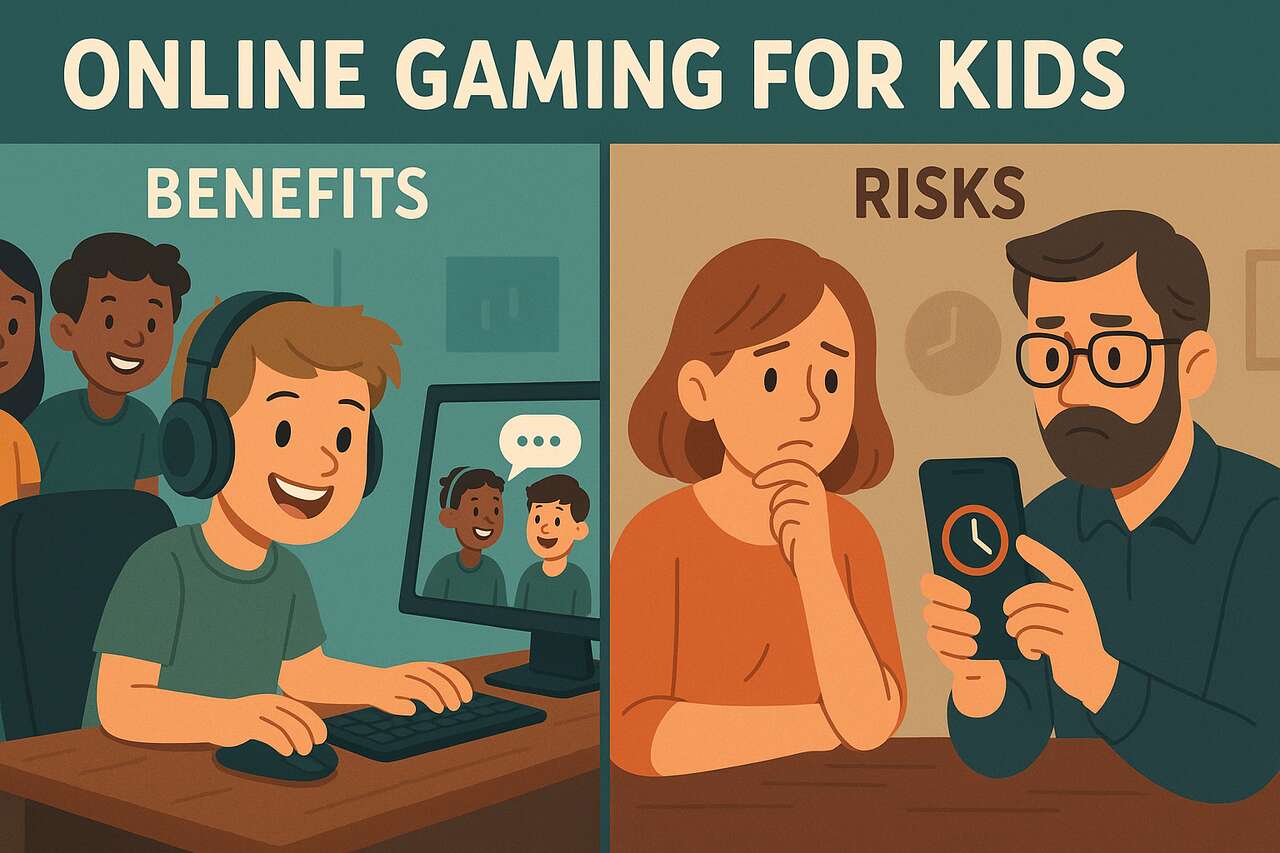

Online Gaming for Kids refers to the participation of children and adolescents in interactive digital games played through internet-connected consoles, computers, mobile devices, or tablets. As online gaming becomes deeply embedded in modern childhood, it influences cognitive development, emotional resilience, social behavior, and digital literacy. Understanding how, when, and why children game provides parents and educators with the insight needed to maximize benefits while minimizing risks. This article offers a comprehensive, context-rich analysis of the developmental, psychological, social, and safety dimensions of kids’ online gaming.
Strengthen Developmental Outcomes Through Mindful Gaming Engagement
Online gaming can support healthy development when approached with intentional structure, balanced usage, and appropriate content. Children gain cognitive flexibility, problem-solving skills, and improved hand-eye coordination when games challenge memory, spatial reasoning, or quick decision-making. The right games enhance learning outcomes, especially when they include puzzles, simulations, or cooperative missions that require strategic thinking. These benefits occur most reliably when play is moderated and aligned with a child’s developmental stage.
The core entities shaping positive outcomes include game genre, platform features, social dynamics, and player context. Educational, non-violent, and cooperative games offer the most consistently beneficial effects, while complex strategy titles reinforce planning and critical thinking. Sub-entities such as challenge progression, feedback loops, learning mechanics, and collaborative tasks shape the depth and transferability of cognitive gains. When games are chosen intentionally, parents exert meaningful influence on the quality of outcomes.
Surrounding contexts family gaming culture, school expectations, peer relationships, and personality traits affect how children integrate gaming into their daily lives. A child with strong social support may use gaming as an extension of friendship, while a more introverted child may rely on gaming for social confidence. Cultural norms also dictate acceptable screen-time habits. Understanding these variations helps adults tailor gaming habits to individual children to maximize long-term benefits.
Enhance Cognitive Skills and Problem-Solving Through Purposeful Game Selection
Many online games provide built-in mechanisms that stimulate cognitive processes such as working memory, sustained attention, and logical reasoning. Strategy, simulation, building, and puzzle genres present children with complex systems requiring planning, experimentation, and rapid adaptation. These game structures inherently promote learning behaviors like hypothesis testing, spatial manipulation, and pattern recognition. When kids engage with tasks that require continuous decision-making, they strengthen neural pathways associated with executive function.
These cognitive improvements hinge on game design attributes such as level difficulty progression, feedback timing, mission complexity, and reward structures. Games that gradually increase difficulty allow children to practice perseverance and tolerate frustration while mastering new skills. Learning-oriented games often include explicit instructional components, while sandbox games cultivate creativity and problem framing. In addition, multiplayer puzzle games embed cognitive tasks inside cooperative objectives, blending thinking with communication.
Contextual variables age, developmental readiness, and gaming motivation modulate how cognitive gains manifest. Younger children may benefit more from adaptive educational games, while older children gain from strategy-based titles requiring long-term planning and resource allocation. Cognitive boosts are strongest when play remains balanced with sleep, schoolwork, and physical activity, ensuring the brain has time to consolidate learning while avoiding overstimulation.
Build Social Skills, Teamwork, and Communication Through Cooperative Play
Multiplayer online games create structured environments where children must collaborate, negotiate, and communicate to achieve shared goals. Team-based challenges train kids to strategize with peers, coordinate actions, resolve conflicts, and adapt to team dynamics. These experiences mimic real-world group work, providing social practice in an engaging, low-risk setting. For socially anxious children, online cooperation can serve as an entry point to forming connections.
The social benefits rely on sub-entities such as chat systems, guilds or clans, voice communication, and moderation features. Games with strong cooperative architecture encourage prosocial behavior by requiring players to combine strengths and roles healer, builder, defender, strategist to advance through levels. Positive community norms and well-designed communication tools further enhance collaborative learning.
At the same time, outcomes differ depending on the social environment a child encounters. Supportive teams foster confidence and communication skills, while toxic behavior or unmoderated chats may undermine a child’s self-esteem. Family involvement such as co-playing or discussing game experiences provides grounding and helps children interpret social encounters constructively.
Support Emotional Well-Being and Resilience Through Adaptive Gameplay
Online gaming offers meaningful avenues for emotional regulation, stress release, and self-expression. Gameplay can function as a temporary escape from real-world pressures, allowing children to decompress while engaging in immersive, enjoyable activities. Challenging missions build perseverance, while overcoming obstacles creates a sense of mastery and self-efficacy. Emotional resilience is reinforced through repeated experiences of failure, learning, and retrying.
The emotional impact depends on mechanics like challenge-reward balance, failure tolerance, autonomy (choice over actions), and character identification. Games with adaptive difficulty prevent frustration overload by adjusting to a player’s skill level. Narrative-driven games allow children to explore emotions through characters’ stories, promoting empathy and emotional understanding.
Contextual variables mental-health status, social support, and real-world stress levels shape whether gaming helps or harms emotional well-being. Used intentionally, gaming can complement a child’s coping toolkit. However, if used to avoid problems chronically, it may hinder emotional growth. Parental awareness and dialogue help children maintain a balanced relationship with digital play.
Identify and Address Core Risks of Children’s Online Gaming
To protect children effectively, adults must understand the primary risks associated with online gaming environments. Online games can expose kids to inappropriate content, cyberbullying, aggressive gameplay, privacy threats, and monetization schemes designed to encourage excessive spending. Excessive play can disrupt sleep, academic performance, and mood regulation, particularly when children lose track of time or use gaming as an escape from real-world responsibilities.
Risk profiles are shaped by entities such as platform policies, content rating systems, multiplayer dynamics, loot-box mechanics, and screen-time patterns. Sub-entities like violent imagery, unmoderated chat, harassment, random-reward systems, and competitive ranking influence how much risk a child faces. Game structures that encourage continuous engagement daily rewards, timed events, or infinite levels can nudge children toward compulsive use.
Risk levels vary depending on age, developmental vulnerabilities, self-control levels, and parental oversight. Younger children face higher exposure risks because they cannot reliably discern safe from unsafe behavior online. Teenagers may be more susceptible to social pressure and competition-driven stress. Different family contexts influence risk tolerance and coping capacities. Understanding these dynamics allows adults to intervene early and appropriately.
Understand How Excessive Gaming Impacts Physical and Mental Health
Long gaming sessions increase the risk of poor sleep patterns, headaches, posture problems, reduced physical activity, and eye strain. Sedentary behavior contributes to weight gain and may reduce cardiovascular fitness if gaming replaces sports or outdoor play. Over-exposure to screen light particularly at night interferes with melatonin production and disrupts sleep cycles, which in turn affects school performance and mood stability.
Physical health impacts connect to sub-entities including blue-light exposure, sedentary session length, ergonomic setup, and screen-distance habits. Kids often play on couches or floors, which encourages slouching and neck strain. Mobile devices pose additional risks because children tend to hunch over them for long periods. Regular breaks, ergonomic chairs, and screen filters help mediate these issues.
Mental-health impacts occur when gaming interferes with emotional balance, leading to irritability, dependency, or avoidance of social and academic responsibilities. Contextual factors pre-existing anxiety, ADHD, stressful home environments, or low self-esteem increase susceptibility. The key is not eliminating gaming, but integrating it within a broader lifestyle that includes physical activity, sleep hygiene, and offline social interaction.
Evaluate the Dangers of Violent or Inappropriate Game Content
Exposure to violent or sexualized content can affect behavioral patterns, emotional responses, and worldview formation in developing children. Research suggests a modest but consistent link between violent video games and increased aggression, particularly in children already predisposed to aggressive tendencies. Violent content may desensitize young players to real-world harm or normalize hostile conflict resolution.
Sub-entities shaping content-related risk include graphic intensity, narrative framing, player roles in violence, and in-game reward systems. Games that reward violence or depict it in realistic detail produce stronger behavioral effects compared to abstract or cartoon-like violence. Multiplayer environments add layers of unpredictability because players may encounter obscene language or inappropriate behavior from others.
Content impact varies significantly depending on parental monitoring, child temperament, and exposure frequency. Children from supportive, communicative households are better able to contextualize violent scenes. Pre-teens and teens with emotional regulation difficulties or experiences with bullying may be particularly vulnerable. Choosing age-appropriate games and maintaining open conversations remain critical.
Recognize Pathways from Healthy Play to Addiction or Problematic Use
Gaming becomes problematic when children begin prioritizing online play over school, family, sleep, or social life. Problematic use stems from psychological reward loops that combine unpredictable reinforcement (loot drops), social obligations (team expectations), and emotional dependency (escape from stress). These loops can create patterns similar to addictive behaviors, especially in vulnerable children.
Core sub-entities connected to risk include loot boxes, microtransactions, daily reward mechanics, social ranking systems, and endless gameplay design. These features are intentionally engineered to drive engagement, making it difficult for children to stop playing or limit spending. Games that penalize players for missing events create fear of falling behind, further reinforcing compulsive behavior.
Contextual factors such as parenting style, academic pressure, social anxiety, and mental-health challenges influence susceptibility. Children who use gaming as their primary source of identity or achievement experience higher risk for dependency. Preventive strategies include structured gaming schedules, regular monitoring, and proactive conversations around digital habits.
Evaluate Game Content and Design to Shape Safe, Beneficial Play
Game design directly influences developmental, behavioral, and emotional outcomes for children. The interplay between content, difficulty structure, social components, and monetization determines whether a game supports healthy play or encourages risky behavior. By learning how game mechanics work, parents and educators can make more informed choices aligned with children’s needs.
Entities tied to game design include difficulty progression, violence level, narrative tone, multiplayer structure, reward systems, and monetization models. Sub-entities such as loot-box randomness, cosmetic purchases, ranking ladders, age-rating descriptors, and privacy settings each exert unique influences. Games that emphasize cooperation, creativity, and exploration generally yield more positive outcomes.
Contextual variations matter: a competitive teenager may thrive in esports-style environments, while a young child benefits more from creative puzzle games. Families can tailor their gaming choices by factoring in temperament, maturity, and goals. Co-playing and evaluating reviews together also improve children’s digital literacy and critical thinking about media consumption.
Compare Educational and Non-Violent Games with Violent or Competitive Titles
Educational and non-violent games typically provide predictable developmental benefits. They emphasize logic, creativity, skill acquisition, and structured learning. These games reduce exposure to harmful content and often include built-in parental settings. In contrast, violent or competitive games vary widely in impact some offer teamwork and strategy development, while others pose heightened behavioral risks.
Sub-entities driving these differences include learning objectives, graphic content, mission structure, and player interaction styles. Educational games incorporate quizzes, challenges, and feedback loops that encourage mastery. Violent games emphasize conflict and reaction speed, while competitive games prioritize ranking and performance.
Context matters greatly: a mature teen may engage with competitive play in a healthy manner, using it as a channel for self-improvement. Younger children may not yet possess the emotional regulation required to navigate such environments. Parents should match game type to developmental stage.
Assess How Multiplayer, Microtransactions, and Loot Boxes Alter Risk Profiles
Multiplayer dynamics expose children to strangers, peer pressure, and social hierarchies. Microtransactions allow immediate upgrades or cosmetic enhancements but raise concerns about overspending and impulsive behavior. Loot boxes resemble gambling mechanisms by offering random rewards, which can encourage repetitive purchasing.
Sub-entities shaping monetization risk include purchase frequency, reward probability transparency, spending caps, and cosmetic vs pay-to-win structures. Games that require real money for competitive advantage produce higher frustration and spending pressure. Randomized reward systems can foster addictive behavior patterns.
Contextual influences family financial rules, child self-control, peer expectations determine how children interact with these features. Teaching kids about digital spending and probability helps develop healthier long-term habits.
Comparison of Game Types for Kids
| Game Type | Benefits | Risks | Best For |
|---|---|---|---|
| Educational | Skill building, structured learning | Limited excitement may reduce engagement | Younger children, academic support |
| Non-violent / Creative | Creativity, exploration, low stress | May include in-game purchases | Kids of all ages |
| Competitive Multiplayer | Teamwork, strategy, communication | Toxic behavior, pressure, overspending | Teens, experienced players |
| Violent Games | Fast decision-making, coordination | Aggression risk, inappropriate content | Older teens with supervision |
Implement Parental and Educator Strategies to Guide Healthy Gaming
Guiding children through healthy online gaming requires consistent habits, informed game selection, and thoughtful communication. Parents who engage with their child’s gaming world by co-playing, discussing content, or setting shared expectations encourage balanced digital behavior. The goal is not to eliminate gaming but to integrate it responsibly into daily life.
Entities central to healthy guidance include screen-time rules, age ratings, parental controls, device settings, and family gaming policies. Sub-entities such as playtime timers, chat filters, privacy tools, and content restrictions offer families practical control mechanisms. Educators contribute by teaching digital citizenship and helping students reflect on media use.
Surrounding contexts school workload, family routines, siblings, and home technology access determine how realistic specific rules are. Clear, consistent habits adapted to family life promote long-term well-being without creating unnecessary conflict.
Establish Healthy Screen-Time Routines and Gaming Limits
Children benefit from structured, predictable gaming schedules that balance online play with sleep, physical activity, schoolwork, and offline social time. Setting limits helps children regulate their own impulses while providing clarity for everyone. Healthy routines include defined gaming hours, mandatory breaks, and device-free evenings before bedtime.
Sub-entities affecting screen-time routines include duration, timing, break frequency, and rule enforcement method. Tools such as console time limits, router scheduling, and app timers simplify management. Consistency is essential; sporadic enforcement often leads to conflict or rule-testing.
Context shapes how families implement rules: high-stress households may use gaming as a coping mechanism, while busy households may rely on digital entertainment for childcare. Flexible but firm guidelines help children internalize self-regulation skills.
Choose Age-Appropriate, Educational, and Positive Games for Children
Selecting appropriate games begins with reviewing age ratings, gameplay descriptions, and user reviews. Parents should consider violence levels, monetization models, social features, and educational value. The most beneficial games support creativity, teamwork, and resilience while avoiding excessive competitive pressure or explicit content.
Sub-entities in game selection include ESRB/PEGI ratings, content descriptors, gameplay mechanics, and community moderation level. Age ratings provide baseline guidance, while detailed descriptions help parents evaluate suitability. User communities with active moderation reduce the risk of harassment or inappropriate interactions.
Context matters: a highly sensitive child may react poorly to even mild conflict, while an analytical child may thrive in complex strategy games. Co-playing or watching gameplay videos together helps children feel included in the decision-making process.
H3: Apply Robust Safety and Privacy Protections in Online Gaming Environments
Online safety requires vigilance regarding who children interact with and what personal information they share. Families should enable privacy settings, disable open chat when appropriate, and ensure children understand basic digital safety rules. Teaching children to recognize suspicious behavior or scams is essential for long-term digital literacy.
Sub-entities important for safety include chat filters, friend request settings, profile visibility, data collection policies, and report/block mechanisms. Parental controls allow adults to restrict communication modes and manage friends lists. Using child-specific accounts also limits data exposure.
Context influences risk: children with strong social networks outside gaming may face fewer online pressures, while isolated children may be more vulnerable to predatory behavior. Monitoring not surveillance combined with open communication fosters trust and security.
Key Parental Controls and Their Functions
| Control Feature | Function | Benefit |
|---|---|---|
| Time Limits | Restricts daily or weekly gaming hours | Supports healthy routines |
| Chat Filters | Blocks explicit language and risky interactions | Enhances safety |
| Content Restrictions | Limits games based on rating or genre | Reduces exposure to harmful content |
| Spending Caps | Prevents unauthorized purchases | Protects finances |
| Privacy Settings | Controls who can contact the child | Minimizes predatory risk |
H2: Determine When Gaming Becomes More Harmful Than Helpful
Online gaming shifts from recreational to harmful when it interferes with a child’s functioning, health, or emotional stability. Recognizing when gaming becomes excessive enables early intervention. Harmful gaming patterns often reflect underlying problems stress, bullying, loneliness, or academic struggles rather than gaming itself being the root cause.
Entities signaling harmful engagement include behavior change, academic decline, social withdrawal, sleep disruption, and emotional volatility. Sub-entities such as irritability when not gaming, deceptive behavior around gaming time, or loss of interest in offline activities provide important clues. Identifying these early can prevent escalation.
Contextual factors family stress, learning disorders, or peer conflicts shape vulnerability. Children with mental-health challenges may use gaming for emotional escape, making them more prone to dependency. A holistic view helps differentiate casual passion from problematic behavior.
H3: Identify High-Risk Ages, Personalities, and Contexts for Gaming Harm
Pre-teens and early adolescents face the highest risk due to developmental sensitivity to peer approval, reward systems, and identity formation. Children with impulsive tendencies, anxiety, or attention disorders may gravitate toward gaming for emotional regulation. Competitive, unmoderated environments can exacerbate insecurity or aggressive responses.
Sub-entities influencing vulnerability include impulsivity, social anxiety, reward sensitivity, and self-regulation capacity. Children who struggle academically or socially may rely on gaming to build confidence, increasing reliance on digital validation.
Context-based risks include family conflict, limited outdoor play opportunities, or inconsistent parental supervision. Understanding these nuances enables targeted guidance rather than blanket restrictions.
H3: Recognize Warning Signs that Indicate Harmful Gaming Patterns
Warning signs include declining academic performance, secretive behavior, sleep disruption, irritability when offline, and withdrawal from friends or hobbies. Children may lie about gaming time, skip obligations, or experience mood swings linked to gameplay outcomes.
Sub-entities that help spot early issues include time spent, emotional reactivity, functional impairment, and social changes. Parents should observe whether gaming interferes with meals, chores, homework, or sleep.
Context determines how symptoms manifest: in academically pressured households, gaming might mask stress, while in isolated children it may serve as their only social outlet. Early intervention typically involves adjusting routines, improving communication, or consulting mental-health professionals when needed.
Conclusion
Online Gaming for Kids carries both significant benefits and tangible risks. When guided thoughtfully, online games can enhance cognitive skills, improve social interaction, and bolster emotional resilience. Without proper boundaries, however, games can expose children to harmful content, disrupt sleep, encourage overspending, or contribute to problematic use. Parents and educators play a decisive role in shaping outcomes by implementing clear routines, choosing age-appropriate games, applying safety settings, and maintaining open communication. The healthiest digital ecosystems integrate gaming as one enriching part of a balanced childhood supporting growth, connection, learning, and well-being. For more informative articles related to Gaming’s you can visit Gaming’s Category of our Blog.
FAQ’s
Yes. Many online games promote memory, attention, problem-solving, spatial reasoning, and decision-making. Strategy and puzzle games especially support executive-function development.
They can be. Multiplayer games encourage teamwork and communication, but safety depends on good moderation, privacy settings, and parental guidance to avoid exposure to inappropriate interactions.
Yes. Excessive gaming can disrupt sleep, cause posture problems, and reduce physical activity. Overuse also affects mood regulation and academic performance.
Research shows a small but consistent correlation, particularly among children already prone to aggression. Violent games do not guarantee real-world violence but may influence behavior.
Set healthy limits, choose age-appropriate games, co-play or discuss content regularly, enable parental controls, and encourage offline social and physical activities.
Irritability when not playing, hiding gaming time, lost interest in other activities, declining grades, and disrupted sleep are key warning signs.
Educational games provide more predictable learning benefits, but entertainment games can still develop creativity and teamwork if used in moderation.
No. Effects differ based on age, temperament, mental health, family environment, and type of game. Personalized guidance ensures the healthiest digital outcomes.
