

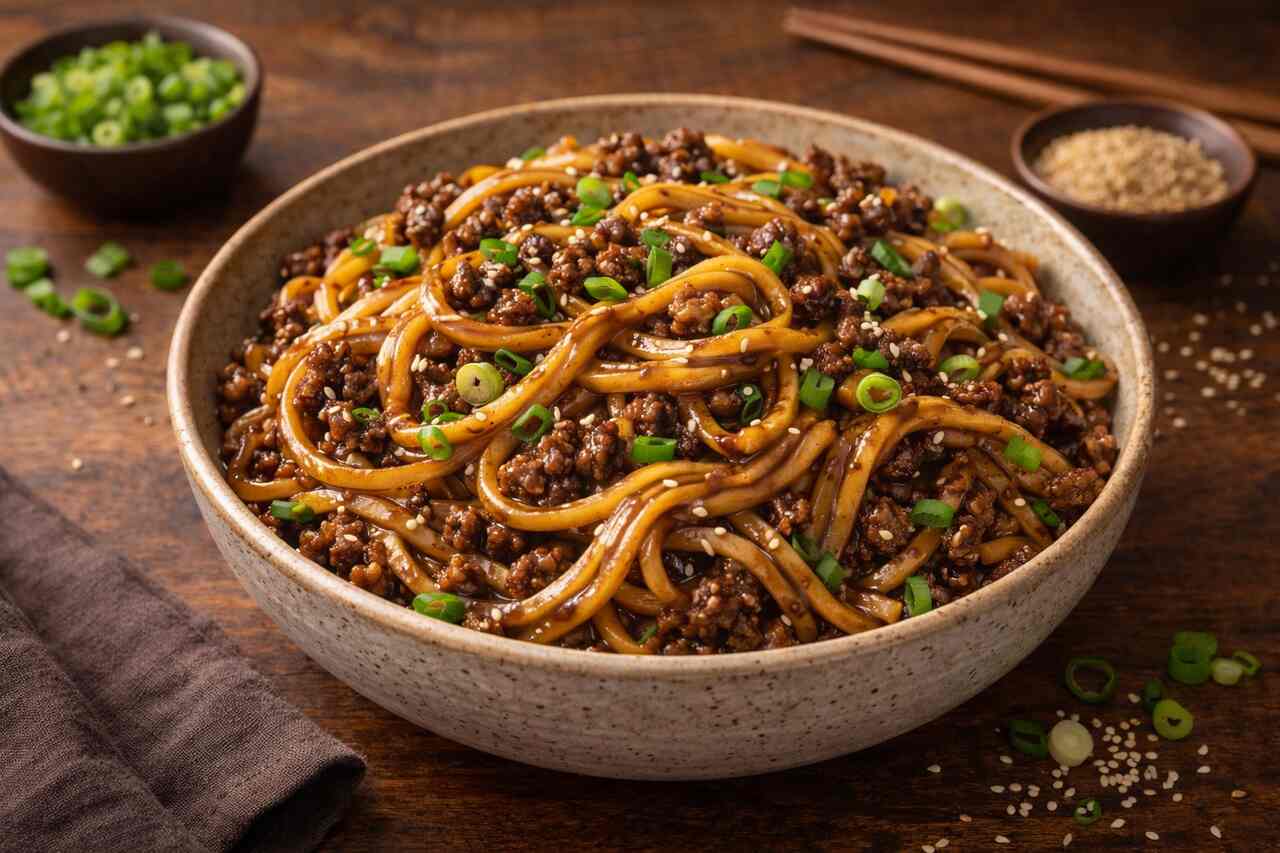

Mongolian ground beef noodles combine bold soy-based sauce, aromatic garlic and ginger, and tender noodles into a fast, satisfying meal. This dish builds on the flavors of Mongolian beef but replaces sliced flank steak with ground beef for affordability and convenience. The result is a weeknight-friendly stir fry that delivers sweet, savory, and umami depth in under 30 minutes.
Despite the name, the recipe is not a traditional Mongolian preparation. Instead, it belongs to the American-Chinese culinary tradition that emphasizes wok-seared proteins coated in glossy brown sauce. This guide explains the origins, ingredient science, noodle choices, sauce thickening techniques, healthier swaps, storage methods, and professional tips needed to perfect this dish at home.
Understand the Origins and Naming of Mongolian Ground Beef Noodles
Mongolian ground beef noodles evolved from the restaurant classic Mongolian beef, a dish widely served in Chinese-American establishments. The sauce typically combines soy sauce, brown sugar, garlic, and ginger. Thinly sliced flank steak is traditionally used, but home cooks adapted the recipe using ground beef for faster preparation and lower cost.
The name “Mongolian” does not reflect authentic cuisine from Mongolia. It is more closely tied to the marketing concept behind Mongolian BBQ restaurants, where meats and vegetables are stir-fried on large flat grills. The flavor profile aligns with Cantonese-American techniques rather than traditional Mongolian cooking.
Ground beef versions gained popularity because they cook quickly and distribute sauce evenly throughout the noodles. This adaptation makes the dish accessible for busy households seeking quick 30-minute dinners.
Select the Essential Ingredients for Authentic Flavor Balance
Start with 80 to 90 percent lean ground beef. Higher fat adds richness, but excess grease can dilute sauce consistency. Garlic and fresh ginger provide aromatic heat. Brown sugar contributes caramel sweetness.
Beyond soy sauce, many cooks incorporate hoisin sauce for sweetness and depth. Some add oyster sauce to intensify umami. Each sauce performs a specific function. Soy sauce provides salt and fermentation complexity. Hoisin adds molasses-like sweetness. Oyster sauce enhances savoriness.
Scallions finish the dish with brightness. Optional red pepper flakes introduce mild heat without overpowering sweetness.
Choose the Best Noodles for Texture and Sauce Absorption
Noodle selection affects both flavor and texture. lo mein noodles are ideal because they are wheat-based, slightly chewy, and absorb sauce effectively. Rice noodles offer a lighter texture and gluten-free option. Even spaghetti works in a pinch due to similar starch composition.
Wheat noodles contain more gluten, which provides elasticity and bite. Rice noodles are softer and can become delicate if overcooked. Cooking noodles just to al dente prevents sogginess when combined with sauce.
Here is a side-by-side comparison:
| Noodle Type | Texture | Sauce Absorption | Gluten-Free | Best Use |
| Lo mein noodles | Chewy | Excellent | No | Authentic texture |
| Rice noodles | Tender | Moderate | Yes | Gluten-free option |
| Spaghetti | Firm | Good | No | Pantry substitute |
| Egg noodles | Soft-chewy | Good | No | Richer variation |
Cook Mongolian Ground Beef Noodles Step by Step
Brown the ground beef in a large skillet or wok over medium-high heat. Break it apart into small crumbles for even texture. Drain excess grease if necessary but retain a small amount for flavor.
Add minced garlic and ginger once the beef is nearly cooked. Aromatics release essential oils when heated briefly. Avoid overcooking garlic to prevent bitterness.
In a separate bowl, whisk soy sauce, brown sugar, hoisin sauce, and a splash of water or broth. Pour into the skillet and simmer for 3 to 5 minutes. Add cooked noodles directly into the sauce and toss thoroughly until evenly coated. Finish with scallions.
Achieve Restaurant-Style Sauce Consistency
A glossy sauce depends on starch activation. A cornstarch slurry combines cornstarch with cold water before being added to simmering sauce. Heat triggers gelatinization at approximately 203°F, thickening the liquid.
Without slurry, sauce may remain thin. Add slurry gradually and stir continuously. High heat encourages rapid thickening but can scorch sugars if unattended.
Wok cooking enhances evaporation and caramelization. A standard skillet works effectively but may require slightly longer simmering to reduce liquid.
Balance Sweet and Savory Elements Precisely
The signature taste comes from balancing brown sugar with salty soy sauce. Too much sugar creates cloying sweetness. Too much soy sauce causes harsh saltiness.
Taste during simmering. Adjust with small increments. A splash of rice vinegar can brighten flavor. Fresh ginger adds warmth without heat intensity.
The dish is typically mild rather than spicy. Add chili garlic sauce if heat is desired.
Incorporate Vegetables for Texture and Nutrition
Bell peppers add sweetness and crunch. Snap peas contribute crisp freshness. Broccoli florets hold sauce well and add fiber.
For best texture, stir fry vegetables separately before combining. High heat preserves color and crispness. Overcrowding the pan causes steaming instead of browning.
Vegetables increase nutritional value and visual appeal while balancing the richness of ground beef.
Compare Mongolian Ground Beef Noodles with Similar Dishes
Mongolian ground beef noodles differ from traditional lo mein because the sauce is sweeter and more concentrated. Lo mein typically uses lighter seasoning and more vegetables.
Korean beef bowls emphasize sesame oil and gochujang rather than brown sugar. Teriyaki beef noodles feature soy and mirin sweetness without the pronounced garlic-ginger intensity.
Understanding these differences clarifies flavor expectations and helps avoid confusion when ordering or preparing similar dishes.
Modify the Recipe for Healthier Options
Swap ground beef for lean ground turkey or chicken to reduce saturated fat. Choose low-sodium soy sauce to decrease salt content.
Rice noodles provide gluten-free alternative. Zucchini noodles lower carbohydrate content. Reduce sugar by 25 percent and increase garlic and ginger for flavor compensation.
Approximate nutrition per serving:
| Nutrient | Average Amount |
| Calories | 450–550 |
| Protein | 25–30 g |
| Carbohydrates | 50–60 g |
| Fat | 18–25 g |
| Sodium | 800–1000 mg |
Portion control and vegetable additions improve macro balance.
Store and Reheat for Meal Prep Efficiency
Store leftovers in airtight containers in the refrigerator for up to four days. Reheat in a skillet over medium heat with a splash of water to loosen sauce.
Freezing is possible but may soften noodles upon thawing. For best results, freeze sauce and beef separately, then combine with fresh noodles when reheating.
Meal prep scaling works well. Double sauce quantities proportionally while maintaining starch ratio for consistent thickness.
Avoid Common Mistakes That Ruin Texture
Watery sauce often results from insufficient reduction or skipping cornstarch slurry. Greasy texture indicates high-fat beef without draining.
Clumping noodles occur when they are not rinsed or tossed with oil after cooking. Overcooking noodles before adding to sauce leads to mushiness.
Maintaining medium-high heat ensures rapid evaporation and flavor concentration.
Purchase Ready-Made or Frozen Options When Short on Time
Many grocery stores carry frozen Mongolian-style beef meals. Prices average $4 to $7 per serving depending on brand and portion size.
Meal kits from national grocery chains provide pre-measured sauce and noodles for quick preparation. While convenient, homemade versions offer superior control over sweetness and sodium.
Conclusion
Mongolian ground beef noodles transform a restaurant favorite into a fast, adaptable home-cooked meal. By understanding sauce structure, noodle selection, starch thickening, and heat control, you can consistently achieve bold flavor and glossy texture. Whether prepared traditionally, lightened for health goals, or customized with vegetables, this dish delivers reliable comfort with impressive depth. For more informative articles related to Food’s you can visit Food’s Category of our Blog.
FAQ’s
No. It originates from American-Chinese cooking traditions rather than Mongolia.
Yes. Substitute additional soy sauce and a small amount of brown sugar for balance.
Lo mein noodles provide the most authentic texture, but rice noodles or spaghetti work well.
Cook to al dente, drain thoroughly, and toss lightly with oil before adding to sauce.
Yes, though texture may soften. Freeze sauce separately for best results.
It is primarily sweet and savory with mild garlic and ginger warmth.
Use a cornstarch slurry and simmer until glossy and reduced.
