


Key Takeaways
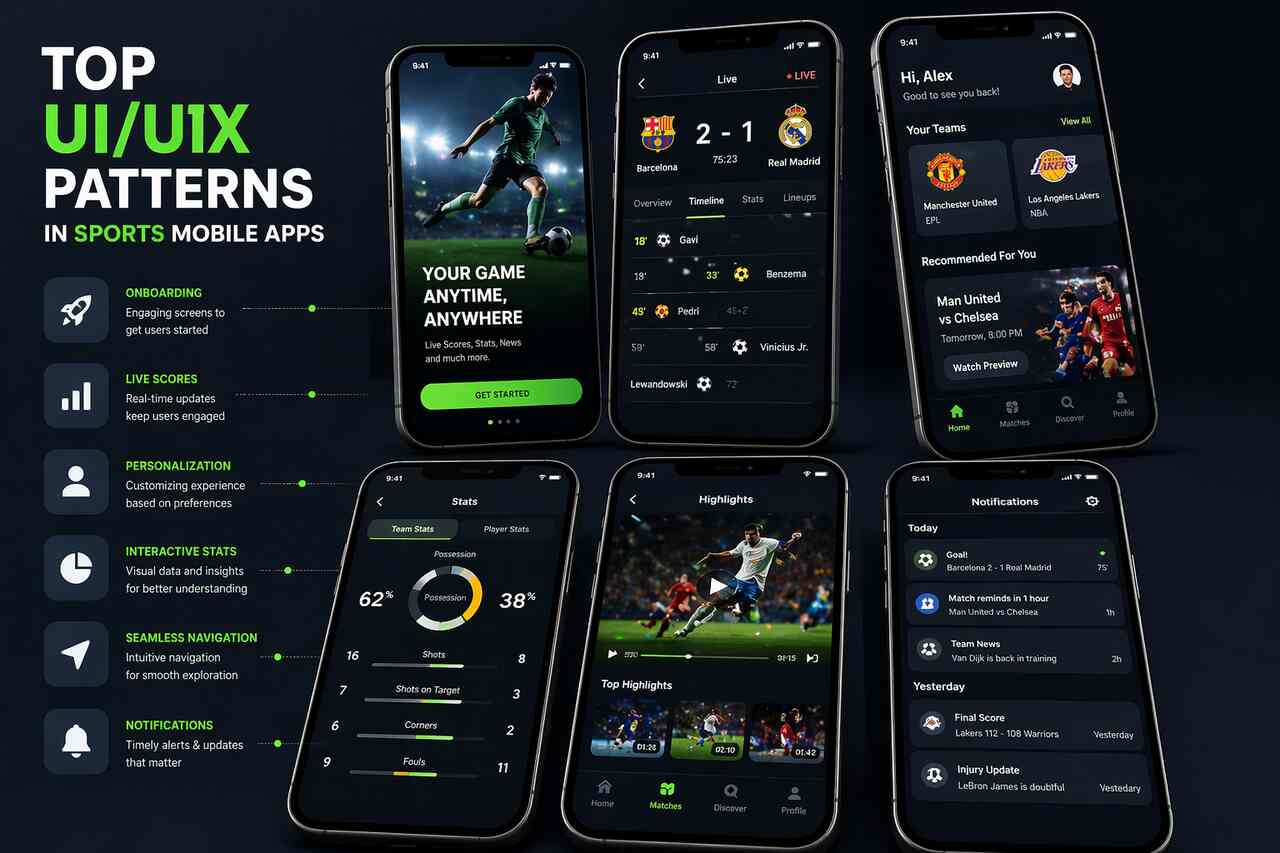
- Sports apps thrive on live data visualization, delivering real-time stats and interactive graphics to keep fans engaged.
- Personalized content feeds and smart notifications tailor the experience to individual users, boosting retention.
- Intuitive navigation, clear layouts, and logical sections help users find information quickly.
- Dark mode improves comfort, reduces eye strain, and enhances visual focus.
- Micro-interactions and animations provide feedback, making the app feel responsive and engaging.
- Accessibility features ensure all users, including those with disabilities, can fully participate.
- Gamification elements like badges and leaderboards increase motivation and encourage repeat use.
- Social media integration fosters community, sharing, and deeper emotional investment in the app.
- Overall, these UI/UX patterns enhance engagement, satisfaction, and long-term loyalty for sports app users.
Introduction
As demand for interactive, informative digital experiences grows, sports mobile apps are evolving rapidly to meet fans’ needs. A well-designed sports app delivers more than just scores or news; it provides immersive experiences through modern UI and UX principles. Developers and designers are increasingly turning to established sports app UI patterns to captivate users and set their apps apart from the competition.
The global sports app market is expected to continue expanding as users seek faster, more reliable, and visually engaging ways to follow their favorite teams, leagues, and events. These evolving expectations compel developers to embrace innovative UI/UX solutions that seamlessly blend data, personalization, and usability to keep fans coming back for more.
The focus on effective UI/UX is not just about visual appeal. It is about meaningful engagement and ensuring that all users, regardless of their technical experience or ability, can benefit from the app’s offerings. In this article, the leading UI/UX design patterns shaping today’s sports mobile apps are explored, drawing inspiration from both successful releases and emerging industry standards.
From real-time updates to personalized content curation, the following patterns illustrate why sports mobile apps have become such essential tools for fans worldwide.
Live Data Visualization
For many sports fans, quick access to real-time stats and match information is non-negotiable. Today’s best sports apps excel at turning live data into visually rich charts, heatmaps, and event timelines. Dynamic data visualization helps users quickly grasp key moments and trends during a game. Incorporating interactive graphs and live updating infographics not only improves comprehension but also increases engagement, ensuring users stay glued to their devices throughout the event.
Personalized Content Feeds
Personalization has redefined what users expect from sports mobile apps. Through analyzing user behavior, favorites, and viewed content, apps are increasingly curating feeds with news, updates, and statistics that are individually relevant. Smart notification systems alert fans to breaking developments that matter most to them, whether updates on their favorite players or live scores from their chosen teams. A personalized news and notification feed not only increases user satisfaction but also boosts retention by consistently delivering value tailored to each individual.
Intuitive Navigation
With the often vast range of information packed into sports apps, intuitive navigation is paramount. Clean navigation bars, strategically placed icons, and clear categorizations help users find what they need effortlessly. Many modern apps use a bottom navigation bar to break the interface into logical segments such as scores, news, live games, and social features. This consistent layout reduces frustration, making it easy for new users to quickly familiarize themselves with the app’s structure.
Dark Mode Integration
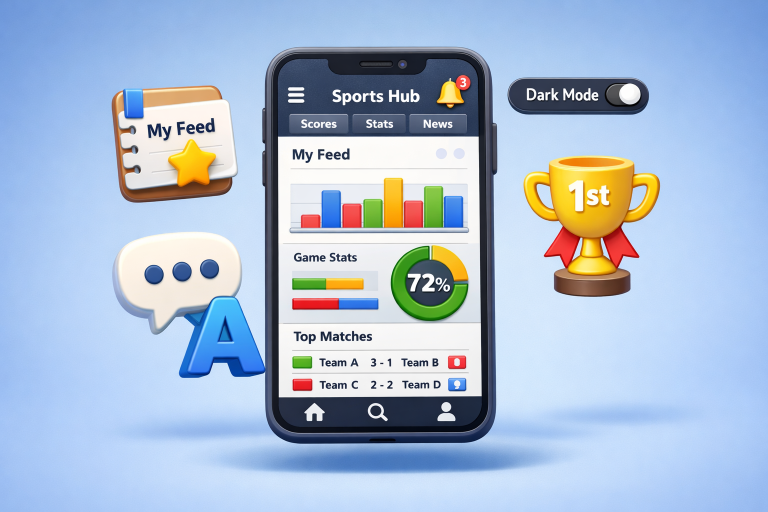
Enabling users to switch to dark mode has become a user expectation rather than just a trend. This feature not only reduces eye strain during evening hours or in low-light environments but also extends battery life on devices with OLED screens. Many users also prefer the visual aesthetics of a darker palette, which can be less distracting and make colorful data points stand out more prominently. Incorporating a smooth toggle between light and dark modes enhances accessibility and user comfort.
Micro-Interactions and Animations
Micro-interactions such as subtle loading animations, button feedback, and animated transitions enhance the app’s responsiveness and user delight. These small design elements provide users with immediate feedback and guide them intuitively through the app. For example, a quick animation when updating a score or unlocking an achievement injects energy into the user experience and strengthens the connection between the user and the app interface. Micro-interactions are also effective in clarifying actions and making navigation feel natural.
Accessibility Features
Building accessibility into sports apps ensures that everyone, including users with visual, auditory, or motor disabilities can enjoy the full range of features. This can include support for screen readers, voice commands for hands-free navigation, high-contrast visual schemes, and the ability to adjust font size and element spacing. Accessibility is not only a matter of compliance; it is integral to reaching the broadest possible audience and providing inclusive digital experiences.
Gamification Elements
Gamification strategies, such as unlocking badges, climbing leaderboards, and participating in prediction challenges, have taken sports apps beyond passive consumption. These elements leverage competitive instincts, turning regular activities into rewarding experiences. By offering digital achievements and real-time competitive features, apps motivate fans to return regularly, deepening their engagement and sense of accomplishment.
Seamless Social Media Integration
The best sports apps foster community by making sharing and interaction effortless. Whether posting highlights, sharing articles, or connecting directly with friends and other fans, integrated social features strengthen emotional investment and extend the app’s reach. Allowing users to contribute content and engage in discussions also builds a sense of belonging within the app ecosystem, which is crucial for fostering loyalty and attracting new users through peer recommendation and social sharing.
Final Thoughts
Forward-thinking sports mobile apps are defined by their commitment to user-centric design and practical innovation. By focusing on solutions such as live data visualization, smart personalization, seamless social integration, and accessibility, developers can create experiences that not only meet the high expectations of today’s sports fans but also keep them engaged in the long term. Implementing these UI/UX patterns can help your app reach a wider audience, enhance satisfaction, and ensure a competitive edge in the ever-expanding landscape of sports digital products.
