


Understanding Coverage for Home Medical Supplies
Managing our health often extends beyond doctor’s visits and prescriptions. Many of us rely on essential home medical supplies to maintain our well-being, support recovery, or enhance our daily quality of life. From mobility aids to specialized health monitoring devices, these items are crucial. However, understanding how to navigate the complex world of insurance to cover their costs can be a significant challenge.
The financial aspect of healthcare can be daunting. We often encounter a maze of policies, deductibles, and prior authorizations. Ensuring we receive the necessary support without facing unexpected financial burdens is a top priority for individuals and families alike.
In this extensive guide, we will demystify the process of securing insurance coverage for various home medical supplies. We’ll explore the criteria for coverage, step-by-step instructions for filing claims, and even delve into how insurance can support vital aspects of our health, including essential nutrients and dietary needs. Our goal is to provide you with clear, actionable insights to confidently manage your healthcare journey.
When we talk about home medical supplies, we’re often referring to what insurers classify as Durable Medical Equipment (DME). This category encompasses a wide range of items designed for repeated use in the home, such as wheelchairs, oxygen equipment, hospital beds, and even certain diabetes supplies. The primary purpose of DME is to serve a medical purpose, not convenience, and it must be appropriate for use in the home.
Navigating insurance policies for DME can be complex. Each plan has specific rules regarding what it covers, under what circumstances, and for how long. We often find that policies differ significantly in terms of out-of-pocket costs, including deductibles, co-pays, and co-insurance. Reimbursement rates can also vary, meaning the amount your insurance company pays for a particular item might not cover the full cost, leaving you responsible for the balance. It’s crucial for us to review our specific insurance plan documents thoroughly or contact our provider directly to understand these nuances. Medicare, for instance, has specific guidelines for DME coverage under Part B, generally covering 80% of the Medicare-approved amount after the deductible, with the patient responsible for the remaining 20%. Private insurance plans often mirror these structures but may have different preferred suppliers or pre-approval requirements.
Criteria for Insurance-Covered Home Medical Supplies
For a home medical supply to be covered by insurance, it typically must meet several key criteria. The most fundamental requirement is medical necessity. This means a healthcare provider must determine that the equipment is essential for treating an illness, injury, or medical condition, or to improve the functioning of a body part. It’s not enough for an item to be helpful; it must be medically required.
To establish medical necessity, a doctor’s prescription is almost always mandatory. This prescription should clearly state the specific item needed, the diagnosis for which it’s required, and the expected duration of its use. In many cases, a more detailed Certificate of Medical Necessity (CMN) may be required. This document, completed by your physician, provides comprehensive justification for the equipment, outlining your medical history, current condition, and how the DME will address your health needs. Without this thorough documentation, insurance companies are likely to deny coverage.
Furthermore, insurers often have specific rules about the type of equipment they will cover. They may prefer rental over purchase for certain items, or they might only cover the least expensive option that meets your medical needs. It’s also worth noting that the definition of ‘medical supplies’ can sometimes extend to nutritional products or specialized dietary supplements when deemed medically necessary. For a broader understanding of what might be covered, including certain nutritional supports, you can explore resources on insurance-covered medical supplies. Always remember that upfront communication with your doctor and insurance provider is key to ensuring that the supplies you need will be covered.
How to File Claims for Home Medical Supplies
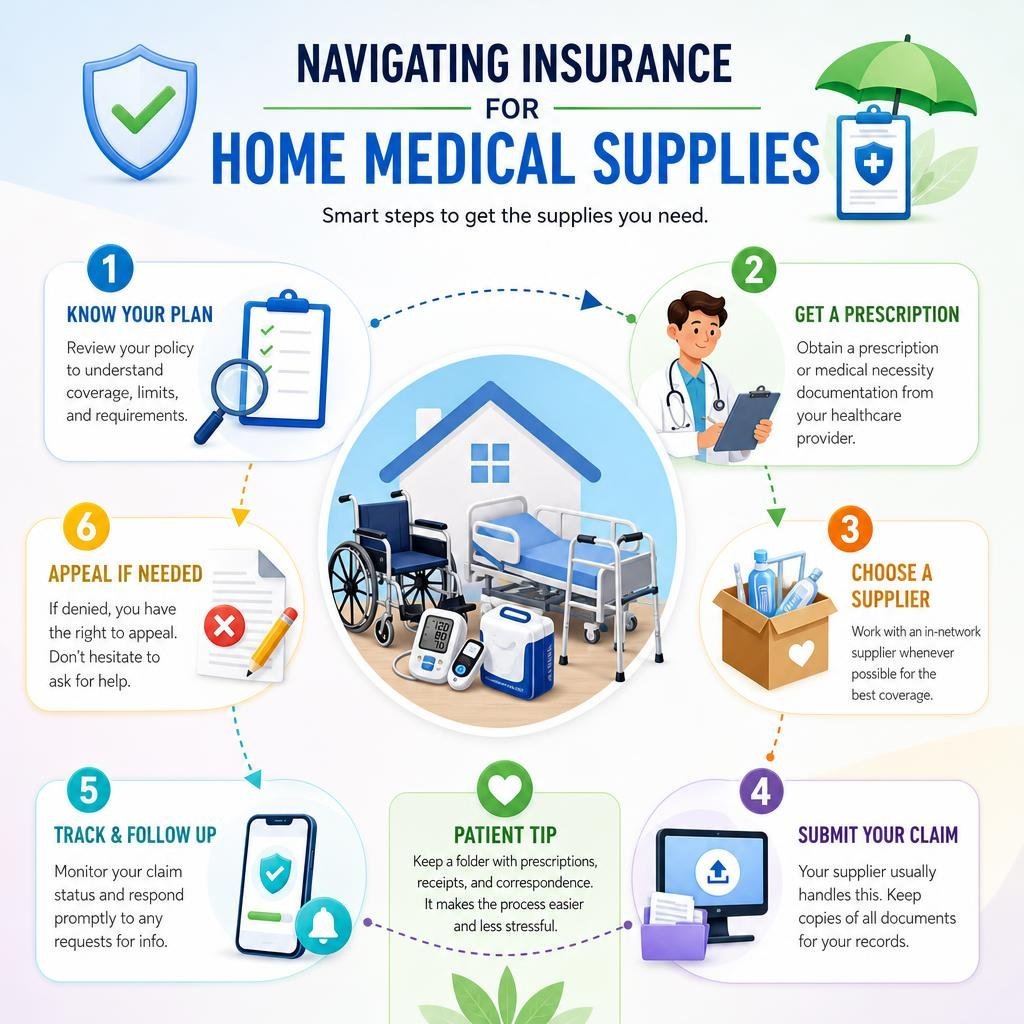
Filing claims for home medical supplies can feel like navigating a bureaucratic labyrinth, but with a structured approach, we can simplify the process. The first and often most critical step is obtaining prior authorization from your insurance company. Many high-cost or specialized DME items require pre-approval before you acquire them. This involves your doctor submitting a request to your insurer, detailing the medical necessity. Skipping this step can lead to claim denials, leaving you responsible for the full cost.
Once you have authorization, or if the item doesn’t require it, the next step is to submit the claim using the appropriate claim forms. These forms, often provided by your medical supply vendor or available on your insurer’s website, require detailed information about the patient, the provider, and the services or supplies rendered. It’s essential to include all supporting documentation, such as the doctor’s prescription, CMN, and any relevant medical records.

Always keep meticulous records, including copies of all submitted documents, dates of submission, and confirmation numbers. Ensure you receive itemized receipts from your supplier, clearly listing each item, its cost, and the diagnostic codes (ICD-10) and procedure codes (HCPCS) used. These codes are vital for accurate processing.
If a claim is denied, don’t despair; the appeal process is your next recourse. This typically involves submitting a formal letter of appeal, often with additional medical documentation or a letter of support from your doctor, explaining why the denial should be overturned. Many insurers offer multiple levels of appeal, and persistence can often lead to a favorable outcome. Understanding each step and meticulously documenting your journey can significantly improve your chances of successful reimbursement.
Essential Nutrients and Dietary Support Under Insurance
Beyond physical equipment, our health journey often requires attention to nutritional therapy and dietary support. While traditional insurance coverage has historically focused on acute care and medical devices, there’s a growing recognition of the role of preventative health and therapeutic nutrition in managing chronic conditions and promoting overall well-being. For many, addressing dietary gaps through specialized products isn’t just about feeling better; it’s a critical component of their medical treatment plan.
Insurance coverage for nutritional support can be more nuanced than for DME. It often depends on whether the nutritional intervention is deemed medically necessary for a specific condition, rather than for general wellness. For instance, specialized formulas for individuals with severe digestive disorders, metabolic conditions, or those requiring tube feeding are more likely to be covered. This falls under the umbrella of therapeutic nutrition, where food or supplements are prescribed to treat, manage, or prevent a disease or condition. Understanding how our insurance plans view these essential nutrients can unlock vital support for our health.
The Role of Essential Vitamins and Daily Supplements
Our bodies require 13 essential vitamins—Vitamins A, C, D, E, K, and the eight B vitamins (thiamine, riboflavin, niacin, pantothenic acid, biotin, B-6, B-12, and folate) to function optimally. These micronutrients play crucial roles in everything from energy production and immune function to bone health and vision. Ideally, we obtain these from a balanced diet rich in whole foods. However, various factors, including dietary restrictions, age, medical conditions, or lifestyle, can lead to deficiencies, necessitating daily supplements.
For example, strict vegetarians and vegans often require vitamin B12 supplementation, as it’s primarily found in animal products. Similarly, many individuals, particularly in northern climates or those with limited sun exposure, benefit from vitamin D supplementation, given its critical role in bone health and immune regulation. According to the NIH, about half of the U.S. population may be magnesium-deficient, highlighting another common gap.
When considering supplementation, we often face a choice between a multivitamin and individual supplements. Multivitamins offer convenience, providing a broad spectrum of nutrients in one or a few doses. They are designed to fill general nutritional gaps. Individual supplements, on the other hand, allow for targeted dosing of specific nutrients where a deficiency is known or a therapeutic effect is desired. For instance, someone with osteoporosis might take a high-dose calcium and vitamin D supplement, while an athlete might focus on specific B vitamins or magnesium for energy and muscle function.
Here’s a comparison to help illustrate the differences:
Feature Multivitamins Individual Supplements Purpose Fills general dietary gaps, broad support Targets specific deficiencies or health goals Nutrient Profile Wide range of vitamins and minerals, often lower doses High doses of one or a few specific nutrients Convenience High (one or two pills) Lower (multiple pills for multiple needs) Cost Generally cost-effective for broad coverage Can be more expensive if many are needed Customization Limited High (tailored to exact needs) Risk of Over-Dosing Lower (generally modest doses) Higher (especially with fat-soluble vitamins/minerals) The best approach depends on individual needs, which should ideally be determined in consultation with a healthcare professional.
Evaluating Supplement Quality and Third-Party Certifications
Given the vast and often unregulated market for dietary supplements, ensuring supplement safety and efficacy is paramount. Unlike prescription drugs, the U.S. Food and Drug Administration (FDA) does not approve dietary supplements for safety and effectiveness before they are marketed. This places the onus on us, the consumers, to be diligent in our choices.
One of the most reliable ways to evaluate quality is to look for third-party testing and certifications. These independent organizations test supplements to verify their contents, purity, and dosage accuracy. Key certifications to look for include:
- USP (U.S. Pharmacopeia) Verified: This seal indicates that the product contains the ingredients listed on the label in the declared potency and amounts, does not contain harmful levels of specified contaminants, will break down and release into the body within a specified amount of time, and has been made according to FDA current Good Manufacturing Practices (cGMPs).
- NSF International Certified: Similar to USP, NSF certification ensures that supplements are tested for harmful levels of contaminants, contain the ingredients listed on the label, and do not contain unlisted ingredients. NSF also offers a specific “Certified for Sport” program, which tests for substances banned in athletic competitions.
- UL (Underwriters Laboratories) Verified: UL provides verification services that confirm the ingredients listed on the label match what’s in the product, ensuring safety and accuracy.
These certifications provide an extra layer of assurance that what’s on the label is actually in the bottle, and in the correct amounts. Without such verification, products may contain less (or more) of an active ingredient than stated, or even harmful contaminants.
It’s also crucial to be aware of the toxicity risks associated with taking high doses of vitamins or combining multiple supplements without professional guidance. Fat-soluble vitamins (A, D, E, K) can accumulate in the body and lead to toxicity, while excessive intake of certain minerals like iron or magnesium can cause adverse effects, ranging from gastrointestinal distress to more serious health issues. Always adhere to recommended dosages and consult a healthcare provider, especially if you are taking other medications, to avoid potential interactions or adverse effects.
Dietary Needs Across Different Life Stages and Conditions
Our nutritional requirements are not static; they evolve significantly throughout our lives and can be profoundly impacted by various health conditions. Understanding these changing needs is crucial for effective dietary support and supplementation.
For instance, during pregnancy, the demand for certain nutrients skyrockets to support both maternal health and fetal development. Prenatal vitamins, rich in folic acid, iron, and calcium, are universally recommended to prevent birth defects and ensure adequate nutrient stores. Similarly, aging adults often face unique challenges, such as reduced nutrient absorption, decreased appetite, and potential interactions with medications. Many older adults, particularly those over 65, may struggle to absorb vitamin B12 from food due to decreased production of intrinsic factor, making supplementation vital.

Specific medical conditions also necessitate tailored dietary approaches. Individuals with metabolic health concerns, such as diabetes, often benefit from targeted nutritional strategies. Magnesium, for example, plays a critical role in insulin sensitivity and blood sugar regulation. Studies indicate that highly absorbable forms like magnesium glycinate can be beneficial for diabetes management, helping to improve insulin binding to cell receptors. However, consult with a healthcare professional to determine the appropriate type and dosage, as excessive magnesium can have laxative effects.
Conditions affecting the digestive system can lead to absorption issues, where even a nutrient-rich diet might not provide sufficient intake. In such cases, specialized, highly bioavailable forms of vitamins and minerals, or even parenteral nutrition, might be necessary. A clinical consultation for dietary needs with a registered dietitian or physician is invaluable in these situations. They can assess individual requirements, identify deficiencies, and recommend appropriate dietary adjustments or supplements, ensuring that our bodies receive the precise support they need at every stage and under every circumstance.
Scientific Evidence for Popular Wellness Supplements
In the bustling market of wellness products, it’s easy to be swayed by marketing claims. However, a critical look at the scientific consensus reveals that while some popular supplements offer robust, evidence-backed benefits, others are largely overhyped.
Among those with strong scientific support, fish oil and its active components, omega-3 fatty acids (EPA and DHA), stand out. Numerous studies link omega-3 supplementation to improved cardiovascular health, reduced inflammation, and support for brain function. For individuals who don’t consume fatty fish regularly, fish oil supplements can be a valuable addition. However, it’s important to choose high-quality products with verified purity and potency.
Probiotics, live microorganisms intended to provide health benefits when consumed, also show promise, particularly for digestive health. Specific strains have been linked to improvements in irritable bowel syndrome (IBS) symptoms, antibiotic-associated diarrhea, and immune function. The emerging research on Akkermansia muciniphila, a beneficial gut bacterium, highlights its potential role in gut barrier integrity and metabolic health. However, the efficacy of probiotics is highly strain-specific, meaning a probiotic that works for one condition may not work for another. Consulting a healthcare professional to identify the right strain for your specific needs is crucial.
Prebiotics, non-digestible food ingredients that promote the growth of beneficial microorganisms in the gut, also have scientific backing. Found in foods like fiber-rich fruits, vegetables, and whole grains, or available as supplements, prebiotics can enhance the effectiveness of probiotics and support overall gut health.
Another well-researched supplement is CoQ10 (Coenzyme Q10). This antioxidant, naturally produced by the body, plays a vital role in energy production and cellular health. Supplementation is often recommended for individuals taking statin medications, as statins can deplete CoQ10 levels, and for those with heart conditions, where it has shown benefits in improving symptoms of heart failure.
On the other hand, many supplements often fall into the ‘overhyped’ category. Trendy “green powders,” for example, while containing various fruit and vegetable extracts, rarely offer the same nutritional benefits as consuming whole produce. Their high cost often outweighs their proven efficacy, leading experts to suggest that investing in actual vegetables is a better use of resources. Similarly, while collagen supplements are popular for skin, hair, and joint health, the scientific evidence for their direct benefits is still developing and often intertwined with the effects of added vitamin C, which is crucial for collagen synthesis.
Approaching supplements with a critical, evidence-based mindset, and always consulting with a healthcare provider, is the best strategy to ensure we invest in products that genuinely support our health goals.
