

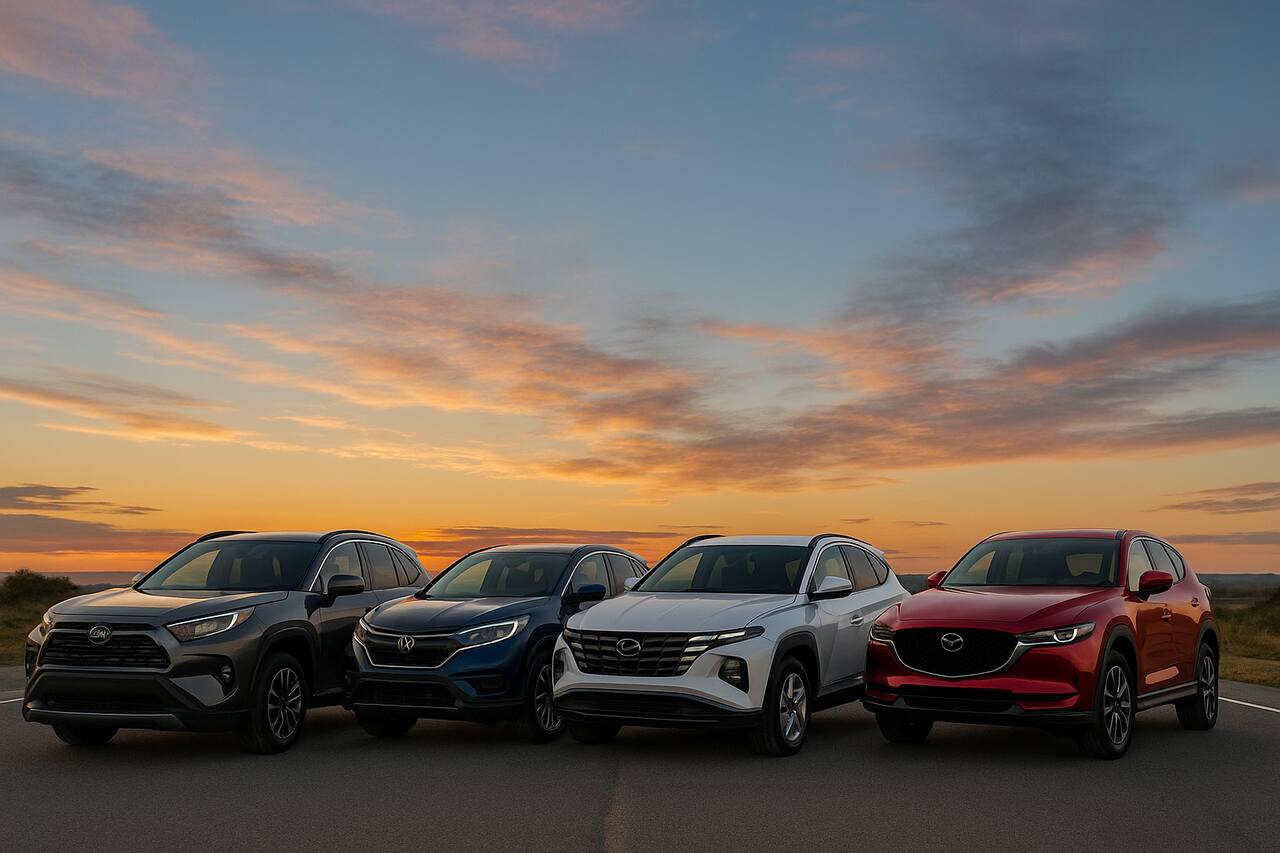

Medium SUVs have become the most balanced vehicle category for families and commuters who want practicality, comfort and fuel efficiency without stepping into the bulk and running cost of a full-size SUV. Their size makes them easier to maneuver in cities, while still offering strong highway stability for long-distance travel. The following guide examines what defines a medium SUV, how popular models compare, and how to select the one that best fits your lifestyle, budget and driving conditions.
Choosing the right medium SUV in 2025 requires more than comparing prices or fuel numbers. The category has expanded to include hybrid and plug-in options, advanced safety systems, adaptable cargo layouts and AWD variants tailored for different climates. Families, commuters and long-distance travelers often see medium SUVs as the “sweet spot” between compact agility and full-size capability. This guide evaluates four top choices and explains how to match their features with everyday driving needs, weekend trips, budget considerations and long-term ownership costs.
Define the Characteristics of a Medium SUV Before Choosing a Model
Medium SUVs offer the ideal combination of cabin room, power, and handling, making them particularly appealing to families and anyone upgrading from a compact crossover. Their seating configuration, suspension tuning and wheelbase length create a comfortable ride with added stability on highways. Buyers often gravitate toward this class because it delivers more versatility without compromising day-to-day maneuverability.
Most medium SUVs carry two rows of seats, though some offer optional smaller third rows for occasional use. Cargo areas generally expand significantly when the second row folds flat, a key advantage over compact SUVs. Dimensions usually fall between 4.6 and 4.9 meters long, with ground clearance that performs well on rough roads or snow. This balance serves drivers who need more space than a compact trucklet without dealing with the parking challenges of a full-size SUV.
Driving environments influence the appeal of medium SUVs. Urban drivers benefit from the elevated seating position and responsive turning radius, while suburban and rural drivers appreciate the stronger towing capability and smoother long-range comfort compared with compact models. Full-size SUVs may add extra seats, but they often introduce higher fuel consumption, higher insurance costs and limited agility. Medium SUVs strike a more efficient middle ground.
Compare Cabin Size, Seating and Cargo Flexibility Across SUV Classes
Medium SUVs usually seat five comfortably, while compact models may feel tight for taller occupants or families with multiple child seats. In contrast, full-size SUVs extend cabin width and legroom but are more challenging to park and maneuver in tight streets. Most medium SUVs offer more adaptable cargo layouts, including split-fold second rows, sliding seats and large rear openings.
Compact SUVs typically provide luggage space around 400–500 liters, medium SUVs push closer to 550–800 liters, and full-size SUVs can exceed 900 liters or offer three usable rows. Medium SUVs hit a useful midpoint, delivering enough volume for strollers, sports gear and grocery hauls without committing to a larger footprint.
Fuel economy also aligns with size differences. Compact SUVs lead in efficiency, but modern medium SUVs especially hybrids narrow the gap significantly. Full-size SUVs often use larger engines for towing or three-row hauling, driving up fuel consumption. Buyers comparing categories should weigh space needs against the cost and practicality of moving up in size.
Choose a Medium SUV When Balancing Space, Comfort and Efficiency
Medium SUVs work best for households needing flexibility. Families of four often find the balance ideal: enough room for kids and luggage, plus strong safety systems and comfortable ride quality. Drivers who enjoy road trips benefit from the longer wheelbase stability and quieter cabins compared with compact SUVs.
Shoppers also choose medium SUVs when they want improved towing capability for small trailers, boats or camping gear. They outperform compact alternatives but avoid the heavier handling of full-size platforms. Buyers who rarely carry seven passengers may prefer a roomy two-row layout with larger cargo space instead of a tight third row that sees little use.
Medium SUVs also offer better long-term cost predictability. They typically hold resale value well, especially hybrid variants, and maintenance costs remain manageable because their parts and tire sizes stay within mid-range segments. For most everyday uses, they provide the most lifestyle versatility.
Evaluate the Top 4 Medium SUVs Offering Value and Comfort in 2025
The following four models consistently deliver strong scores in comfort, economy, reliability and features. They suit different types of drivers, but all share a refined driving experience and efficient space utilization. They also offer various powertrains, from petrol to hybrid and plug-in hybrid options.
These models stand out due to smooth ride quality, cargo versatility, advanced driver-assist systems, and strong reliability records. Some focus on performance and handling, while others excel in hybrid efficiency or rugged AWD capability. Price brackets differ, but all deliver excellent overall value.
Regional availability may affect which versions you find at dealerships. Some trim lines or hybrid configurations launch earlier in North America, Europe or Asia. However, the overall strengths and recommended use cases remain consistent globally.
Identify the Strengths and Ideal Use Cases of Each Recommended SUV
Each of the following SUVs performs well, but they excel in different scenarios:
1. Toyota RAV4 (Hybrid and Standard)
The RAV4 delivers outstanding fuel economy, durability and resale strength. The hybrid variant suits city commuters who want low running costs and quiet operation. Its cargo volume and interior ergonomics make it an excellent family choice. The standard AWD delivers strong traction on slippery roads.
2. Honda CR-V (Hybrid and Turbocharged)
The CR-V remains one of the most comfortable medium SUVs. Its rear legroom and flexible cargo space set benchmarks in its category. The hybrid version is smooth and efficient, ideal for mixed urban–highway use. Families seeking long-term reliability and predictable maintenance often choose it first.
3. Mazda CX-5 or CX-50 (depending on region)
Mazda’s medium SUV options focus on premium interior feel and engaging driving dynamics. These models suit drivers who want a sporty ride, upscale cabin materials and refined design. They offer a range of engines, including efficient four-cylinders. The suspension tuning provides excellent composure during long trips or curvy roads.
4. Hyundai Tucson (Hybrid and Plug-in Hybrid)
The Tucson excels with its modern cabin technology, practical layout and extensive safety features. The hybrid and plug-in hybrid variants deliver strong acceleration and excellent fuel economy. Buyers who prioritize advanced infotainment, generous warranties and modern styling will find this model especially appealing.
Compare Comfort, Practicality, Fuel Economy and Price Among the Top 4
| Category | RAV4 | CR-V | CX-5 / CX-50 | Tucson |
|---|---|---|---|---|
| Comfort | Strong seat comfort, quiet hybrid | Excellent cabin space | Premium feel, sporty ride | Soft, tech-focused interior |
| Practicality | Excellent cargo layout | Best rear legroom | Slightly smaller cargo area | Very versatile cabin |
| Fuel Economy | Hybrid is segment leader | Hybrid highly efficient | Efficient but not class-leading | Hybrid and PHEV very efficient |
| Price Range | Mid-range | Mid-range | Slightly premium | Wide range & strong value |
Fuel savings differ depending on daily driving routes. For city-heavy driving, Toyota and Honda hybrids shine, while Mazda delivers more driving enjoyment at the expense of a few kilometers per liter. Tucson’s plug-in hybrid version benefits short-distance commuters with at-home charging. Comfort levels also vary: Honda leads in passenger space, Mazda leads in premium feel, and Toyota excels in long-term durability.
Price differences reflect equipment levels and engine choices. Buyers should evaluate which trim delivers the best combination of safety, infotainment and driver-assist features for their budget.
Match Your Medium SUV Choice to Your Specific Driving Needs
Before selecting a model, outline where and how you drive most often. Daily commuters may value hybrid savings, while frequent travelers might prioritize seat comfort, highway stability and noise insulation. Families require versatile seating, simple child-seat installation and cargo adaptability.
Driving environment shapes the ideal feature set. Snowy regions benefit from AWD systems, hill-descent technology and higher ground clearance. Urban areas call for compact turning circles, parking-assist features and efficient engines. Occasional off-road enthusiasts may look for rugged body cladding and tow ratings suited to camping gear.
Trim levels add further differentiation. Some emphasize comfort with heated seats and panoramic roofs, while others focus on safety technology such as lane-keeping, adaptive cruise control and enhanced blind-spot detection. Matching these elements to your lifestyle ensures a more satisfying long-term experience.
Prioritize Key Features Based on Daily Use and Family Needs
Families with infants or toddlers should examine rear-door openings, seat-back angles and ISOFIX anchor accessibility. Long-legged teenagers require generous rear legroom, steering many buyers toward the CR-V. Dog owners may prefer cabin floors that sit low and fold flat, found in the RAV4 and Tucson.
AWD matters if you travel on wet, snowy or gravel roads regularly. In milder climates, front-wheel-drive models offer enough traction while cutting running costs. Infotainment systems also influence satisfaction; Mazda delivers premium simplicity, while Hyundai offers larger screens and digital features.
Safety remains a core consideration. Most medium SUVs now provide automatic emergency braking, lane departure alerts and adaptive cruise control as standard. Higher trims often add surround-view cameras and advanced lane-centering. Examine which features come standard rather than optional in each model.
Assess Long-Term Ownership Costs Before Making a Commitment
Fuel consumption, insurance, tire replacement and scheduled servicing all shape total ownership cost. Hybrid SUVs often reduce fuel expenditure significantly, particularly for city drivers. Plug-in hybrids can cut cost further if charged regularly, though they usually command higher purchase prices.
Resale value also plays a major role. Toyota and Honda hold exceptionally strong resale strength, while Hyundai and Mazda remain competitive with attractive warranty coverage. Buyers intending to keep a vehicle for more than eight years may prioritize low maintenance complexity, parts availability and engine longevity.
Climate and terrain influence wear. Warmer climates may accelerate tire and brake wear, while cold regions require winter tire investment. Urban drivers accumulate more brake wear due to stop-and-go traffic. Budgeting for these long-term factors prevents surprises and improves satisfaction over the vehicle’s lifespan.
Examine Hybrid and Plug-In Medium SUV Options Before Finalizing a Choice
Hybrid and plug-in hybrid technology has reshaped the medium SUV market. Buyers who traditionally leaned toward compact cars for fuel savings increasingly shift toward hybrid SUVs because they deliver similar efficiency with far more space. Hybrids also offer quiet operation, smooth power delivery and reduced emissions.
Plug-in hybrids raise the efficiency bar by allowing short trips on electric-only mode. Drivers who travel under 40–60 kilometers daily may rarely use the petrol engine. However, plug-in models often cost more upfront, and charging access should be considered.
Hybrid and plug-in SUVs share the same core benefits: lower running costs, better urban performance and improved resale value. They also fit well in countries with rising fuel prices or regions implementing stricter emissions standards.
Understand the Benefits and Trade-Offs of Hybrid and Plug-In Models
Hybrid medium SUVs generate strong fuel savings without needing external charging. They excel at balancing highway comfort and urban efficiency. Their powertrains also reduce engine strain during low-speed driving, extending engine life.
Plug-in hybrids offer even greater fuel reduction when charged consistently. They deliver instant torque and quieter operation, especially in city environments. However, they introduce heavier battery packs, which may slightly reduce cargo space. Upfront cost increases, and charging habits determine real-world savings.
Weather also impacts performance. Cold climates may reduce electric-only range in plug-in hybrids, though petrol backup remains available. Hot climates require efficient thermal management systems to protect the battery. Regular maintenance ensures longevity and efficiency.
Identify Who Benefits Most From Hybrid Medium SUVs
Drivers spending most time in urban traffic, short commutes or congested areas gain the most from hybrid or plug-in medium SUVs. Fuel savings quickly accumulate when regenerative braking activates frequently. Households able to charge at home benefit even more from plug-in hybrid options.
Long-distance travelers may still prefer hybrid over plug-in due to battery weight and simpler ownership. Hybrid SUVs demonstrate excellent fuel economy at steady speeds and do not rely on external charging infrastructure. Buyers planning to keep vehicles for many years appreciate the stability and proven reliability of hybrid systems.
Mixed-use drivers who combine city errands with weekly highway travel often find hybrids the best compromise. They deliver quiet operation during errands and smooth, efficient cruising during long trips.
Conduct Thorough Checks When Buying or Testing a Medium SUV
Before finalizing any purchase, inspect the vehicle carefully, test drive multiple trims, and compare financing options. Medium SUVs vary in cabin materials, powertrains and ride quality. Choosing the correct version ensures satisfaction for years.
During test drives, evaluate seat comfort, visibility, engine responsiveness and cabin noise. Check how easily the second row folds, whether the cargo floor is level and how the infotainment system integrates with your smartphone. These elements strongly influence the ownership experience.
For buyers considering used models, vehicle history becomes crucial. Service records, odometer accuracy and accident reports shape long-term reliability. Medium SUVs often retain value, so find well-maintained units to maximize quality for price.
Verify Paperwork, Service History and Mechanical Condition When Buying Used
A used medium SUV requires thorough documentation. Confirm that the service booklet shows consistent maintenance at appropriate intervals. Check the VIN against records to ensure authenticity. Examine the condition of the tires, brakes, fluids and suspension components.
Inspect electronics carefully. Ensure all infotainment functions work correctly, including Bluetooth, safety alerts, and camera systems. Medium SUVs rely heavily on electronic driver aids, so faults can be costly to repair.
Before purchasing, request a mechanical inspection from an independent professional. They can evaluate engine health, transmission behavior and chassis components. A small investment in inspection prevents expensive issues later.
Assess Dealer Reputation, Warranty Coverage and After-Sales Support
A trustworthy dealer provides transparent pricing, fair trade-in evaluations and clear information about warranties. Ask about extended warranty options, especially for hybrid systems or electronics. Review customer feedback to gauge reliability.
Availability of parts and service centers matters in regions outside the United States. Hyundai and Toyota often maintain extensive networks, ensuring easier access to replacement components. Mazda and Honda deliver consistent service quality, but coverage may vary depending on country.
Strong after-sales service can significantly enhance long-term satisfaction. Technicians trained in hybrid systems, genuine parts availability and timely maintenance scheduling all contribute to a smooth ownership experience.
Conclusion
Medium SUVs represent the most versatile and balanced vehicle category for families, professionals and commuters in 2025. They provide an ideal mix of comfort, interior space, fuel efficiency and driving stability. With hybrid and plug-in technology expanding, buyers now enjoy more economical choices without sacrificing capability. The Toyota RAV4, Honda CR-V, Mazda CX-5/CX-50 and Hyundai Tucson each excel in specific areas, offering options for drivers who value practicality, performance, premium feel or advanced technology. Understanding your driving habits, cargo needs, climate and long-term budget ensures you select the model that seamlessly supports your lifestyle for many years. For more informative articles related to Auto’s you can visit Auto Category of our Blog.
FAQ’s
A medium SUV typically sits between 4.6 and 4.9 meters long, offering a spacious two-row layout with optional third rows in some models. It provides more cargo room and stability than compact SUVs but avoids the bulk and high running costs of full-size vehicles.
It offers the best balance of maneuverability, interior comfort and cargo versatility. Families and commuters often prefer medium SUVs because they provide more space without the higher fuel use and parking challenges of larger models.
The Toyota RAV4 Hybrid and Honda CR-V Hybrid lead in fuel efficiency and comfort, while the Hyundai Tucson Hybrid/PHEV offers strong value and modern technology. Mazda’s CX-5 delivers premium comfort with a sportier drive.
Yes, especially for city or mixed driving. Hybrids reduce fuel consumption significantly, while plug-in models allow electric-only trips if charged consistently. They often provide quieter operation and higher resale value.
Confirm full-service history, inspect brakes, tires and suspension, validate the VIN, check electronics and request a professional mechanical inspection. These steps reduce the risk of hidden issues.
Hybrids reduce fuel expense, while petrol models may cost slightly more to operate. Toyota and Honda retain strong resale value, Hyundai offers generous warranties, and Mazda provides premium quality with reasonable long-term costs.
Yes. Most families find a two-row medium SUV offers ample cabin room and cargo flexibility. Optional third rows in some models can help with occasional extra passengers but often reduce cargo space.
AWD for harsh climates, advanced safety systems, intuitive infotainment, flexible cargo layouts and hybrid options for lower running costs. Comfort features such as heated seats and panoramic roofs improve long-distance driving.
