


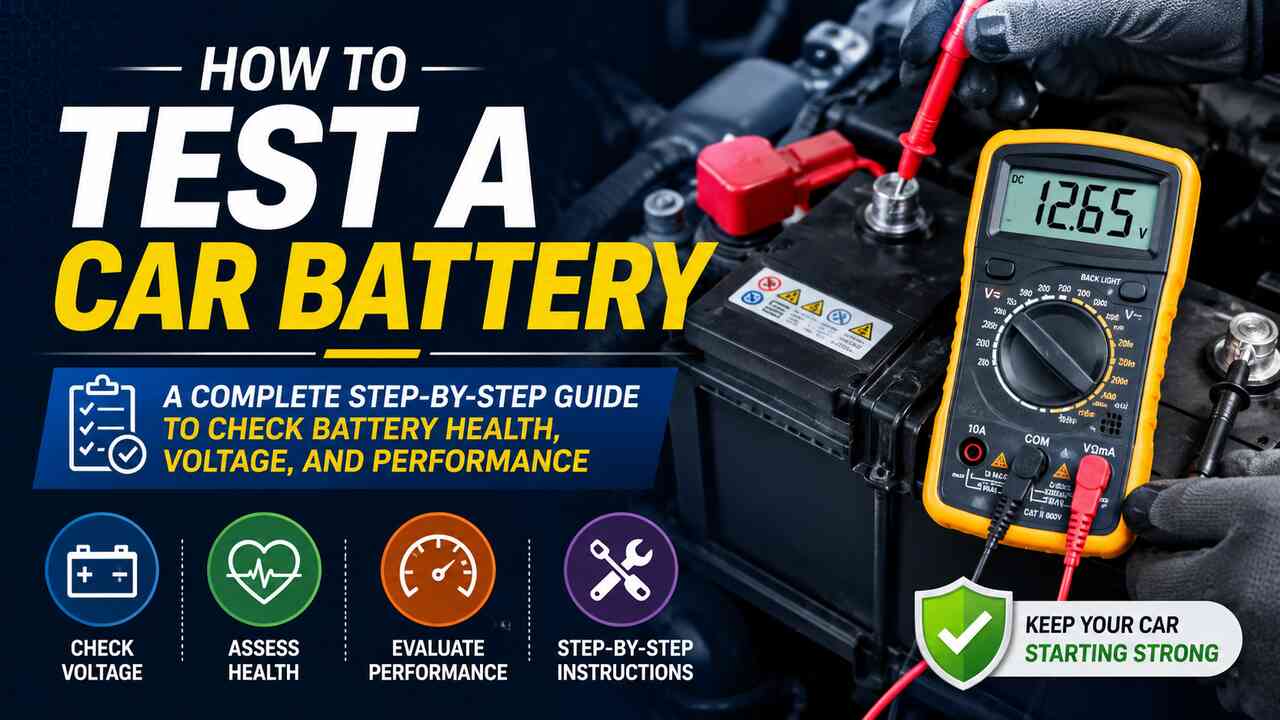


A healthy car battery is essential for starting your vehicle, powering electrical components, and supporting the charging system. Whether you drive a gasoline, diesel, or hybrid vehicle, knowing how to test a car battery helps you identify problems before they leave you stranded. A weak battery can cause slow engine cranking, dim headlights, malfunctioning electronics, and unexpected breakdowns.
Testing a car battery is a straightforward process that can be completed with basic tools such as a digital multimeter or a battery tester. By checking voltage, inspecting the battery terminals, performing a load test, and verifying the alternator’s charging performance, you can accurately determine whether the battery is healthy, needs charging, or should be replaced. This guide explains every step in detail, provides practical tips, compares different testing methods, and answers common questions to help you confidently evaluate your vehicle’s battery.
Gather the Required Tools Before Testing
Before testing a car battery, collect the proper tools to ensure accurate results and safe handling. Using the right equipment prevents incorrect readings and reduces the risk of damaging electrical components.
The most commonly used tools include a digital multimeter, battery load tester, battery terminal cleaning brush, safety gloves, and eye protection. A flashlight is also useful if you are working in low-light conditions. Many automotive parts stores also rent or provide battery testing equipment if you do not own one.
Choose the testing method based on your goal. A multimeter measures battery voltage, while a dedicated battery tester evaluates both voltage and starting capacity. If your battery has repeatedly failed to start the engine, combining multiple tests provides the most reliable assessment.
| Tool | Purpose | Recommended Use |
|---|---|---|
| Digital Multimeter | Measures battery voltage | Routine battery inspection |
| Battery Load Tester | Tests battery under load | Diagnosing weak batteries |
| Battery Terminal Brush | Cleans corrosion | Before testing |
| Safety Gloves | Protects hands | During inspection |
| Safety Glasses | Protects eyes | When handling batteries |
Inspect the Battery for Visible Damage
Begin by examining the battery before connecting any testing equipment. A visual inspection often reveals problems that affect battery performance even when voltage appears normal.
Look for cracked battery cases, leaking electrolyte, swollen sides, loose terminals, damaged cables, broken hold-down brackets, or excessive corrosion around the battery posts. White, blue, or green deposits on the terminals indicate corrosion that increases electrical resistance and reduces starting power.
Inspect the battery label for its manufacturing date. Most automotive batteries last between three and five years under normal driving conditions. Batteries exposed to extreme heat, freezing temperatures, or frequent short trips may have a shorter lifespan even if they appear physically intact.
Clean the Battery Terminals Before Measuring Voltage
Dirty or corroded terminals can produce inaccurate voltage readings and reduce charging efficiency. Cleaning the battery terminals before testing improves electrical contact and provides more reliable measurements.
Disconnect the negative terminal first, followed by the positive terminal if cleaning is necessary. Remove corrosion using a battery terminal brush or a mixture of baking soda and water. Dry the terminals completely before reconnecting them.
Once cleaned, reconnect the positive terminal first and then the negative terminal. Ensure both clamps fit tightly without movement. Loose connections can create symptoms similar to a failing battery.
Measure Battery Voltage with a Digital Multimeter
A digital multimeter provides one of the easiest and most accurate methods for checking battery condition.
Turn off the engine and all electrical accessories. Set the multimeter to DC voltage and select the 20-volt range if the meter is not auto-ranging. Place the red probe on the positive terminal and the black probe on the negative terminal.
Read the displayed voltage after a few seconds. Compare your measurement with the standard voltage ranges below.
| Battery Voltage | Battery Condition |
| 12.6 to 12.8 volts | Fully charged |
| 12.4 volts | About 75% charged |
| 12.2 volts | About 50% charged |
| 12.0 volts | About 25% charged |
| Below 12.0 volts | Discharged or failing |
| Below 11.8 volts | Likely damaged or deeply discharged |
A fully charged battery should normally read approximately 12.6 volts after resting for several hours. If the battery was recently charged or the engine was recently running, allow it to rest before taking measurements for greater accuracy.
Perform a Cranking Voltage Test
Testing voltage while starting the engine provides valuable information about battery strength under real operating conditions.
Keep the multimeter connected to the battery terminals while another person starts the engine. Watch the voltage as the starter motor turns the engine.
A healthy battery usually remains above 9.6 volts during cranking. If voltage drops significantly below this level, the battery may have insufficient capacity even if it appears fully charged.
Cold weather naturally increases battery load, so slightly lower readings may occur during winter. However, repeated low cranking voltage generally indicates battery deterioration.
Use a Battery Load Tester for a More Accurate Evaluation
A battery load tester measures the battery’s ability to deliver current under heavy demand. This method provides a better picture of battery health than voltage testing alone.
Connect the tester according to the manufacturer’s instructions. Apply the specified load for several seconds while observing the voltage reading.
A healthy battery maintains sufficient voltage throughout the load test. If voltage rapidly falls below acceptable levels, internal battery damage or reduced capacity is likely present. Professional repair shops frequently rely on electronic conductance testers because they provide fast and accurate diagnostic results without placing excessive stress on the battery.
Test the Alternator Charging System
A battery may appear weak because the alternator is not charging it properly. Testing the charging system helps determine whether the battery or charging system is responsible for the problem.
Start the engine and measure battery voltage again with the multimeter connected. A properly functioning alternator generally produces between 13.8 and 14.7 volts.
Switch on headlights, air conditioning, and the rear defroster to increase electrical load. The charging voltage should remain within the normal operating range. Readings below 13.5 volts or above 15 volts may indicate alternator, voltage regulator, or charging system issues.
Evaluate Battery Performance During Everyday Driving
Battery condition is influenced by driving habits as much as laboratory testing. Monitoring everyday performance helps identify gradual battery deterioration.
Pay attention to slow engine cranking, flickering interior lights, delayed power window operation, warning lights on the dashboard, or electronic accessories that behave inconsistently. These symptoms often develop before complete battery failure.
Frequent short trips prevent the alternator from fully recharging the battery. Vehicles that sit unused for extended periods also experience gradual battery discharge. Using a battery maintainer during long storage periods helps preserve battery life.
Interpret Common Battery Test Results
Understanding the meaning of test results allows you to choose the correct solution rather than replacing parts unnecessarily.
If the battery voltage is low but rises after charging, the battery may simply require a full recharge. If voltage quickly falls again after charging, internal sulfation or worn battery plates are likely reducing capacity.
A battery that repeatedly passes voltage tests but fails load tests generally has reduced reserve capacity. Conversely, a battery with normal load test results but low charging voltage often indicates an alternator or charging system fault rather than battery failure.
Extend Car Battery Life Through Proper Maintenance
Routine maintenance helps maximize battery lifespan and improve vehicle reliability.
Keep battery terminals clean, tighten cable connections regularly, avoid leaving headlights or interior lights on, and drive long enough for the alternator to recharge the battery. If your vehicle remains parked for weeks at a time, connect a smart battery maintainer to prevent deep discharge.
Extreme temperatures accelerate battery aging. During hot summers, park in shaded areas whenever possible. During winter, ensure the battery remains fully charged because cold temperatures reduce available starting power.
Decide Whether to Recharge or Replace the Battery
Testing results help determine whether charging or replacement is the better option.
Recharge the battery if it has simply become discharged due to infrequent driving, leaving accessories on, or recent storage. A quality battery charger can restore normal performance if the battery remains structurally healthy.
Replace the battery if it repeatedly loses charge, fails load testing, shows physical damage, leaks electrolyte, develops swollen sides, or exceeds its expected service life. Replacing a deteriorated battery before complete failure reduces the risk of unexpected breakdowns and protects sensitive electronic systems.
Common Mistakes to Avoid When Testing a Car Battery
Many inaccurate battery diagnoses result from simple testing mistakes rather than defective equipment.
Avoid testing immediately after driving because the battery may display a temporary surface charge that produces misleading voltage readings. Allow the battery to rest before testing whenever possible.
Never reverse the multimeter probes, ignore corroded terminals, or perform tests with loose battery connections. Ensure the multimeter is set to DC voltage rather than AC voltage. Following proper procedures produces consistent and dependable results.
Conclusion
Knowing how to test a car battery is an essential skill for every vehicle owner. By inspecting the battery, cleaning the terminals, measuring voltage with a digital multimeter, performing a cranking test, using a load tester, and verifying alternator output, you can accurately determine the condition of your battery and charging system. Regular testing helps prevent unexpected breakdowns, improves vehicle reliability, and allows you to address minor battery issues before they become costly repairs. With routine maintenance and proper testing techniques, you can extend battery life and ensure dependable engine starts throughout the year.
FAQ’s
1. What voltage should a healthy car battery have?
A fully charged car battery should typically measure between 12.6 and 12.8 volts with the engine turned off.
2. Can a car battery test good but still fail?
Yes. A battery may show normal voltage but have poor reserve capacity. A load test or conductance test can identify this type of failure.
3. How often should I test my car battery?
Testing every six months is recommended. Additional testing before winter and summer is beneficial because extreme temperatures place additional stress on the battery.
4. Can I test a car battery without removing it?
Yes. Most battery tests, including voltage, cranking, load, and charging system tests, can be performed while the battery remains installed in the vehicle.
5. How long does a typical car battery last?
Most automotive batteries last between three and five years, although climate, driving habits, maintenance, and charging conditions significantly influence lifespan.
6. Does a low battery voltage always mean the battery needs replacement?
No. Low voltage may simply indicate the battery requires charging. If the battery cannot maintain its charge after recharging or repeatedly fails testing, replacement is usually the best solution.


