

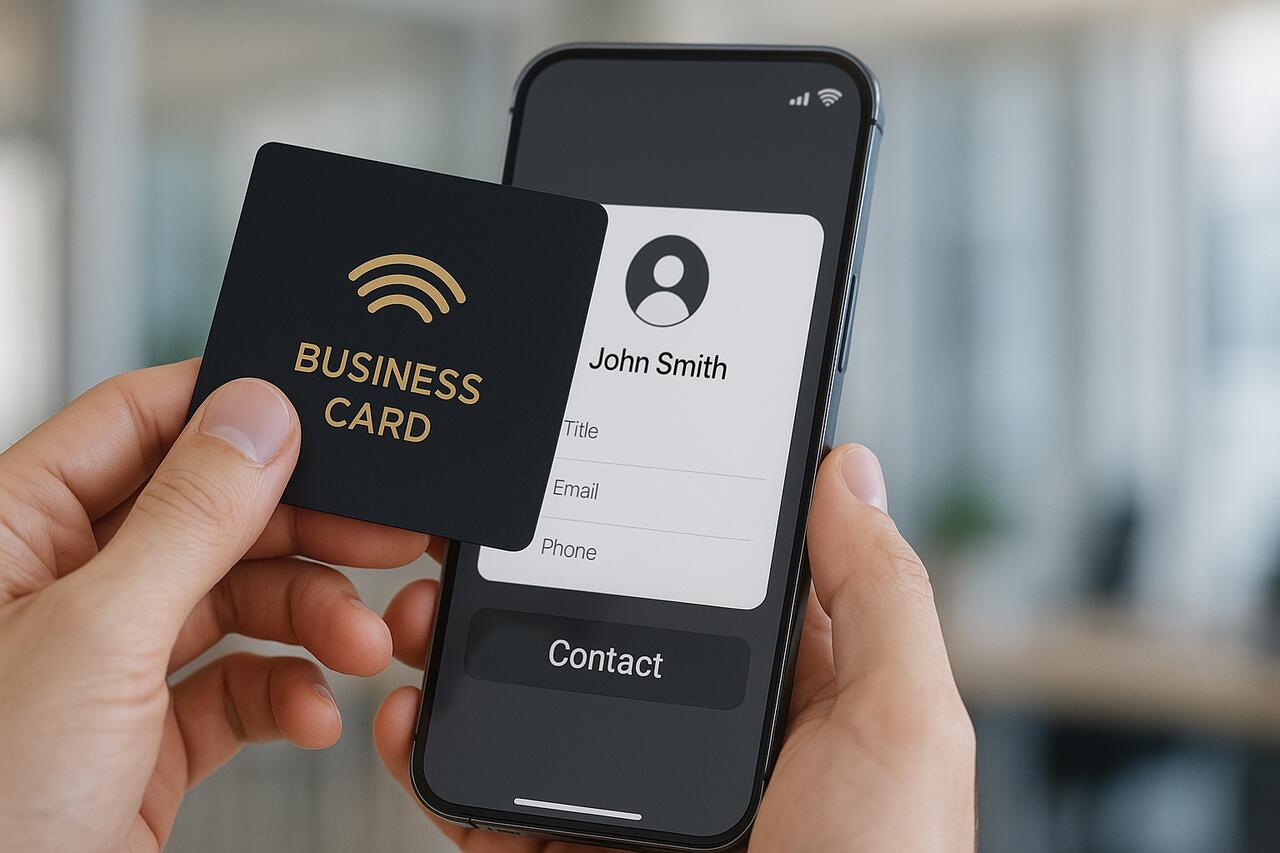

NFC business cards have become essential tools for professionals who want faster, cleaner, and more memorable networking experiences. These cards use tap-to-share technology to send a digital profile directly to someone’s smartphone, eliminating the need to carry stacks of paper cards or worry about outdated contact details. As more industries shift toward digital-first communication, selecting the right NFC business card can influence how effectively you build connections, maintain brand presence, and streamline follow-ups. This guide helps you understand how these smart cards work, the features that matter most, and the best options available in 2026.
Understand How NFC Business Cards Work
NFC business cards function by storing a smart chip inside a physical card, and when someone taps the card to a compatible smartphone, it instantly opens a digital contact profile. This removes the friction of manually typing emails or phone numbers and gives recipients a smooth, modern interaction in just a second. The process is fully contactless, making it ideal for events, meetings, and quick introductions where efficiency matters.
Inside every card is an NFC chip that carries a small amount of data, usually a link to your digital profile. These chips can include variations like NTAG213, NTAG215, or NTAG216, each offering different storage sizes and performance levels. The card also links to a digital dashboard where you manage your profile, customize the landing page, add multimedia, and update your details at any time. Many providers also include security layers to protect your profile from unauthorized edits.
This tap-based approach delivers a consistent experience regardless of where you are networking. Since NFC is universally recognized by modern smartphones, most recipients can interact with your card instantly. When a device lacks NFC scanning capabilities, a printed QR code backup ensures the card still works across all situations.
Compare NFC Business Cards With Traditional Paper Cards
Choosing NFC business cards over standard paper cards gives you a more efficient and sustainable way to share professional information. Instead of handing out dozens of cards that may get lost or thrown away, you carry a single smart card that updates constantly and lasts for years. This reduces clutter and gives each interaction a high-tech feel, strengthening your overall presentation.
Key advantages include the ability to update contact details without reordering new cards, better durability from materials like PVC, metal, or bamboo, and the option to showcase richer information such as videos, portfolios, or social links. NFC cards also support analytics, allowing you to track views, taps, and profile visits depending on the provider. With a paper card, you have no visibility into who engaged with your information or when.
Although these cards are highly convenient, there are trade-offs to consider. Some older phones may not support NFC reading, and certain metal cards require a QR backup due to potential interference with scanning. You must also remember to carry the physical card, even though you only need one. For high-volume events, some users still choose to complement NFC cards with a few printed alternatives.
Evaluate Key Features Before Buying an NFC Business Card
When selecting the best NFC business card, focus first on material, chip quality, customization, and the provider’s platform capabilities. These elements shape durability, brand impression, and long-term usefulness. A well-built card should feel professional, resist wear, and offer consistent tap performance across devices.
Card materials vary widely. PVC cards are affordable and lightweight, suitable for everyday use. Metal cards deliver premium aesthetics and durability but may reduce NFC read range. Bamboo cards offer a balanced mix of eco-friendliness and unique texture. The internal NFC chip should support fast scanning and broad compatibility, with NTAG21x chips being the most common choices for reliable performance.
Branding options matter too. Look for providers that offer full-surface printing, laser engraving, or custom color palettes. The digital platform should support instant updates to your profile, multimedia uploads, link management, and lead-capture tools. Providers that offer shipping guarantees, customer support, and sustainability certifications ensure you get lasting value from your purchase.
Compare Top NFC Business Card Options for 2026
Choosing the right NFC card often depends on your priorities such as budget, design quality, material preference, or platform features. Some brands focus on high-end customization while others prioritize affordability or simplicity. Understanding these trade-offs helps you make an informed decision.
Budget-friendly cards typically use PVC and come with limited customization, but they still deliver dependable tap-to-share features. Premium providers offer metal or bamboo cards, strong branding options, and advanced platforms with analytics and CRM integrations. For most professionals, the best value lies in mid-range cards that balance durability with customization and profile management.
Below is a comparison table summarizing popular NFC business card providers in 2026:
Table 1 – Comparison of Leading NFC Business Card Providers
| Provider | Material Options | Platform Features | Ideal For | Price Range |
|---|---|---|---|---|
| V1CE | PVC, Metal, Bamboo | Custom profiles, analytics, team plans | Corporate teams, executives | Mid to high |
| Popl | PVC, Metal | Robust app, CRM integrations | Sales teams, creators | Mid |
| HiHello | Digital-first, optional NFC cards | Digital profile suite, QR backup | Remote workers, freelancers | Low to mid |
| Dot Cards | PVC, Metal | Simple UI, minimalistic design | General users | Low |
| Wave | PVC, Metal | Custom design tools, fast setup | Small businesses | Low to mid |
| Tapt | PVC | Quick sharing, straightforward profiles | Budget users | Low |
Each brand excels in different categories. V1CE and Popl stand out with strong customization and enterprise-level functionality, while Dot and Tapt cater to users seeking basic features at a lower cost. Bamboo offerings from V1CE distinguish themselves for users prioritizing sustainability.
Choose the Right NFC Business Card for Your Profession
Selecting the best NFC card depends heavily on your industry and networking style. Freelancers often benefit from cards that allow multimedia portfolios and creative layouts. Sales professionals need strong analytics, lead capture, and CRM integrations to track client interactions. Creative professionals may prefer metal or bamboo cards that deliver memorable first impressions through distinct design.
Corporate professionals may require team-based features, multi-profile management, or compliance-friendly data handling. In large organizations, uniform branding and the ability to manage employee profiles centrally become crucial. Some providers offer administrative dashboards that allow businesses to update staff profiles without distributing new cards.
Metal cards are worth considering when brand positioning is a priority. Their weight, finish, and durability lend authority to your introduction. However, they may need a strong QR backup due to occasional NFC interference. Standard PVC cards are ideal for users who prioritize affordability and lightweight portability, especially at large events.
Compare NFC Cards With QR-Code or Fully Digital Alternatives
NFC cards are popular, but they are not the only digital networking tool available. QR-code business cards are often cheaper and work on all smartphones with cameras. Fully digital business cards, managed through apps, remove the need to carry a physical card altogether.
QR cards are useful when you need broad compatibility and want recipients to scan without tapping. They work well in fast-moving environments like conferences. However, they lack the premium feel of NFC interactions and require visible codes, which may limit design options.
Fully digital cards are convenient for remote or virtual interactions. They work well for users who rarely meet contacts in person. The downside is they lack the tactile, memorable experience of handing someone a card. NFC cards strike a balance by offering both physical presence and digital convenience.
Table 2 – NFC vs QR vs Digital Business Cards
| Feature | NFC Card | QR-Code Card | Fully Digital Card |
|---|---|---|---|
| Physical Interaction | Yes | Yes | No |
| Tap-to-Share | Yes | No | No |
| Device Compatibility | High (modern smartphones) | Universal | Universal |
| Updateable | Yes | Yes | Yes |
| Cost | Low to high | Very low | Low |
| Best Use Case | In-person networking | High-volume events | Remote meetings |
Implement Smart Networking Techniques With NFC Business Cards
To get the most value from an NFC business card, focus on clear design, fast interactions, and timely follow-ups. Your digital profile should present essential information without overwhelming the recipient. Placing your name, title, contact details, and key links at the top ensures clarity the moment your profile opens.
Strong design choices help your card stand out. Ensure your physical card reflects your brand colors, includes your logo, and uses durable materials to maintain long-term appearance. Some platforms allow you to embed videos, portfolios, or product demos directly into your digital card for deeper engagement.
Analytics tools offered by some providers help you evaluate the effectiveness of your networking. Tracking taps, views, and link clicks can reveal which events or interactions generate the most leads. You can use this data to refine your strategy, optimize follow-ups, and improve how you present your profile at future meetings.
Conclusion
NFC business cards have become one of the most valuable tools for professional networking in 2026. Their ability to share information instantly, update digitally, and create meaningful first impressions makes them superior to traditional paper cards in most contexts. Whether you are a freelancer, executive, salesperson, or creative, the right NFC card can amplify your presence and simplify your follow-ups. By choosing the right material, platform, and features, you can ensure each introduction is memorable, efficient, and aligned with the modern expectations of digital-first communication. For more informative articles related to Business’s you can visit Business Category of our Blog.
FAQ’s
Most modern smartphones support NFC, including nearly all Android devices and newer iPhones. Older models may rely on QR backup.
Yes. Most providers allow you to update your digital profile instantly through their dashboard, with no need to replace the physical card.
Metal cards offer a premium appearance and enhanced durability, making them ideal for executives or brand-focused professionals. They may require QR backup due to occasional read limitations.
They can be, depending on the provider’s platform security, encryption, and access controls. The card itself stores only a simple link, not your personal data.
Compared to printing hundreds of paper cards each year, using a single reusable NFC card significantly reduces waste, especially when choosing bamboo or recycled materials.
Your profile remains safe because the card contains only a link. You can deactivate the link or remove the card from your dashboard if needed.
Yes. NFC works globally, and most providers ship internationally. Some regions may have longer shipping times.
