


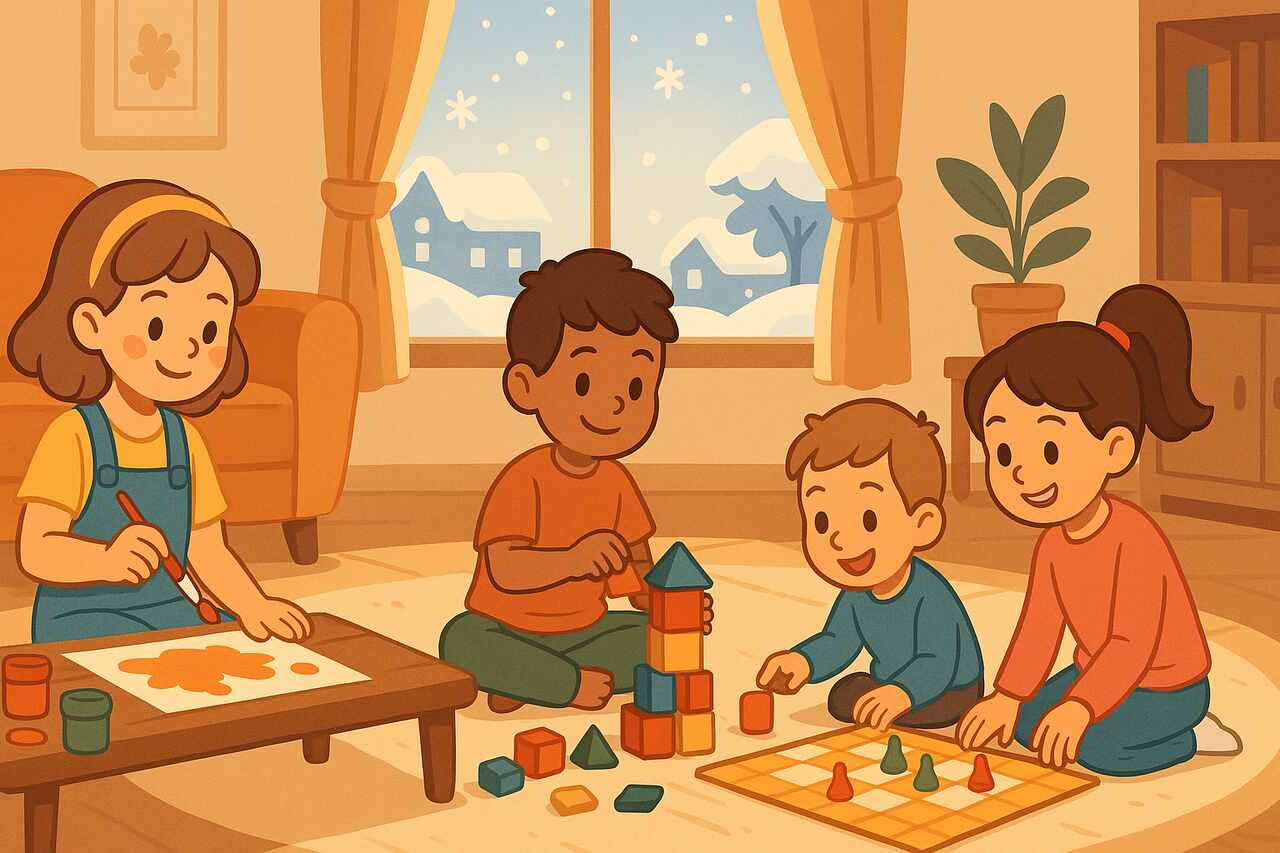


Winter brings shorter days, colder temperatures, and plenty of time spent indoors, which often leaves parents searching for creative ways to keep children active, engaged, and happy. Finding meaningful activities that combine fun with learning helps turn long winter days into opportunities for development and connection. This guide provides a complete set of indoor ideas, step-by-step instructions, helpful variations, and ways to adapt the activities for different ages and interests.
Set Up a Creative Arts Station
A dedicated arts station gives kids a focused area to express their imagination while staying productively occupied. Creating this space allows them to explore new materials, practice fine motor skills, and develop confidence in their creative choices. The station can be large or small depending on your space, but the key is to make it inviting and easy to access.
Gathering the right supplies helps children move seamlessly from one artistic idea to the next. Stock the area with crayons, colored pencils, washable paints, stamps, glue sticks, safety scissors, and recycled craft materials. Organizing these items in bins or trays helps kids learn responsibility while encouraging independence during craft time.
Over time, the arts station becomes more than a place to color. It evolves into a supportive environment where kids learn to make decisions, follow visual patterns, and experiment with new techniques. It also creates opportunities for conversations about color, texture, and storytelling, strengthening communication skills naturally.
Choose Simple and Safe Materials
Affordable, safe, and easy-to-clean materials keep the art experience stress-free. Washable paints, blunt scissors, and non-toxic crayons allow younger children to enjoy creative freedom without constant supervision. Choosing sturdy paper prevents tearing and frustration, helping build a successful crafting experience.
Include Inspiring Reference Items
Placing finished examples or color booklets in the station offers children visual encouragement. Kids often feel more confident starting a project when they can see similar ideas, such as painted rocks, paper chains, or mosaic patterns. These small references inspire creativity without limiting originality.
Build an Indoor Obstacle Course
Designing an indoor obstacle course channels a child’s energy in a structured, exciting way. It is a perfect winter activity because it allows movement even when outdoor play is impossible. Children enjoy the sense of adventure, and parents appreciate the physical exercise it provides.
Start with soft objects such as pillows, sofa cushions, lightweight boxes, or tape pathways. These items can form tunnels, balance lines, jumping spots, and crawling spaces. Tailor the course to your child’s age and abilities to keep things engaging without being overwhelming.
Indoor obstacle courses encourage problem solving, motor coordination, and endurance. Kids learn to plan their next move, test boundaries safely, and celebrate personal achievements. This activity often becomes a family favorite because it can be reconfigured repeatedly and works well for group play.
Use Household Items for Easy Setup
Common items like laundry baskets, rolled towels, and chairs can be transformed into stepping points, hurdles, or tunnels. Using what you already have makes the activity budget-friendly while teaching children to reimagine everyday objects creatively.
Add Timed Challenges
Timed runs add excitement and motivate kids to go through the course multiple times. Recording times or setting goals like “finish in under one minute” gives children a sense of friendly competition. This creates a fun way to build resilience and improve coordination.
Create a Winter-Themed Sensory Bin
A sensory bin is a hands-on activity designed to stimulate a child’s senses through touch, sound, and visual exploration. During winter months, a seasonal bin introduces textures and objects associated with colder weather while promoting calm play and concentration.
Start with a large container and add materials such as cotton balls, faux snow, blue water beads, pom-poms, or smooth stones. For added depth, include scoops, cups, and small toys like miniature animals or figurines. These tools encourage sorting, pouring, and storytelling.
Sensory bins help kids develop hand strength, pattern recognition, and structured play habits. They also provide a peaceful environment for children who benefit from soothing, tactile experiences. Parents often enjoy the simplicity and versatility this activity offers.
Choose a Winter Color Palette
A combination of white, silver, and blue materials gives the bin a seasonal theme. Adding glittery pieces or translucent shapes enhances visual exploration. Children naturally gravitate toward the cool tones that evoke snow and ice, making the activity feel magical.
Rotate Objects to Keep It Fresh
Changing out a few items every week keeps the bin exciting. Swapping figurines, adding new scoops, or introducing different textures gives kids a reason to revisit the station regularly. This rotation supports ongoing curiosity and imaginative play.
Host a Family Game Tournament
Winter is the perfect time to turn family game nights into friendly tournaments. Games encourage decision-making, teamwork, and strategic thinking while bringing everyone together. A tournament format creates anticipation and boosts participation.
Choose a variety of board games, card games, and cooperative options that appeal to multiple ages. Mixing fast-paced games with longer strategy-based options allows everyone to shine. Simple scoring systems help keep track of winners across several rounds.
Family game tournaments strengthen communication and teamwork skills, offering a warm alternative to screen time. They also build family traditions and help children learn about cooperation, patience, and sportsmanship.
Select Age-Appropriate Games
Younger children benefit from games with simple rules and clear visuals, while older kids may enjoy strategy-based options. Choosing inclusive games ensures every family member feels involved and valued throughout the tournament.
Create Fun Awards or Certificates
Small certificates or handmade ribbons add a celebratory element to the event. Titles like “Best Teammate,” “Fastest Thinker,” or “Most Creative Player” highlight positive qualities beyond winning, reinforcing encouragement and kindness.
Start a DIY Science Exploration Corner
Creating a science corner turns your home into a mini lab where curiosity takes center stage. Kids naturally love experimenting, and winter provides extra time for hands-on projects that spark imagination and discovery.
Simple, household-based experiments introduce scientific thinking without requiring specialized tools. Baking soda reactions, sink-or-float tests, and magnet explorations help children observe cause and effect. Setting up a designated area keeps everything organized and safe.
A consistent science corner supports long-term curiosity and confidence. Kids learn to ask questions, predict outcomes, and interpret results. Over time, this fosters a deeper appreciation for problem solving and discovery.
Introduce Easy Experiments
Start with classic projects like vinegar-and-baking-soda fizzers, balloon inflations, or simple circuits with batteries and bulbs. These projects provide immediate excitement while teaching foundational concepts like reactions and energy flow.
Display Kids’ Observations
Encourage children to record or draw observations after each experiment. Posting results on the wall or putting them in a binder helps reinforce learning and builds pride in their work. This turns the corner into a growing archive of discoveries.
Create a Cozy Reading Nook
A reading nook offers a comfortable area where kids can relax, explore stories, and build literacy skills. Winter is an ideal time to prioritize reading because indoor downtime allows for longer periods of imaginative engagement.
Choose a quiet spot and add soft blankets, cushions, and good lighting. Add a basket of books that match your child’s interests, such as adventure stories, winter tales, mysteries, or picture books. A cozy atmosphere encourages kids to stay longer and read more.
Reading nooks help children improve vocabulary, comprehension, and focus. They also promote emotional calm, giving kids a restful break from active play. Over time, the nook becomes a special sanctuary for peaceful learning.
Rotate Seasonal Books
Adding winter-themed books or rotating titles monthly keeps the nook fresh and inviting. Introducing new stories nurtures curiosity and encourages kids to explore genres they may not typically select on their own.
Add Interactive Elements
Enhance the nook with bookmarks, story cubes, or themed cushions. Items like these spark conversations and motivate kids to engage more deeply with the books they read, creating a richer reading experience.
Bake Simple Winter Treats Together
Baking offers a hands-on way to entertain kids indoors while teaching practical life skills. When outdoor activities are limited, preparing winter treats provides warmth, delightful smells, and opportunities for family bonding.
Choose recipes that involve safe tasks for kids such as stirring, measuring, or decorating. Cookies, muffins, and easy breads are great starting points. Preparing ingredients in advance helps streamline the process and keeps children actively involved.
Baking supports math skills, patience, and following instructions. It also creates meaningful shared memories, as kids enjoy tasting the results of their hard work. Winter baking often becomes a cherished tradition that brings comfort and joy.
Start With Kid-Friendly Recipes
Recipes with few steps and simple ingredients are ideal for beginners. Sugar cookies, banana bread, and hot cocoa mix are easy, delicious options that guarantee quick success and confidence.
Encourage Creative Decorating
Allow kids to decorate treats using sprinkles, icing, or edible shapes. Creativity enhances the baking experience and gives each child a sense of ownership. Decorating also strengthens hand coordination and artistic expression.
Comparison Table: Activity Type and Benefits
| Activity | Movement Level | Creativity Level | Ideal Age Range | Indoor Space Needed |
|---|---|---|---|---|
| Arts Station | Low | High | 3–12 | Small |
| Obstacle Course | High | Medium | 4–10 | Medium to Large |
| Sensory Bin | Low | Medium | 2–7 | Small |
| Family Tournament | Medium | Medium | 4+ | Small |
| Science Corner | Low to Medium | High | 5–12 | Small |
| Reading Nook | Low | Medium | 2–12 | Small |
| Baking | Medium | High | 4–12 | Medium |
Winter Activity Preparation Checklist
| Preparation Task | Purpose |
|---|---|
| Organize materials ahead of time | Keeps activities flowing smoothly |
| Create designated activity zones | Helps children stay focused and reduces clutter |
| Rotate weekly themes | Prevents boredom and sparks new interest |
| Include both active and calm activities | Balances energy and improves family harmony |
Conclusion
Indoor winter days do not have to be boring or unproductive. With thoughtful planning and creative setups, families can fill their home with joy, learning, and meaningful connection. Whether through movement, art, reading, science, or baking, these activities bring out the best in children and help them grow in confidence and creativity. Embracing these ideas ensures your home becomes a warm, engaging space throughout the coldest months.
FAQ’s
Try movement-based activities like an indoor obstacle course, dance challenges, or simple relay races that encourage physical activity without requiring much space.
Select activities that match skill level and interest. Younger children enjoy sensory bins and crafts, while older kids often prefer games, science projects, and hands-on baking.
Rotate materials weekly, change themes, or introduce small variations. Even small updates can make an activity feel brand new.
Family game tournaments, baking projects, and art stations work well because kids can participate at their own skill levels.
Use trays, mats, and small storage bins to keep materials organized. Establish simple cleanup routines to make tidying a shared responsibility.


