

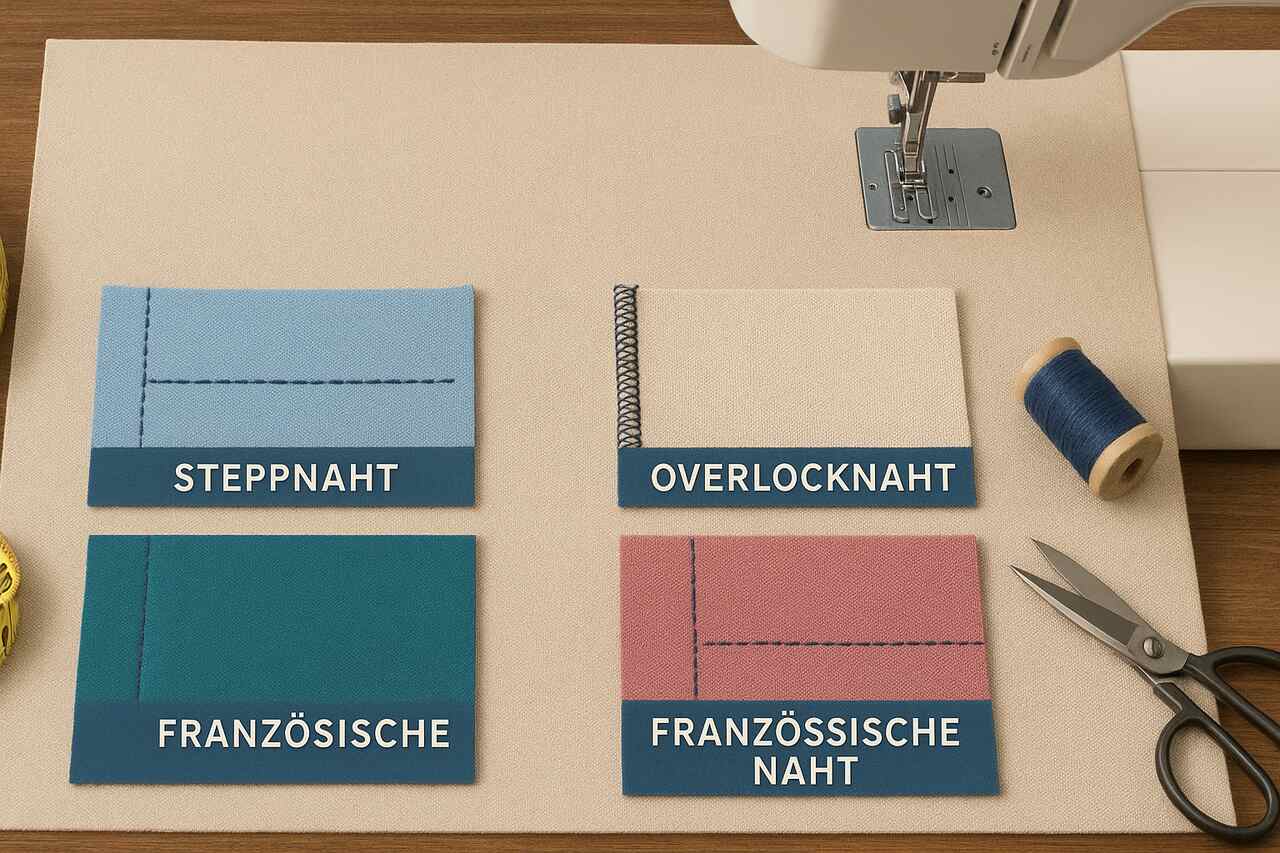

Every piece of clothing, from the simplest T-shirt to a tailored suit, owes its structure and strength to one fundamental element the seam. In textile construction, Nahttypen (German for types of seams) define how fabrics are joined, shaped, and finished. Choosing the right seam type isn’t merely a matter of appearance; it directly determines a garment’s durability, comfort, and professional finish.
Whether you’re a home sewer refining your technique, a fashion designer aiming for couture precision, or a textile engineer optimizing production quality, understanding Nahttypen means mastering the foundation of garment construction. Each seam type from the classic plain seam to the robust flat-felled seam or the versatile overlock seam responds differently to fabric behavior, tension, and function.
This guide explores seam types in depth: their structures, strengths, and ideal applications across woven, knit, and technical fabrics. You’ll learn how to choose the right seam for every project, avoid common construction errors, and even discover how new technologies such as smart textiles and bonded seams are reshaping the future of sewing.
By the end, you’ll not only recognize the main Nahttypen by name but also understand how each contributes to the art, science, and engineering of high-quality clothing.
What are Nahttypen and why do they matter?
“Nahttypen” is the German term for seam types the structural ways fabrics are joined in sewing. Every seam carries both a mechanical and an aesthetic role. Mechanically, it determines the strength and elasticity of a garment; visually, it shapes how polished or hidden the join appears. Understanding seam types is essential for every sewer, from beginners crafting home projects to textile engineers optimizing industrial production lines.
How does the term “Nahttypen” relate to seam and stitch types?
Although often used interchangeably, a seam (Naht) and a stitch (Stich) are not the same. A stitch is the single loop or interlacing of thread made by a sewing needle, while a seam is the cumulative line created when two or more fabrics are joined with stitches. Seam type therefore depends on:
- Stitch class (lockstitch, chain stitch, overlock, cover stitch)
- Number of fabric layers joined
- Direction of fold and finishing
- Purpose (functional vs decorative)
International standards such as ISO 4916 and DIN 61400 classify seam types into eight major categories, including superimposed, lapped, bound, and flat seams each optimized for different performance and appearance goals.
What roles do seam types play in garment construction and textile products?
Seam types affect the durability, fit, and comfort of garments. For example:
- A flat-felled seam reinforces jeans, preventing fraying and offering clean inner finishes.
- A French seam hides raw edges inside lightweight blouses.
- An overlock seam prevents stretch fabrics from unravelling while maintaining elasticity.
In upholstery, automotive interiors, and technical textiles, seam types even contribute to safety, airtightness, or abrasion resistance. Hence, the right seam is a design decision as critical as fabric choice itself.
How do you choose the right Nahttyp for your project?
Selecting the correct seam type begins with analysing fabric structure, garment purpose, and equipment capability.
A soft silk dress, for instance, needs enclosed seams to hide fraying, while a canvas bag requires reinforced seams to withstand tension. Matching the seam to the material’s behaviour avoids puckering, seam failure, or bulk.
Which factors influence seam type selection?
- Fabric type and weight – Light or transparent fabrics benefit from narrow, enclosed seams; heavy or thick fabrics demand robust, flat seams.
- Stretch behaviour – Knit fabrics require flexible seams like zigzag or overlock.
- Garment function – Outerwear, uniforms, or sportswear need strong, flat seams; couture clothing prioritises clean appearance.
- Seam visibility – Decorative top-stitching calls for visible, even seams; hidden seams need precision.
- Machine capacity – Industrial overlockers and cover-stitch machines handle operations home machines cannot.
What are common mistakes in seam choice and needle/stitch settings?
- Using a straight seam on stretchy knit → causes broken threads.
- Choosing too long or short a stitch length, leading to seam puckering or weakness.
- Neglecting proper needle type (ballpoint vs sharp) for the fabric.
- Applying excess seam allowance thicker fabrics may require trimming instead.
- Mixing incompatible thread weights (e.g., thick thread on fine silk).
A practical rule: test your seam on fabric scraps before starting the garment.
What are the most common Nahttypen used in sewing?
Understanding core seam constructions helps any sewer adapt techniques confidently across materials.
What is a plain seam and when is it used?
A plain seam (Geradstichnaht) is the foundation of all garment construction. Two fabric edges are placed right sides together and sewn with a straight stitch, typically with 1 – 1.5 cm seam allowance. It suits woven fabrics and is used in side seams, bodices, or sleeves.
Its simplicity, however, exposes raw edges. Hence, the plain seam is often finished using pinking shears, zigzag stitches, or serging to prevent fray.
What is a French seam and what fabrics suit it?
A French seam (Französische Naht) encloses the raw fabric edges inside a double seam. First, the fabric is sewn wrong sides together; then it’s turned and stitched again right sides together.
This results in a neat, enclosed finish ideal for lightweight, sheer fabrics like chiffon, voile, or organza.
Advantages:
- Perfectly clean interior look
- Prevents fraying without overlock
- Adds a delicate, couture touch
Limitation: Not suitable for thick fabrics due to bulk buildup.
What is a flat-felled seam and why is it strong?
The flat-felled seam (Kappnaht) is created by overlapping fabric edges, folding one inside the other, and top-stitching both layers down. This double-stitched construction provides exceptional strength and neatness on both sides.
Commonly found in jeans, workwear, and outdoor apparel, the flat-felled seam resists fraying, withstands heavy stress, and lies flat for comfort against the skin.
It is, however, more time-intensive and slightly less flexible than simpler seams.
What is an overlock seam and how is it advantageous for knits and industrial sewing?
An overlock seam (Overlocknaht) trims fabric edges while stitching and binding them simultaneously. Overlock machines (sergers) use multiple threads to loop around the fabric edge, producing a stretchable seam ideal for jersey and knitwear.
Advantages:
- Seams stretch with the fabric
- Fast and efficient for production
- Prevents fraying completely
In industrial settings, overlock seams dominate due to their speed, neatness, and economy.
What is a zigzag seam and when is it necessary?
The zigzag seam (Zickzacknaht) uses a zigzag stitch pattern that flexes with the fabric. It’s used for:
- Elastic seams on knits
- Edge finishing when no overlocker is available
- Attaching appliqués or lace
Its width and length are adjustable, making it a versatile seam for home sewing. While less polished than overlock, it’s a good compromise for versatility.
How do advanced or niche seam types broaden your sewing possibilities?
Beyond basics, specialized seams can add decorative value or technical performance.
What are decorative seams and functional seams (e.g., cap seams, paspel seams)?
- Paspel (piping) seams – Add a fabric-covered cord between layers for decoration or structure (used in cushions, tailored garments).
- Cap seams – Feature a raised ridge, offering strength and visual interest in outerwear.
- Lapped seams – Overlapping panels stitched down, common in leatherwork or sportswear.
- Bound seams – Enclose raw edges with bias binding, improving appearance and durability.
Each decorative seam can have functional reinforcement benefits, merging artistry with engineering.
How are seams applied in technical textiles, upholstery, or industrial sewing situations?
Technical fabrics (e.g., coated nylons, membranes, composites) often require special seams to maintain waterproofing or mechanical strength:
- Welded seams (heat or ultrasonic) – eliminate needle holes.
- Taped seams – seal waterproof garments like rain jackets.
- Top-stitched load seams – reinforce upholstery and seat covers.
- Chain-stitched seams – add flexibility for stress points.
In industrial sewing, seam selection aligns with machine automation, production speed, and compliance with quality standards (ISO 4916, ASTM D1683).
Where can you learn and practise Nahttypen?
Mastering seam types combines theoretical understanding with hands-on repetition.
What sewing machines and attachments support different seam types?
| Seam Type | Best Machine | Typical Attachments |
|---|---|---|
| Plain/French | Standard lockstitch | Straight-stitch foot, edge guide |
| Flat-felled | Lockstitch/industrial | Flat-felled foot, twin needle |
| Overlock | Overlocker (serger) | 3-/4-thread overlock foot |
| Zigzag | Domestic sewing machine | Zigzag foot |
| Bound/Piping | Lockstitch | Binder or piping foot |
Special attachments such as hem guides or compensating feet help maintain precision and consistency.
Which books, online courses or workshops focus on seam mastery?
Resources for in-depth seam training include:
- “The Complete Guide to Sewing” (Reader’s Digest) – foundational seam encyclopedia.
- “Professional Sewing Techniques for Designers” – university-level reference.
- Online platforms like Craftsy, Fashion Makery, and Skillshare feature visual tutorials.
- In-person courses through fashion schools or community colleges build tactile understanding.
What are the pros and cons of different Nahttypen?
| Seam Type | Durability | Elasticity | Appearance | Skill Level | Typical Use |
|---|---|---|---|---|---|
| Plain seam | Medium | Low | Basic | Beginner | General garments |
| French seam | Medium | Low | Very neat | Intermediate | Sheer fabrics |
| Flat-felled | Very high | Low | Professional | Intermediate | Jeans, uniforms |
| Overlock | High | High | Clean edge | Beginner – Intermediate | Knitwear |
| Zigzag | Moderate | Moderate | Functional | Beginner | Stretch & finishing |
| Piping/Bound | High | Low | Decorative | Advanced | Couture, upholstery |
How much does professional seam selection cost?
Professional seam selection and execution can vary widely in cost, depending on the complexity of the seam type, the fabric characteristics, and whether the work is done by a tailor, seamstress, or industrial production unit. In home sewing, the expense primarily involves time and equipment investment, while in professional tailoring or fashion design, the cost reflects both technical expertise and finishing precision.
For custom tailoring or garment alterations, seam work is typically priced per seam or per hour. Basic seams like a plain or straight seam are fast to sew and inexpensive, while decorative or structural seams like a flat-felled, French, or bound seam require more preparation, pressing, and top-stitching time.
In industrial textile production, seam cost is calculated per meter or per unit, often influenced by:
- Stitch count and seam length (affecting thread consumption and machine time)
- Machine type (overlock vs lockstitch vs cover-stitch)
- Operator skill level and automation efficiency
- Quality control requirements (e.g., ISO 4916 seam classification compliance)
While automated systems lower per-unit costs, specialized or decorative seams in luxury or technical garments remain labor-intensive.
For individual sewers, the cost of achieving professional seam quality also involves investing in the right sewing machine, special feet or attachments, and quality thread an upfront investment that enhances long-term results.
In short, professional seam selection is less about a fixed price tag and more about matching the cost to the garment’s value and purpose. A couture blouse may justify the precision of a $25 French seam, while a casual T-shirt benefits from an efficient overlock finish at a fraction of that price
What is typical pricing for a tailor or seamstress when using specialised seams?
Professional pricing varies by seam complexity and garment type:
- Plain seam (basic alteration): $5 – $10 per seam
- Flat-felled or French seam: $15 – $25
- Decorative piping or bound seams: $30 + depending on fabric handling
High-end tailoring factors time for pressing, alignment, and finishing not just stitching.
What sewing machine models support advanced seams, and what do they cost?
| Machine Type | Example Model | Approx. Price (USD) | Best For |
|---|---|---|---|
| Domestic Lockstitch | Brother CS7000X | ≈ $250 | Plain/French seams |
| Overlock (Serger) | Juki MO-654DE | ≈ $600 | Overlock/knits |
| Cover-stitch | Janome CoverPro 3000 | ≈ $800 | Hemming/stretch seams |
| Industrial Lockstitch | Juki DDL-8700 | ≈ $1,000 | Flat-felled seams |
| Programmable Industrial | Brother S-7100A | $2,000 + | High-volume production |
Investing in the right machine expands seam capabilities and productivity.
Myth-busting & future trends in seam types
The world of sewing and textile engineering is evolving rapidly and so are the myths and innovations surrounding seam construction. Understanding both helps sewists and manufacturers make smarter, more durable, and more sustainable design choices.
Do more stitches per cm always mean stronger seams?
No. Excessive stitch density can weaken the fabric by perforation, especially on light materials. True strength results from:
- Correct stitch length for fabric type
- Balanced thread tension
- Proper seam allowance and finishing
Optimal stitch density lies between 2.5 – 3 mm for general garments and 3.5 – 4 mm for heavier fabrics.
How are smart textiles and 3D printed fabrics affecting seam types and methods?
Emerging smart fabrics integrate sensors, conductive yarns, or 3D-knit structures that require non-traditional joining methods.
Future trends include:
- Bonded seams using adhesives or laser welding
- Seamless 3D knit garments that eliminate cut-and-sew
- Hybrid seams combining electronics and flexibility
- Sustainable seam engineering reducing waste via minimal seam construction
As technology evolves, “Nahttypen” will encompass both stitched and non-stitched joining methods.
Conclusion
Understanding Nahttypen seam types bridges artistry and engineering in textile creation. The right seam not only determines how long a garment lasts but how it feels and looks when worn. From the humble plain seam to advanced bonded or overlocked constructions, each type has its purpose, governed by material behaviour, functional demand, and design vision. Whether you sew at home or in an industrial setting, mastering seam selection ensures quality, comfort, and craftsmanship in every stitch. For more informative articles related to Fashion’s you can visit Fashion’s Category of our Blog.
FAQ’s
The plain seam aligning two fabrics and sewing with a straight stitch. It’s the foundation for nearly all garments.
No. Light or stretchy fabrics need flexible or enclosed seams; heavy fabrics need reinforced ones.
A French seam encloses edges perfectly, ideal for transparent or fine materials.
The flat-felled seam, used in jeans, is the strongest and most abrasion-resistant.
Not necessarily too many stitches can perforate the fabric. Balance matters more.
Industrial processes rely on high-speed machines (overlock, cover-stitch, chain-stitch) and automation for consistency and throughput.
Most seams are machine-stitched, but couture or decorative seams may still be done by hand.
Smart textiles and 3D knits introduce bonding, welding, and seamless production redefining what a “seam” means.
