

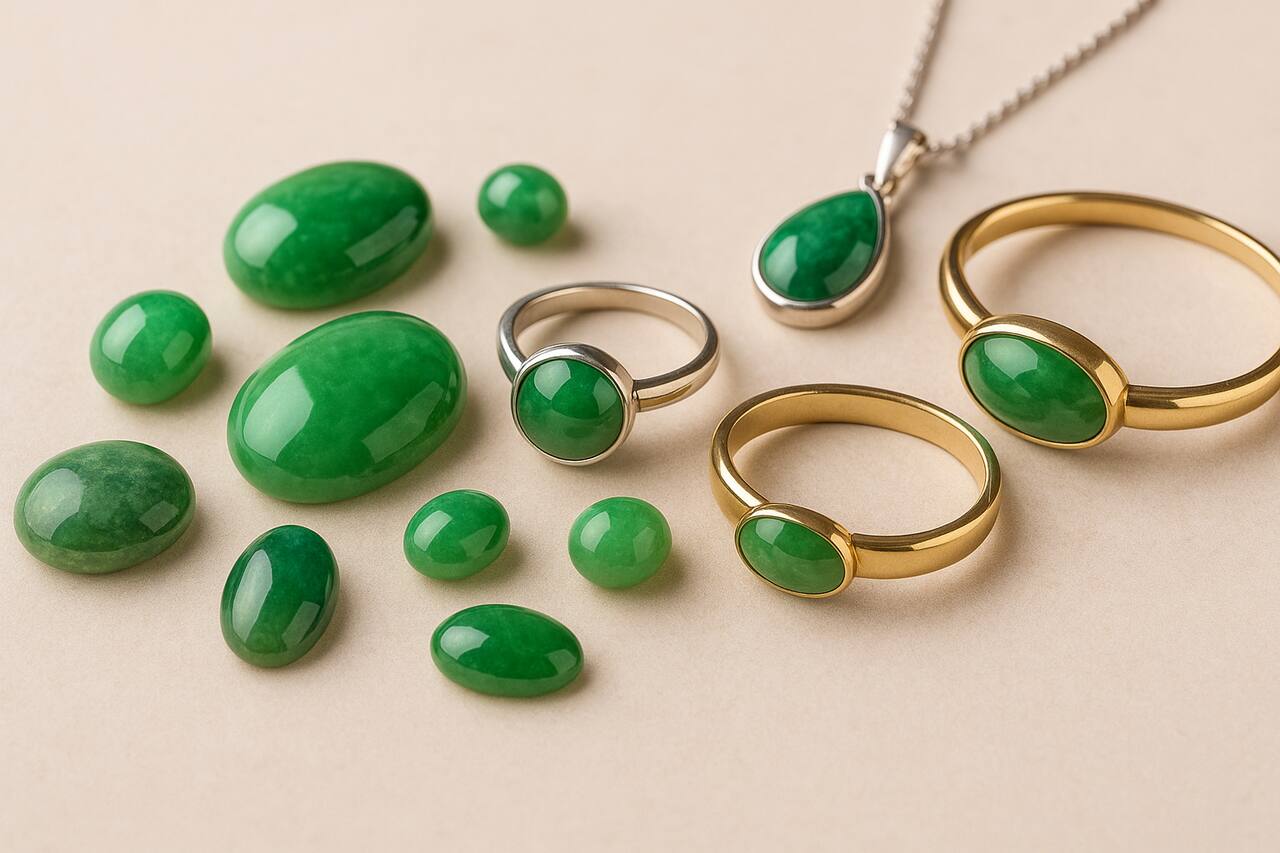

Jadeitový kameň known globally as jadeite stands among the most revered gemstones in human history. Celebrated for its luminous green tones, exceptional toughness, and profound spiritual symbolism, jadeite has shaped art, jewelry, and ritual across civilizations for millennia. Unlike many ornamental stones, jadeite embodies both geological intrigue and cultural heritage. Understanding its composition, formation, and authenticity is key not only for collectors and gemologists but also for investors and jewelry enthusiasts seeking authenticity, rarity, and value in today’s gemstone market.
Related Article: Blazertje: the Light, Stylish Blazer Alternative for Every Season
Understand the Essence of Jadeitový kameň (Jadeite)
Jadeite is one of two distinct minerals known collectively as jade the other being nephrite. While they may appear similar, jadeite’s vibrant colors and glass-like translucency distinguish it as the rarer and more valuable form. As a sodium-aluminum silicate from the pyroxene group, it crystallizes under immense pressure within metamorphic rocks, forming tight interlocking grains that contribute to its exceptional durability.
The gemstone’s desirability lies in its intense color saturation, fine texture, and ability to achieve a mirror-like polish. Among all hues, “imperial green jadeite,” a deep emerald shade with semi-translucent clarity, commands the highest prices.
How Jadeite Differs from Nephrite
Nephrite, though often sold as jade, is a calcium-magnesium amphibole mineral softer and less dense than jadeite. Its silky texture and fibrous structure make it excellent for carving, yet it lacks the brilliant translucency and color range of jadeite. This mineralogical distinction explains why jadeite dominates in high-end jewelry, while nephrite is favored for sculptures and artifacts.
| Property | Jadeite (NaAlSi₂O₆) | Nephrite (Ca₂(Mg,Fe)₅Si₈O₂₂(OH)₂) |
|---|---|---|
| Mineral Group | Pyroxene | Amphibole |
| Hardness (Mohs) | 6.5–7 | 6–6.5 |
| Density | 3.3 | 2.9–3.1 |
| Color Range | Wide (green, lavender, black, white, orange) | Mostly green, white, brown |
| Transparency | Semi-translucent to opaque | Opaque |
| Market Value | Very high (especially imperial green) | Moderate |
Mineralogical and Chemical Characteristics
At the atomic level, jadeite’s compact crystal lattice of Na⁺, Al³⁺, and Si⁴⁺ ions creates a dense, durable structure resistant to breaking. It often coexists with minerals like omphacite and albite in high-pressure metamorphic environments. The presence of chromium imparts vivid green tones, while iron or manganese may produce lavender, blue, or brown variations. This chemical diversity explains jadeite’s remarkable spectrum of colors and textures.
Trace the Natural Formation of Jadeitový kameň
Jadeite originates in subduction zones, where oceanic crust descends beneath continental plates. Under immense pressure and moderate temperature, sodium-rich fluids react with aluminum silicates to crystallize jadeite. Such environments are rare, making gem-quality deposits exceedingly limited.
Major Jadeite Deposits Worldwide
The most renowned source of jadeite is Myanmar (Burma), specifically the region around Hpakan and Tawmaw, which produces “imperial jade.” Other deposits exist in Guatemala, Japan, Russia, Kazakhstan, and California, though they yield smaller or less vibrant specimens. Guatemalan jadeite, often blue-green or lavender, has become a modern favorite for both artisans and collectors.
| Country | Notable Deposits | Color Characteristics |
|---|---|---|
| Myanmar (Burma) | Hpakan, Tawmaw | Deep emerald green (Imperial jade) |
| Guatemala | Motagua Valley | Blue-green, lavender, white |
| Japan | Itoigawa | Pale green, white |
| Russia | Polar Urals | Greenish-gray |
| USA | California | Light green, mottled |
Geological Conditions for Jadeite Formation
For jadeite to crystallize, three key conditions are essential:
- High-pressure, low-temperature metamorphism typical of subduction zones.
- Sodium-rich hydrothermal fluids that promote jadeite mineral growth.
- Slow cooling and tectonic uplift, allowing crystals to stabilize and become accessible at the Earth’s surface.
Explore the Colors and Varieties of Jadeitový kameň
Jadeite’s diversity of hues stems from trace elements and internal crystal structure. Its most prized variety, Imperial Green, owes its hue to chromium impurities, creating a mesmerizing translucency reminiscent of emeralds.
Imperial Green Jadeite and Other Varieties
- Imperial Green – Intense, semi-transparent emerald green; highest value.
- Apple Green – Bright, lively green with good translucency.
- Lavender Jadeite – Soft violet tones from manganese.
- Blue Jadeite – Rare, cool-toned variant with gray undertones.
- White Jadeite (Pure Jade) – Milky, translucent white; symbolizes purity.
- Black Jadeite – Rich and opaque; favored for masculine jewelry.
How Color, Transparency, and Texture Affect Value
In jadeite grading, color ranks supreme, followed by transparency and texture. Collectors seek stones with uniform saturation, vivid hue, and smooth grain. Semi-translucent jadeite that allows light to diffuse within the stone commands premium pricing. A smooth, even texture enhances polish and brilliance, increasing the gemstone’s visual depth.
Identify Genuine Jadeitový kameň with Confidence
The jade market is filled with treated and imitation stones. Authentic jadeite is distinguished through scientific testing and certification.
Common Testing and Authentication Methods
- Spectroscopy (FTIR or Raman) – Reveals the mineral’s molecular signature.
- X-Ray Diffraction (XRD) – Confirms crystal structure.
- Specific Gravity Tests – Jadeite’s density (≈3.3) differs from fakes like serpentine or quartzite.
- Microscopic Examination – Detects polymer-filled cracks or dye concentrations.
- Refractive Index Measurement – True jadeite averages around 1.66.
Treatments and Detection Techniques
| Treatment Type | Purpose | Detection Method |
|---|---|---|
| Bleaching (Type B) | Removes stains, improves color | UV spectroscopy, texture analysis |
| Polymer impregnation | Increases translucency | Infrared absorption peaks |
| Dyeing (Type C) | Adds artificial color | UV fluorescence, chemical analysis |
| Combination (Type B+C) | Multiple enhancements | Lab certification required |
Genuine jadeite is Type A – untreated, natural, and only wax-polished. Always seek stones with certificates from recognized labs such as GIA, SSEF, or AGL.
Discover Modern Uses of Jadeitový kameň
While rooted in ancient tradition, Jadeitový kameň has found vibrant relevance in the modern world spanning jewelry, wellness, design, and even technology. Its unique combination of visual beauty, durability, and symbolic meaning makes it a versatile material for both functional and spiritual purposes.
Jewelry and Decorative Objects
From imperial dynasties to modern luxury houses, jadeite remains central to high-end jewelry, including rings, pendants, and bangles. Its toughness allows for intricate carvings and smooth cabochon finishes. Collectors value antique jadeite artifacts for both beauty and provenance.
Wellness Applications: Gua Sha and Facial Rollers
In contemporary wellness, jadeite resurged through gua sha tools and rollers, believed to stimulate circulation and promote calm. Although scientific validation is limited, the stone’s coolness and smooth texture offer tangible relaxation benefits.
Sculptures and Collectible Carvings
Master artisans craft jadeite into figurines, seals, and ceremonial objects. Each carving reflects deep symbolism dragons for strength, phoenixes for rebirth, and peonies for prosperity preserving jadeite’s millennia-old cultural role.
Evaluate the Value and Investment Potential of Jadeitový kameň
Jadeitový kameň is not only prized for its aesthetic and cultural significance but also increasingly viewed as a high-value collectible and investment asset particularly in East Asian markets. However, understanding its investment potential requires a close evaluation of quality indicators, market dynamics, and authenticity verification.
Factors Influencing Jadeite Price
| Factor | Influence on Value |
|---|---|
| Color Intensity and Purity | Deep, vivid greens fetch the highest prices |
| Transparency | Semi-translucent stones command premiums |
| Texture and Finish | Smooth, fine-grained stones are most desirable |
| Treatment Status | Type A (untreated) far exceeds treated stones |
| Origin and Certification | Burmese jadeite with verified lab reports ranks highest |
Where to Buy Authentic Jadeite
Trusted sources include certified retailers, gem auctions (e.g., Sotheby’s, Christie’s), and dealers specializing in Burmese jade. Always verify certificates and request gemological reports before purchase.
Is Jadeite a Smart Investment?
High-quality jadeite, especially imperial green Type A, maintains long-term value and has even outperformed certain luxury assets. However, its market remains opaque, influenced by cultural demand and supply limitations. Investment success requires expert authentication and patience.
Understand the Cultural and Mythological Power of Jadeitový kameň
Jadeitový kameň has held deep cultural and mythological significance for millennia across diverse civilizations. More than just a decorative gemstone, jadeite has symbolized power, purity, and protection often regarded as more valuable than gold in ancient cultures. Its spiritual resonance continues to influence beliefs, rituals, and aesthetics to this day.
Symbolism in Chinese and Mesoamerican Cultures
In ancient China, jadeite symbolized purity, wisdom, and immortality “the stone of heaven.” It adorned emperors’ tombs and imperial seals. In Mesoamerica, the Maya and Aztec valued jadeite above gold, associating it with life force and the divine.
Modern Spiritual and Healing Beliefs
Today, jadeite is associated with emotional balance, protection, and prosperity in metaphysical circles. It is said to align the heart chakra and promote harmony. While not scientifically proven, these beliefs perpetuate jadeite’s role in modern wellness culture.
Conclusion
Jadeitový kameň embodies the perfect union of nature’s artistry and human reverence. Its beauty, resilience, and storied symbolism have transcended centuries, making it more than a gemstone it is a living cultural legacy. From high-pressure metamorphic origins to imperial courts and modern jewelry, jadeite continues to inspire admiration, devotion, and investment. Whether sought for its aesthetic allure or metaphysical promise, authentic jadeite remains one of the world’s most captivating and meaningful gemstones. For more informative articles related to Fashion’s you can visit Fashion’s Category of our Blog.
FAQ’s
No. Jadeite is a pyroxene mineral with higher density and brilliance, while nephrite is an amphibole variety, softer and fibrous.
“Imperial green” jadeite with vivid hue and translucency is the most prized, followed by lavender and blue-green varieties.
Use gem lab testing such as spectroscopy, XRF, and refractive index analysis. Always request certification from institutions like GIA or AGL.
No scientific evidence supports healing effects; these beliefs are cultural and symbolic.
Common treatments include bleaching, dyeing, and polymer impregnation. Only untreated “Type A” jadeite is considered natural.
Mining in Myanmar faces ethical and environmental challenges. Sustainable sourcing and transparent certification are growing priorities in the jade industry.
