




Key Takeaways
- Prioritize safety and medical care before discussing blame or repair costs.
- Save photos, witness information, medical records, bills, and insurance communications.
- Report the crash through the appropriate channel and request records when available.
- Be cautious with recorded statements and releases before the full effect of an injury is known.
- Check legal and insurance deadlines early.
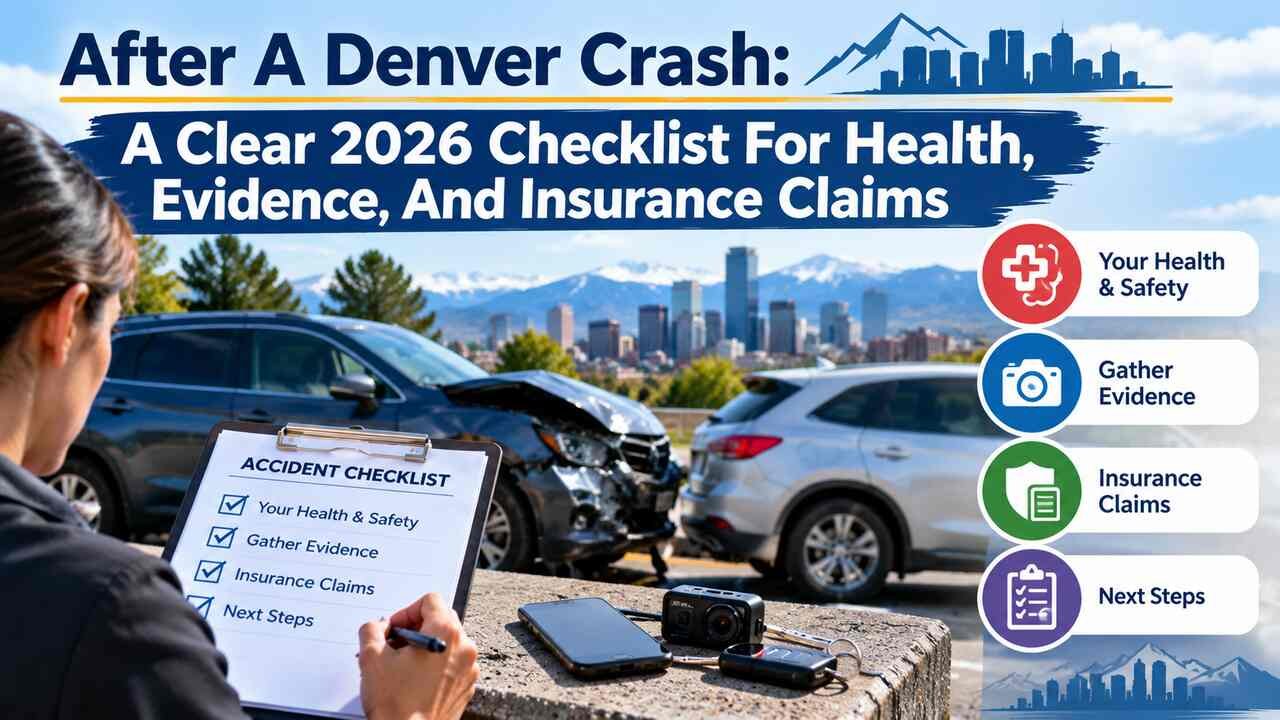
A motor-vehicle crash can raise urgent health, safety, and insurance questions simultaneously. The best first step is usually simple: protect people from immediate danger, get medical attention when needed, and begin preserving accurate information. A Denver personal injury attorney may also help explain options when injuries, disputed fault, or several insurance companies make the situation more complicated.
This plain-English checklist is for general information about Colorado, not legal advice for a particular crash. Deadlines and duties can change based on the facts, including whether someone was injured, whether a government vehicle was involved, and what insurance coverage applies.
1. Start With Safety At The Crash Scene
If possible, move vehicles and people away from active traffic without creating another hazard. Turn on hazard lights, use warning devices if available, and call 911 when someone may be injured, a vehicle is disabled, there is a fire risk, or the scene is unsafe. Do not stand in traffic lanes or near leaking fuel, downed power lines, or unstable vehicles.
Colorado law imposes duties after crashes involving injury or death, including stopping, providing information, and giving reasonable assistance. See Colo. Rev. Stat. § 42-4-1601. When a crash must be reported, quick notice to the proper law enforcement agency is important. [1]
2. Get Medical Care Even When Symptoms Seem Minor
Adrenaline can mask pain. Headaches, dizziness, stiffness, numbness, sleep trouble, and concentration problems may not be obvious at the scene. Seek prompt care when symptoms appear, tell the provider about every symptom, and follow the recommended treatment plan. Medical records can help establish when symptoms began and how they changed over time. [2]
Keep appointment summaries, prescriptions, bills, health-insurance explanations of benefits, and mileage records for medical travel. A brief daily log can also document pain levels, mobility limits, missed activities, and help needed at home.
3. Report The Crash And Get Official Records
If an officer investigated the crash, ask for the agency name, report number, and instructions for obtaining the record. If no officer responded, Colorado provides guidance on when and how to file a report online through its crash-reporting and crash-record resource. An individual online report is generally kept for record purposes and is not the same as a law-enforcement investigation.
4. Exchange Information Without Arguing About Fault
Collect names, phone numbers, driver’s license and insurance information, license plate numbers, and vehicle descriptions. Ask witnesses for their names and contact details. Keep the conversation calm and brief. Avoid roadside admissions, accusations, threats, or negotiations about payment. A complete investigation may later consider evidence that was not apparent at the scene.
5. Document The Scene Before Evidence Disappears
When safe, take wide and close photos of vehicle positions, damage, traffic signals, lane markings, signs, weather, debris, and visible injuries. Save the original dashcam footage without editing. Write down the location, time, direction of travel, traffic conditions, and what happened in sequence.
Preserve damaged clothing, helmets, child seats, and other safety equipment when they may be relevant. Nearby businesses, homes, or intersections may have cameras, so note their locations promptly.
6. Notify Insurance Companies Carefully
Report the crash to your own insurer within the period required by your policy. Provide accurate basic facts, but do not guess about medical diagnoses, future treatment, fault, or the final value of a claim. Record the date, time, claim number, and name of every representative you speak with.
Read requests for recorded statements, authorizations, and releases carefully. A release may end rights beyond the immediate repair issue being discussed. Save every email, letter, estimate, and claim form in one folder.
7. Build A Simple Injury And Expense File
- Medical bills, visit notes, prescriptions, and insurance statements.
- Pay stubs, employer notes, and records of missed work.
- Repair estimates, towing, storage, and rental-car documents.
- Receipts for prescriptions, medical devices, and travel.
- Daily notes about pain, sleep, mobility, and activities affected.
8. Separate Property Damage From Injury Issues
Vehicle repairs, towing, storage, and total-loss questions are property-damage matters. Physical injuries may involve treatment, lost income, ongoing limitations, and other losses. A quick payment for vehicle damage does not necessarily resolve an injury claim, but the wording of any document matters. Review every settlement or release before signing.
9. Avoid Common Claim Mistakes
- Delaying care or skipping follow-up appointments without explanation.
- Posting detailed crash or injury updates on social media.
- Giving inconsistent descriptions of the event.
- Discarding damaged property, photos, or records.
- Waiting until the deadline approaches before seeking clarification.
10. Understand How Fault May Be Reviewed
Fault may depend on witness accounts, vehicle damage, video, roadway design, lighting, weather, evidence of distraction, and vehicle data. Colorado uses comparative negligence rules. Under Colo. Rev. Stat. § 13-21-111, a person’s damages may be reduced by that person’s share of fault, and recovery may be barred when that share is as great as the fault of the party from whom recovery is sought. [3]
11. Special Issues: Hit-And-Run, Multiple Vehicles, And Commercial Traffic
For a hit-and-run crash, write down every detail possible, including a partial plate, vehicle color, logo, direction of travel, and nearby cameras. Multi-vehicle crashes can involve competing accounts and multiple insurers. Commercial trucks, rideshare vehicles, buses, uninsured drivers, and government vehicles can raise additional questions about coverage, notice, and evidence.
12. Check Deadlines Before Time Runs Out
Many Colorado claims for bodily injury or property damage arising from the use or operation of a motor vehicle have a three-year limitations period under Colo. Rev. Stat. § 13-80-101(1)(n). That is not a reason to wait. Different rules may apply to particular claims, minors, incapacitated people, or parties.
Claims involving a public entity or public employee may require written notice within 182 days after discovery of the injury under Colo. Rev. Stat. § 24-10-109. Calendar important insurance, medical, and legal dates as soon as possible.
13. Use Reliable Colorado Resources
The Colorado State Patrol crash information page provides practical information about crash reports, online reporting, accident alerts, towing, and insurance-related questions. Keep in mind that local police agencies may have their own procedures for reports and records.
14. When Professional Guidance May Help
Consider obtaining individualized guidance when injuries are serious or ongoing, fault is disputed, multiple parties are involved, a broad recorded statement is requested, or a release arrives before treatment is complete. Early questions can also be important after a crash involving a truck, a rideshare driver, a bus, a public agency, or an uninsured motorist.
15. One-Page Checklist To Save
- Call 911 when needed and move away from danger if safe.
- Exchange information and identify witnesses.
- Take photos, save video, and preserve damaged items.
- Get medical care and follow treatment instructions.
- Report the crash through the proper channel.
- Notify your insurer and organize every document.
- Read statements, authorizations, and releases carefully.
- Calendar deadlines and seek clarification when needed.
Conclusion
A Denver crash can remain disruptive long after the vehicles leave the road. A careful, organized response can protect health, preserve useful evidence, and reduce confusion during insurance discussions. Focus on safety, accurate documentation, medical follow-through, and early review of deadlines.


