


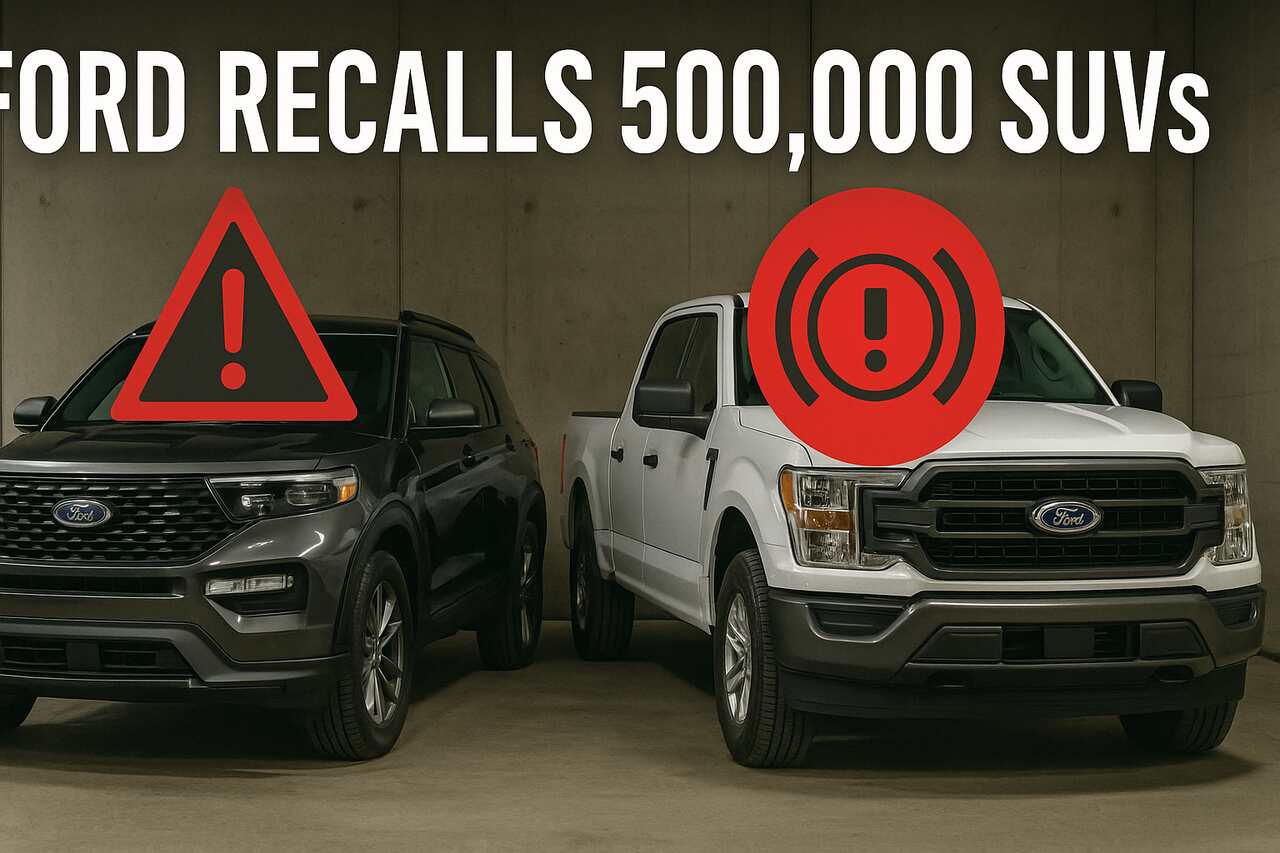


Ford Motor Company has announced a major safety recall affecting nearly 500,000 SUVs due to the risk of a brake fluid leak, marking its second large-scale recall in recent months following the withdrawal of 355,000 trucks over a separate mechanical defect. This latest action raises significant concerns about brake system reliability and highlights ongoing challenges in Ford’s quality control and parts integrity.
The recall targets popular SUV models specifically the Ford Edge and Lincoln Nautilus which may suffer from degraded seals between the brake master cylinder and brake booster, potentially leading to reduced braking power and increased accident risk. As regulatory agencies intensify their scrutiny of automotive safety standards, Ford faces renewed pressure to reinforce its manufacturing processes and restore consumer trust amid growing vehicle defect reports.
Why Has Ford Recalled Nearly Half a Million SUVs?
Ford has issued a recall for approximately 500,000 sport utility vehicles (SUVs) due to a critical brake fluid leak that could significantly reduce braking performance and increase crash risk. The recall specifically targets models exhibiting defective brake master cylinder housings, which may allow fluid to leak into the brake booster.
This malfunction reduces hydraulic pressure, resulting in a soft brake pedal feel and longer stopping distances, directly compromising driver safety. The issue was identified after reports of decreased brake effectiveness and dashboard warning lights, prompting investigations that traced the failure to flawed manufacturing in certain component batches.
Which Ford SUV Models Are Affected by the Brake Fluid Leak Recall?
The recall affects Ford Edge and Lincoln Nautilus models, primarily from model years 2015 through 2019, with a specific focus on vehicles built at Ford’s Oakville Assembly Plant in Canada. These units share a common brake system design that includes potentially compromised seals between the master cylinder and brake booster.
The defect stems from deteriorated materials that weaken over time, particularly under fluctuating temperatures or heavy usage. Ford has identified affected VIN ranges and is notifying registered owners via mail and digital alerts. Dealerships are instructed to inspect and replace faulty components free of charge.
How Does This Recall Relate to Ford’s Earlier Truck Recall?
This SUV recall comes on the heels of Ford’s earlier recall of 355,000 F-150 trucks for a rear axle hub bolt defect, raising concerns about broader quality control and part reliability across Ford’s manufacturing lines. Both recalls share a pattern of systemic component wear and safety-critical part failure, intensifying regulatory scrutiny.
The National Highway Traffic Safety Administration (NHTSA) is monitoring these incidents under Ford’s existing recall compliance obligations. Together, these recalls affect more than 850,000 vehicles within a six-month span, signaling elevated quality assurance risks within Ford’s supply chain.
What Are the Safety Risks Associated With the Brake Fluid Leak?
A leaking brake fluid system compromises the vehicle’s brake response time, reducing driver control during emergency braking scenarios. The loss of fluid leads to partial or full loss of front braking capability, forcing the vehicle to rely on rear brakes only greatly diminishing stopping power.
Drivers may notice warning signs such as a low brake fluid warning, illuminated ABS light, or soft pedal resistance. In extreme cases, failure to address the issue could lead to brake failure during high-speed or heavy-load conditions, significantly increasing the risk of accidents.
What Steps Is Ford Taking to Resolve the Issue?
Ford is instructing dealerships to conduct visual inspections and pressure tests on affected vehicles. If leaks are detected, technicians will replace both the brake master cylinder and brake booster assembly to ensure long-term reliability. In addition, Ford is updating internal protocols to strengthen material testing and supplier compliance for safety-critical systems.
Owners are urged to contact Ford’s customer service or visit the NHTSA recall portal to check their VIN for inclusion in the campaign. The recall campaign number for this SUV defect is 24S17, and Ford has committed to covering all repair costs under warranty, regardless of mileage or vehicle age.
Conclusion
Ford’s back-to-back recalls involving nearly 1 million vehicles highlight growing concerns around automotive component durability and system integrity. The brake fluid leak in SUVs represents a severe safety hazard, especially when compounded by earlier truck defects. As the company works to restore consumer confidence, regulators and vehicle owners alike will be closely watching how Ford enhances its quality assurance frameworks and safety compliance moving forward. For more informative articles related to News you can visit News Category of our Blog.


