


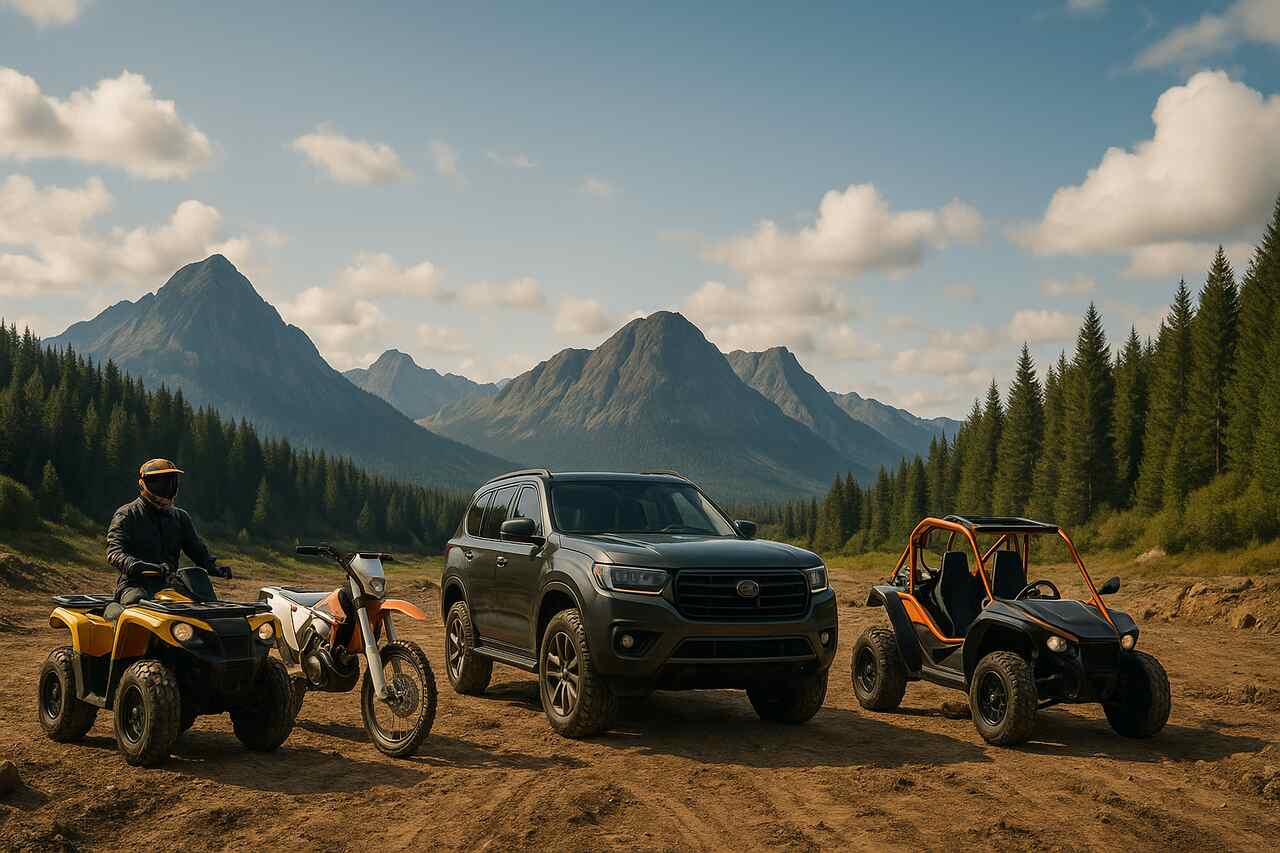


Off-road vehicles play a central role in recreation, transport, exploration, and work across terrains that ordinary cars cannot handle. Their ability to move through mud, rock, sand, snow, and uneven surfaces makes them indispensable for adventure seekers, rural communities, emergency responders, and industries that depend on access to remote areas. This guide explains how off-road vehicles work, what types exist, how to choose the right one, and what practices keep them operating safely and efficiently.
Identify What Qualifies as an Off-Road Vehicle
The first step in understanding off-road vehicles is distinguishing them from standard road-legal passenger cars. An off-road vehicle is designed specifically for travel on unpaved surfaces such as dirt, gravel, sand, snow, and natural terrain. Many regions classify them as machines built to handle uneven ground through features like higher ground clearance, rugged suspension, and specialized tires.
Legal definitions typically describe these vehicles as motorized machines capable of cross-country travel over natural terrain. Regulatory standards often consider factors like wheel or track configuration, maximum width and weight, and intended use. Some jurisdictions separate all-terrain vehicles, utility task vehicles, snowmobiles, and off-road motorcycles into different categories based on how riders sit, how steering works, and whether the vehicle is primarily recreational, utility-focused, or mixed-use.
Off-road vehicles must meet safety and operational requirements that vary depending on terrain type. Environments such as dense forests, rocky mountain routes, deep mud trails, wide desert dunes, snowy backcountry, and swampy lowlands each demand different capabilities. Understanding these conditions clarifies why certain vehicles excel in some areas but struggle in others.
Differentiate the Main Types of Off-Road Vehicles
Choosing an off-road machine starts by examining the wide variety of vehicle classes. The most common categories include 4×4 trucks and SUVs, ATVs, UTVs, off-road motorcycles, snowmobiles, and specialty designs like dune buggies and amphibious vehicles. Each type serves a distinct purpose and fits specific terrain and user needs.
Four-wheel-drive trucks and SUVs appeal to drivers who want a dual-purpose vehicle suitable for both road and trail. They offer seating capacity, cargo room, and towing ability not found in smaller off-road machines. All-terrain vehicles are compact, maneuverable machines built for quick handling and narrow trails, while UTVs provide side-by-side seating, roll cages, and strong hauling capacity for work and recreation in rugged landscapes.
Snowmobiles, amphibious vehicles, sandrails, and dirt bikes extend off-road capability into highly specialized environments. Snowmobiles thrive on winter terrain thanks to skis and track drives, while amphibious vehicles handle wetlands and shallow water. Dune buggies and sandrails excel in deserts because of lightweight frames and long-travel suspension. Dirt bikes remain favored for technical trail riding where agility matters more than carrying capacity.
Identify the Features That Make a Vehicle Off-Road Capable
A vehicle must meet several performance requirements before it can reliably handle off-road terrain. Core features include traction systems, ground clearance, suspension travel, low-range gearing, durable tires, and protective body components. Understanding these elements helps buyers and users evaluate how well a vehicle is built for rugged travel.
Four-wheel drive or tracked systems ensure all wheels or the entire drive surface can grip uneven ground. High ground clearance prevents the underbody from striking rocks, branches, or terrain obstacles. Strong suspension absorbs impacts and keeps wheels planted for maximum traction. Skid plates protect crucial components such as the oil pan, fuel tank, transfer case, and differential when traveling over uneven surfaces.
Tire construction also plays a major role in off-road performance. Mud-terrain tires offer aggressive tread for deep soil, while all-terrain tires balance road comfort with trail ability. Low-range gear ratios provide slow, controlled torque to climb steep inclines or navigate technical trails. Additional modifications like winches, locking differentials, snorkels, and reinforced bumpers expand a vehicle’s capability and resilience during demanding trips.
Compare Core Off-Road Capability Features
Core off-road capability features determine how well a vehicle can navigate challenging terrain, and the most influential components work together to provide traction, durability, and stability. Four-wheel drive or track systems supply power to more than two wheels, allowing the vehicle to maintain grip on loose surfaces such as mud, sand, snow, and rocks. Ground clearance ensures the underbody stays above obstacles, while suspension travel allows wheels to move independently over uneven ground, keeping the vehicle stable and preventing damage.
These features also include specialized tires, which use deeper treads, reinforced sidewalls, and terrain-specific rubber compounds to maintain traction where pavement ends. Low-range gearing, locking differentials, and robust underbody protection further enhance performance by delivering controlled torque and shielding critical components from impacts. Each element addresses a common challenge of off-road travel, from slippery inclines to sharp rocks and rutted trails.
When compared side by side, the strengths and limitations of each feature become clear. Four-wheel drive improves traction but adds weight and complexity; high ground clearance helps avoid obstacles yet raises the center of gravity; long-travel suspension enhances comfort but may reduce precision on paved roads. The right combination depends on terrain demands and user needs, making it essential to evaluate how these capabilities interact to create an effective, well-balanced off-road machine.
Table 1: Key Capability Components and Their Functions
| Component | Purpose | Benefit in Off-Road Conditions |
|---|---|---|
| Four-wheel or track drive | Distributes engine power to more than two wheels | Improves traction on mud, rocks, snow, and sand |
| Ground clearance | Space between underbody and terrain | Reduces risk of scraping or component damage |
| Suspension travel | Range of motion for absorbing bumps | Maintains stability over uneven surfaces |
| Off-road tires | Specialized tread and rubber compounds | Enhances grip and puncture resistance |
| Underbody protection | Skid plates and reinforced components | Shields vital systems from impacts |
Determine Why Off-Road Vehicles Are Used in Recreation and Work
People choose off-road vehicles for adventure, access, and productivity. Enthusiasts use them for trail riding, dune running, rock crawling, overlanding, backcountry exploration, and motorsports events. These activities rely on a vehicle’s ability to navigate terrain that typical cars cannot safely reach. Many recreational riders also value the sense of freedom and challenge that off-roading provides.
Industries depend on off-road machines for essential tasks. Agriculture relies on ATVs and UTVs to move across fields, pastures, and rugged farmland. Construction crews use 4×4 trucks and UTVs to access remote building sites. Oil, mining, forestry, and utility sectors depend on off-road vehicles to transport personnel and equipment to places without established roads. Emergency services often deploy 4×4 trucks, snowmobiles, and tracked vehicles to reach stranded individuals in extreme conditions.
Regulations govern where and how off-road vehicles may be used. Some vehicles are not legally allowed on public roads, while others require registration, permits, or safety equipment such as helmets and flags. Environmental rules often restrict travel in protected ecosystems or sensitive landscapes. Understanding these laws helps riders avoid penalties and ensures sustainable recreational use.
Evaluate Limitations and Trade-Offs of Off-Road Vehicles
Off-road performance comes with compromises that users must understand. Design features like tall suspension, heavy-duty components, and aggressive tires increase weight and aerodynamic drag. These characteristics typically reduce fuel efficiency compared with lightweight city vehicles. Larger engines tuned for torque rather than top speed can also increase operating costs.
On-road comfort often suffers as well. Off-road tires produce more noise and may wear faster when used on pavement. Stiff suspension systems that excel over rough ground may feel less smooth during highway driving. Vehicles optimized for rugged use sometimes have lower top speeds, reduced handling stability, and more frequent maintenance demands.
Maintenance frequency also increases because off-road conditions subject components to dirt, water, impacts, and heavy strain. Owners must check lubricants, filters, bearings, seals, belts, and driveline components more often than they would on a regular car. These requirements make off-road vehicles rewarding for specific tasks but less suitable for users who primarily travel on highways.
Select the Right Off-Road Vehicle for Your Needs
Choosing an off-road vehicle begins with identifying the terrain you expect to travel and deciding whether your use is recreational, work-related, or mixed. Mountain trails, muddy forests, snowy backcountry, open desert, and swampy regions each favor specific vehicle designs. Regulations may also influence your choice, especially if you plan to operate the machine on both private land and public trails.
For rugged trails with steep inclines and obstacles, 4×4 SUVs and trucks provide strength and cargo capacity. ATVs suit riders who want maneuverability on narrow paths, while UTVs offer side-by-side seating and high payload capability for work or adventure travel. Snowmobiles serve areas with deep winter snow, and dirt bikes excel on technical single-track routes. Amphibious vehicles suit marshlands and water-logged environments, while dune buggies thrive where soft sand and long, rolling dunes dominate.
Comparing options according to your experience level helps prevent costly mistakes. Beginners may find UTVs more stable than ATVs, while experienced riders might prefer the agility of a dirt bike or the versatility of a mid-size 4×4 SUV. Balancing price, maintenance needs, speed, comfort, seating capacity, and legal requirements ensures the vehicle fits your daily reality, not just your aspirations.
Table 2: Comparison of Common Off-Road Vehicle Types
| Vehicle Type | Strengths | Best Terrain | Ideal Users |
|---|---|---|---|
| 4×4 truck/SUV | Versatile, road legal, high cargo | Rock, mud, forest | Adventure travelers, workers |
| ATV | Lightweight, agile, small footprint | Trails, fields, forest | Solo riders, ranchers |
| UTV | Stable, high payload, multi-seat | Farms, work sites, general off-road | Work crews, families |
| Dirt bike | Highly maneuverable | Technical trails | Skilled riders |
| Snowmobile | Tracks for snow | Winter terrain | Backcountry users |
| Dune buggy/sandrail | Long-travel suspension | Desert dunes | Recreation riders |
Apply Proper Maintenance and Safe Operating Practices
Keeping an off-road vehicle in reliable condition requires proactive maintenance and responsible operating habits. Before each ride, users should check tire pressure, inspect tread, verify fluid levels, test lights, and confirm that essential recovery gear such as tow straps, a jack, and portable tools is on board. Regular cleaning reduces wear caused by mud, sand, salt, and debris.
Common hazards like rollovers, sudden drop-offs, deep mud pits, and mechanical failures can be mitigated with preparation. Wearing appropriate protective gear, including helmets, gloves, goggles, and reinforced footwear, significantly reduces injury risk. Understanding load limits, maintaining safe speeds, and learning proper winch and recovery techniques also improve safety. Pairing with a riding partner or notifying someone of your route further reduces risk.
Long-term upkeep ensures reliability. Lubricating moving parts, inspecting suspension joints, checking wheel bearings, and replacing filters after dusty or wet rides keeps the vehicle performing at its best. Battery terminals, belts, and intake systems must also be monitored more frequently because off-road environments expose them to extreme conditions.
Assess Emerging Trends Shaping the Future of Off-Road Vehicles
Electrification is transforming off-road transportation. Electric off-road motorcycles, UTVs, and 4×4 SUVs deliver instant torque, quiet operation, and reduced emissions, making them appealing for riders in noise-sensitive or environmentally protected areas. Battery improvements and weather-resistant housings continue to expand the range and practicality of electric machines.
Advances in suspension technology, including adaptive dampers and long-travel lightweight materials, are redefining performance and comfort. High-strength composites help manufacturers reduce weight without sacrificing durability. Updated safety systems such as electronic stability control, roll-over sensors, and reinforced roll cages improve rider protection.
Sustainability initiatives are also influencing design. Manufacturers explore biodegradable lubricants, cleaner engines, and more efficient tires to mitigate environmental impact. As overlanding and expedition travel grow in popularity, demand increases for hybrid systems, energy-efficient components, and rugged chassis built to withstand extended journeys across remote terrain.
Conclusion
Off-road vehicles have become indispensable for adventure travel, utility work, emergency response, and access to remote landscapes. Their specialized features traction systems, durable suspension, high clearance, and protective components enable them to handle environments far beyond the capability of standard passenger vehicles. Understanding the different types of machines, the features that drive performance, the trade-offs involved, and the maintenance and safety practices required helps users select the right vehicle and use it confidently. As innovation continues, off-road vehicles will become even more capable, efficient, and sustainable, opening new possibilities for recreation and practical use alike. For more informative articles related to Auto’s you can visit Auto Category of our Blog.
FAQ’s
An off-road vehicle is designed to travel on natural terrain using specialized features like high clearance, rugged suspension, and enhanced traction systems. Regular cars prioritize smooth pavement and lack the durability and grip needed for rough ground.
Many beginners start with a UTV because it offers stability, seating for multiple people, and intuitive steering. A mid-size 4×4 SUV is another beginner-friendly option for drivers who want both road and trail capability.
Important factors include ground clearance, tire type, four-wheel drive capability, suspension travel, and underbody protection. These elements determine how well the vehicle can handle uneven surfaces and obstacles.
Some off-road vehicles, like 4×4 SUVs, are fully road legal. Others, including most ATVs and UTVs, may only be legal on certain roads or trails depending on regional regulations. Always review local laws before riding.
They can tackle mud, snow, sand, gravel, rocks, forests, mountains, marshland, and desert environments. Different vehicle types specialize in particular terrain categories.
Trade-offs include lower fuel efficiency, higher maintenance needs, more noise from aggressive tires, and reduced on-road comfort. These compromises come with improved capability in rugged environments.
Inspect tires, fluids, lights, and tools; pack recovery gear; wear proper safety equipment; and plan your route. Traveling with a partner or sharing your itinerary enhances safety.
Electric off-road vehicles are increasingly viable. They offer strong low-end torque, quiet operation, and fewer emissions. Their main limitations are range and charging access, though battery technology continues to improve.


