


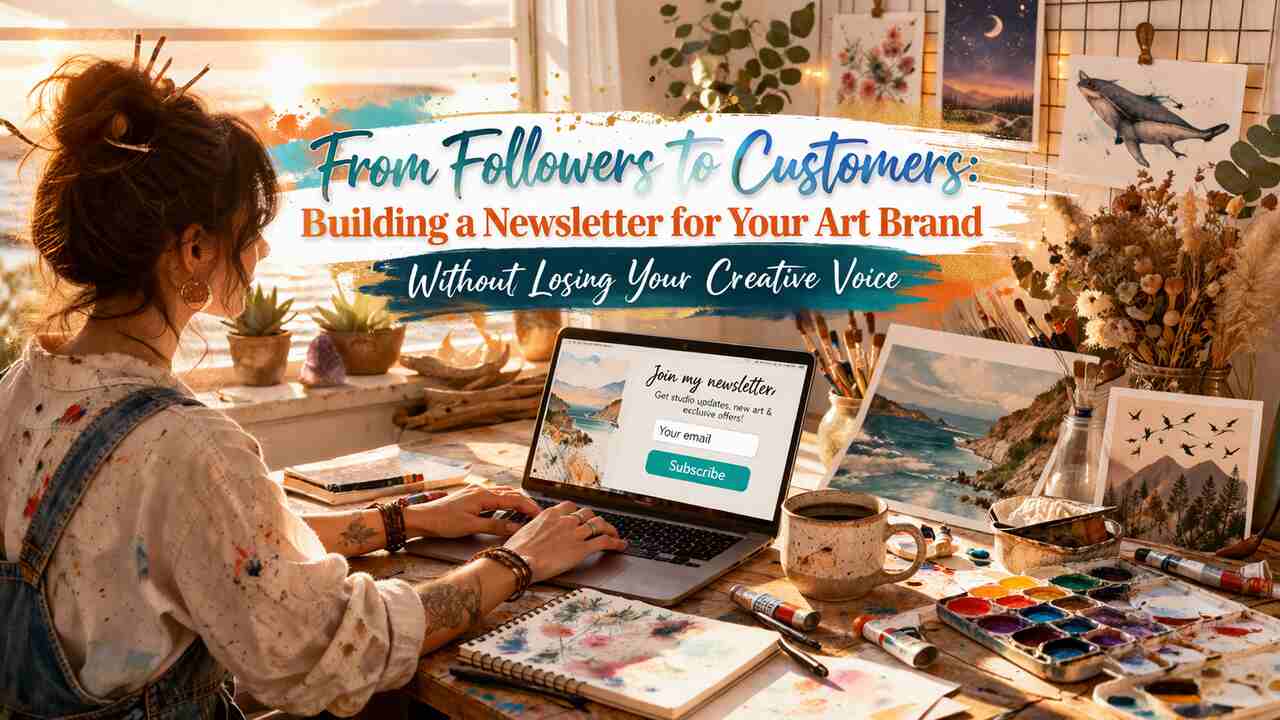


You’ve spent years developing your artistic style. Your Instagram feed tells a cohesive visual story. Your followers comment with heart emojis and “I need this!” under every post. Yet somehow, those double-taps aren’t translating into sales.
Here’s the uncomfortable truth: social media algorithms don’t care about your art. They care about engagement metrics, trending audio, and keeping users scrolling. Your carefully crafted posts compete against dance videos, memes, and celebrity drama – and the platform decides who sees your work.
Email changes everything. When someone gives you their inbox address, they’re inviting you into a space they actually check – with 88% checking email multiple times daily. No algorithm stands between you and your collector. But for many artists, the idea of “marketing emails” feels like a creative compromise – a corporate intrusion into their artistic practice. It doesn’t have to be.
Why Your Art Brand Needs an Email Strategy
Consider this: email marketing delivers an average return of $36-79 for every dollar spent, depending on the platform and strategy. For artists selling original work, prints, or commissions, that ROI can fund your next studio upgrade or art supply haul.
But beyond the numbers, email offers something social media cannot: ownership. Your follower count can vanish overnight if a platform changes its policies or shuts down entirely. Your email list? That belongs to you.
The artists thriving in today’s market understand this distinction. They’ve built direct relationships with collectors who receive studio updates, early access to new pieces, and behind-the-scenes glimpses into their creative process – all delivered straight to inboxes that get opened.
Maintaining Your Creative Voice in Every Send
The fear of sounding “salesy” stops many artists from building email programs. But effective newsletters for creative brands don’t read like promotional flyers. They read like letters from a friend who happens to make beautiful things.
Lead with story, not sales. Share the inspiration behind your latest series. Describe the moment you discovered a new technique. Explain why a particular color palette speaks to you right now. Your subscribers followed you because they connect with your vision – give them more of what drew them in.
Design reflects artistry. Your emails should feel like an extension of your visual brand. Use your signature colors. Include high-quality images of your work. Let white space breathe. The aesthetic choices you make in your newsletter communicate as much as your words.
Write like yourself. If you’re witty on Instagram, be witty in email. If your captions tend toward the contemplative, bring that same energy to your newsletter. Consistency across channels builds trust and recognition.
Building Your List Without Feeling Desperate
Growing an email list doesn’t require begging or bribing. It requires offering genuine value to people who already appreciate what you create.
Create an irresistible lead magnet. Offer something your ideal collector would actually want: a digital wallpaper featuring your art, a guide to caring for original paintings, or early access to new releases. Make it relevant to your work and generous in spirit.
Use your existing platforms strategically. Add newsletter signup links to your Instagram bio, TikTok profile, and website. Mention your email list in Stories when you’re sharing something subscribers received first. Create natural FOMO without artificial urgency.
Capture visitors at the right moment. Website popups work when they’re thoughtfully designed and timed. A subtle form that appears after someone has browsed three pieces feels different than an aggressive popup that blocks content immediately.
Automation That Feels Personal
Here’s where many artists get stuck: they imagine spending hours each week crafting and sending emails. The reality? Smart automation handles the heavy lifting while you focus on creating.
A welcome sequence introduces new subscribers to your world over several emails. An abandoned cart reminder nudges someone who added a print to their cart but got distracted. A post-purchase follow-up thanks buyers and shares care instructions.
These automated flows run continuously, generating 320% more revenue than non-automated emails while you sleep. When evaluating Klaviyo alternatives for your art business, look for platforms that offer visual automation builders, ecommerce integrations, and templates designed for creative brands. The right tool should feel intuitive enough that you’re not spending creative energy learning complicated software.
Segmentation: Sending the Right Message to the Right Collector
Not every subscriber wants the same content. Someone who bought an original painting has different interests than someone who follows your work but hasn’t purchased yet.
Segment your list based on behavior: past purchases, email engagement, website browsing – a strategy that drives a 760% increase in revenue. Send commission availability updates only to collectors who’ve expressed interest. Share print releases with subscribers who’ve clicked on print-related content before.
This targeted approach respects your audience’s attention while improving your results. Higher open rates, more clicks, better conversions – all because you’re treating subscribers as individuals rather than a homogeneous mass.
Measuring What Matters
Track metrics that align with your goals. Open rates tell you whether your subject lines resonate. Click rates reveal which content drives action. Revenue per email shows what’s actually working to grow your business.
Review these numbers monthly, not obsessively. Look for patterns: Do behind-the-scenes emails perform better than product announcements? Does your audience prefer morning or evening sends? Let data inform your strategy without dictating your creative choices.
Your Art Deserves a Direct Line to Collectors
Building an email newsletter isn’t abandoning your creative principles – it’s protecting them. When you own your relationship with collectors, you’re no longer dependent on platforms that prioritize their profits over your art.
Start with what you have: your existing followers, your current website visitors, your genuine enthusiasm for your work. Invite people into a deeper conversation. Share generously. Sell authentically. Your creative voice isn’t something you sacrifice for marketing success. It’s the very thing that makes your marketing work.


