


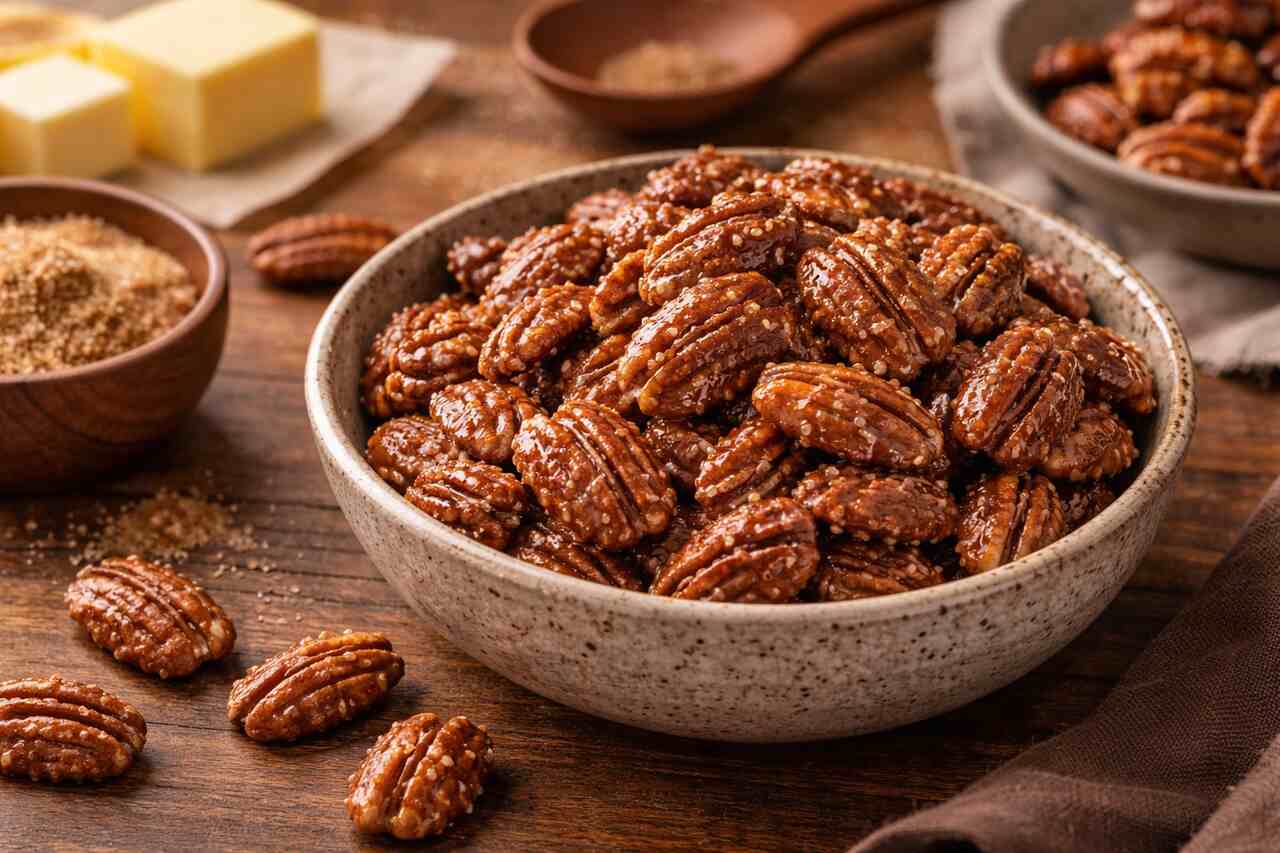


Praline pecans represent one of the most beloved treats in Southern kitchens. This crunchy confection combines buttery caramelized sugar with toasted pecans to create a glossy, sweet coating that snaps when bitten. Deeply rooted in Southern food traditions and strongly associated with New Orleans, praline pecans bridge old-world candy-making techniques with regional American ingredients.
This guide explains how praline pecans differ from other candied nuts, how sugar chemistry shapes texture, how to prepare them perfectly at home, and how to store, scale, and sell them. Whether you are a home baker, a gourmet gift entrepreneur, or a pastry professional, this comprehensive breakdown provides the technical and practical insights needed for consistent results.
Related Article: Pravi Celer The True Celery You Didn’t Know You Needed
Understand What Praline Pecans Are and How They Differ from Candied Pecans
Praline pecans are pecans coated in a cooked sugar mixture that typically includes butter, brown sugar, heavy cream, and vanilla. The mixture reaches a specific temperature that allows caramelization to occur before the nuts are folded in. As the sugar cools, it forms a smooth, creamy glaze that hardens into a crisp shell.
Candied pecans, by contrast, often rely on crystallized sugar rather than a creamy caramel base. They may use egg whites to create a meringue-style coating and are frequently baked instead of cooked on a stovetop. The result is a sandy or crackled exterior instead of the glossy finish seen in praline pecans.
Traditional Southern pralines, especially those found in New Orleans cuisine, are softer and more fudge-like. Praline pecans adapt that same caramel foundation but keep individual nuts separated rather than forming patties. This distinction explains why praline pecans are crunchy clusters while classic pralines are creamy discs.
Trace the Southern Origins of Praline Pecans
Praline techniques originated in France and were adapted in Louisiana during the 18th century. French settlers brought sugar-cooking traditions, but almonds were replaced with locally abundant pecans harvested from the Pecan tree. This substitution created a uniquely American confection.
In New Orleans cuisine, pralines became street-vended sweets. Over time, cooks began separating the coated nuts rather than shaping them into patties. This shift led to praline pecans as a snackable variation.
Today, praline pecans are staples in Southern desserts and holiday gift boxes. They symbolize hospitality and celebration, especially during Christmas and Mardi Gras.
Gather Authentic Ingredients for Traditional Flavor
Authentic praline pecans rely on simple but precise ingredients. Fresh pecan halves provide the base. Brown sugar contributes molasses notes. Unsalted butter adds richness. Heavy cream softens the caramel texture. Pure vanilla extract enhances aroma.
Each ingredient serves a technical role. Brown sugar contains molasses, which reduces crystallization risk. Butter introduces fat, which smooths the sugar matrix. Heavy cream adds moisture and milk solids that influence both caramelization and the Maillard reaction.
Ingredient quality directly affects outcome. Fresh pecans should taste mildly sweet, not bitter. Butter should be high-fat European style for best mouthfeel. Real vanilla extract delivers depth that artificial flavoring cannot replicate.
Prepare the Required Equipment for Controlled Caramelization
Consistent praline pecans require accurate heat management. A heavy-bottom saucepan distributes heat evenly and prevents scorching. A wooden spoon or silicone spatula resists high temperatures. A parchment-lined baking sheet ensures easy release.
A candy thermometer is highly recommended. Sugar temperature determines texture. Soft ball stage occurs around 235 to 240°F. For praline coating, the mixture typically reaches 240 to 250°F before nuts are incorporated.
Humidity also plays a role. On humid days, sugar absorbs moisture from the air, slowing hardening. Professional candy makers often monitor kitchen humidity for predictable results.
Cook the Sugar Mixture to the Correct Temperature
Begin by combining brown sugar, butter, and heavy cream in the saucepan over medium heat. Stir continuously to dissolve sugar and prevent hot spots. Once fully melted, allow the mixture to boil without excessive agitation.
The temperature should rise steadily to approximately 240 to 250°F. At this stage, caramelization deepens flavor while maintaining pourable consistency. Removing the mixture too early creates sticky coating. Cooking too long produces bitterness.
As soon as the target temperature is reached, remove from heat and stir in vanilla extract. Immediately fold in toasted pecans to ensure even coverage.
Control Crystallization and Prevent Burning
Sugar crystallization causes grainy texture. To prevent it, avoid stirring after boiling begins. You may brush the sides of the pan with water to dissolve stray crystals.
Butter and cream naturally reduce crystallization risk by interfering with sugar molecules. Some confectioners add a small amount of corn syrup for additional stability.
Burning occurs when temperature exceeds 260°F. Dark brown color and bitter aroma indicate overcooking. If this happens, the batch cannot be reversed and must be discarded.
Spread and Cool the Coated Pecans Properly
After coating, quickly spread pecans onto parchment paper. Separate them using two forks before the sugar hardens. Work efficiently because cooling happens within minutes.
Cooling at room temperature creates optimal crunch. Refrigeration may introduce condensation, leading to stickiness. Once fully hardened, break apart clusters gently.
Proper cooling defines texture. Slow cooling in dry air creates a crisp shell. Rapid chilling can trap moisture.
Explore Flavor Variations for Modern Preferences
Bourbon praline pecans incorporate a splash of bourbon whiskey for smoky complexity. Maple versions substitute part of the sugar with maple syrup. Spiced praline pecans add cinnamon, nutmeg, or cayenne for warmth.
Vegan variations replace butter with coconut oil and heavy cream with coconut cream. Texture remains crisp if temperatures are maintained correctly.
Savory twists may include sea salt or rosemary. These adaptations expand praline pecans beyond dessert into gourmet snack territory.
Store Praline Pecans for Maximum Freshness
Place cooled pecans in airtight containers. Store at room temperature in a dry location away from sunlight. Ideal storage temperature ranges from 65 to 72°F.
Shelf life typically reaches two weeks at room temperature. Refrigeration extends freshness but may soften texture due to condensation. To restore crunch, briefly warm in a low oven.
Freezing works for up to three months when sealed tightly. Thaw in sealed packaging to prevent moisture absorption.
Compare Praline Pecans and Candied Pecans Side by Side
| Feature | Praline Pecans | Candied Pecans |
| Sugar Base | Brown sugar, butter, cream | White sugar or meringue coating |
| Texture | Glossy, smooth crunch | Sandy or crystallized |
| Cooking Method | Stovetop caramelization | Often oven baked |
| Flavor Depth | Buttery caramel notes | Sweeter, lighter coating |
| Regional Tie | Southern desserts | Broader American use |
This distinction clarifies why praline pecans deliver richer flavor and smoother texture.
Use Praline Pecans in Desserts and Savory Dishes
Praline pecans elevate ice cream, cheesecakes, and brownies. Their caramel shell contrasts creamy textures. They also enhance pecan pie, adding crunch to soft filling.
In savory dishes, praline pecans complement goat cheese salads or roasted vegetables. Sweet and salty interplay creates balance.
Charcuterie boards benefit from praline pecans as a sweet counterpoint to aged cheeses. Coffee and bourbon pairings amplify caramel notes.
Evaluate Nutritional Profile and Sugar Content
| Nutrient (per 1 oz serving) | Approximate Value |
| Calories | 170–190 |
| Total Fat | 14 g |
| Carbohydrates | 12–15 g |
| Sugars | 8–10 g |
| Protein | 2–3 g |
Pecans provide healthy monounsaturated fats. However, sugar increases caloric density. They are naturally gluten free.
Lower sugar alternatives use monk fruit sweetener blends, though texture may vary due to altered caramel behavior.
Scale Production for Commercial and Gift Sales
Small batch candy makers often produce praline pecans in copper kettles for even heating. Scaling requires consistent temperature control and batch timing.
Packaging must prevent moisture infiltration. Heat-sealed bags with desiccant packets extend shelf life for e-commerce shipping.
Cottage food laws vary by state. Producers should verify labeling requirements and permitted sales channels before distribution.
Avoid Common Mistakes During Preparation
Sticky praline pecans result from undercooked sugar. Grainy texture signals crystallization. Burnt taste indicates overheating.
Separating nuts too slowly allows clumping. Cooking on humid days increases softness. Failing to toast pecans beforehand reduces flavor intensity.
Precision and patience ensure consistent success.
Debunk Popular Myths About Praline Pecans
Pralines are not always soft and creamy. While traditional New Orleans pralines are soft, praline pecans are crisp.
A candy thermometer is not strictly mandatory, but accuracy improves significantly with one. Visual cues alone can be misleading.
Praline pecans differ from caramel-coated nuts because caramel lacks dairy. Praline mixtures typically include butter or cream.
Conclusion
Praline pecans represent a refined balance of sugar science, regional heritage, and culinary versatility. Mastering temperature control, ingredient quality, and storage techniques ensures a glossy, crunchy confection every time. From Southern holiday traditions to gourmet commercial applications, praline pecans remain a timeless treat that transforms simple pecans into caramelized perfection. For more informative articles related to Food’s you can visit Food’s Category of our Blog.
FAQ’s
No. Traditional pralines are creamy patties, while praline pecans are individually coated nuts with a crunchy shell.
Graininess occurs due to sugar crystallization, often caused by stirring during boiling or stray sugar crystals on the pan sides.
Approximately 240 to 250°F ensures a firm yet glossy coating.
Yes. Coconut oil and coconut cream can replace butter and heavy cream.
They typically last up to two weeks at room temperature and three months if frozen.
Yes. The ingredients contain no wheat or gluten components.


