

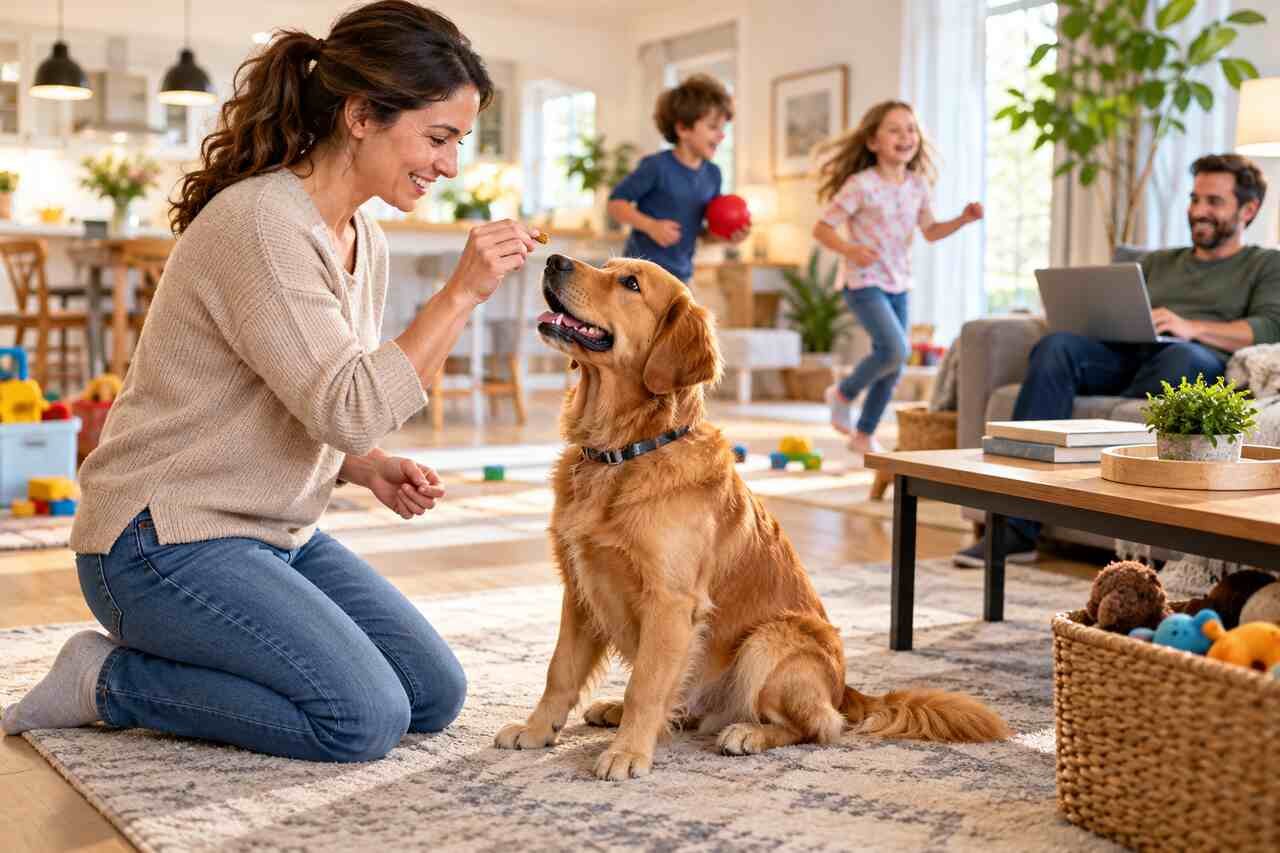

Good behavior is not about expecting a dog to be perfect in every situation. It is about building predictable habits that help the dog feel secure and help the family respond consistently. For households facing bigger challenges, professional dog behavior rehabilitation work can also provide a structured path forward when everyday training is not enough. Whether you have a new puppy, an energetic adolescent dog, or an adult dog with established habits, progress usually starts with small routines. Clear expectations, short training sessions, safe social experiences, and calm handling can make home life, walks, visitors, and family activities much more manageable. The goal is not to control every moment of the dog’s day, but to give the dog understandable alternatives to unwanted behavior.
Why Family Routines Matter
Dogs learn through repetition and consequences. When the household response changes from person to person, the dog has little reason to understand which choice will work. For example, if one person invites the dog onto the couch while another scolds it for climbing up, the dog receives conflicting signals rather than a clear rule. The same issue can affect jumping, barking at the door, pulling on the leash, begging, and coming when called. A steady routine does not have to be strict or complicated. It simply means family members agree on the behavior they want, the cue they will use, and the response they will give when the dog succeeds or makes a mistake. Consistency is especially useful during busy parts of the day, such as morning departures, mealtimes, arrivals home, and bedtime. If the dog knows that a mat, crate, or designated resting spot is part of the routine, those predictable moments can become opportunities to practice calm behavior instead of excitement.
Start With Clear House Rules
Before working on formal cues, decide how the dog will fit into daily life. Agree on where the dog may sleep, rest, and play. Decide whether furniture access is allowed, how greetings should happen when someone enters, and whether the dog should wait before going through exterior doors. Also, identify behaviors that earn attention. A dog who receives petting while jumping may learn that jumping works, even if people say “off” at the same time. Instead, give attention when four paws are on the floor or when the dog sits calmly. Use the same simple words and hand signals throughout the home, and make a plan for barking, stolen objects, and excited greetings. Make the preferred behavior easy to practice. Keep a dog bed near the family room, place treats where supervised training can happen, and use barriers or closed doors when the dog is not yet ready for full freedom. Management is not a substitute for training, but it prevents the dog from rehearsing habits the family is trying to change.
Teach the Basics First
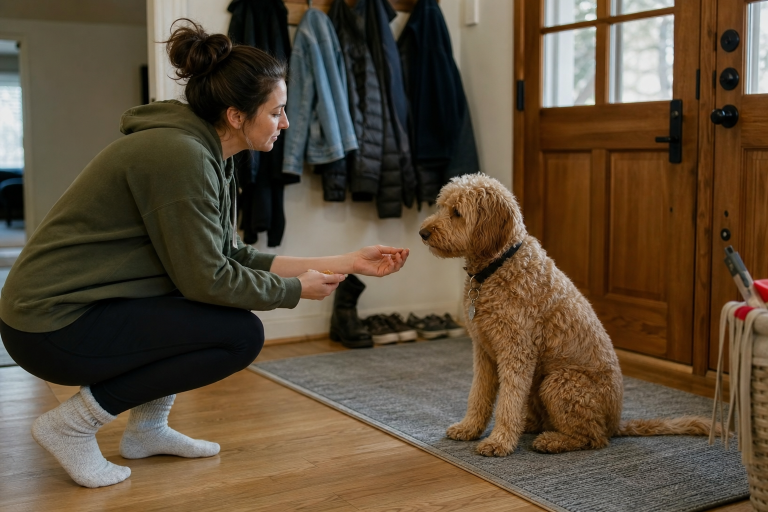
Foundation skills make everyday management easier. Practice in a quiet room before expecting the dog to perform around guests, squirrels, traffic, or another dog.
- Say the dog’s name once, then reward eye contact or a turn toward you.
- Teach sit, down, and stay with brief, achievable repetitions.
- Practice recall indoors, in a fenced space, or with a long line where appropriate.
- Use a release cue, such as “okay,” so the dog knows when an exercise is finished.
- Reward calm choices, including settling on a bed or checking in during distractions.
Keep sessions short enough that the dog can stay engaged. A few successful practices spread through the day are often more useful than a long session that ends in frustration. Everyone should reward the same behavior, particularly during the early stages of training. Build one skill at a time, then gradually combine skills in real-life situations. For instance, a dog may first learn to sit in the kitchen, then sit before the leash is clipped on, and later sit while a visitor enters. This gradual approach helps the dog understand that the cue has the same meaning in different places.
Help Puppies Build Confidence
Socialization means helping a puppy form positive associations with ordinary parts of life, including people, sounds, surfaces, handling, car rides, and new places. It does not mean placing a puppy in a crowded situation and hoping it copes. Introduce new experiences gradually, provide distance when needed, and watch for signs that the puppy is worried or overstimulated. Pair unfamiliar sights and sounds with treats, play, or calm praise, then allow time to rest. Puppies need plenty of sleep and quiet periods to recover from learning. The humane training and puppy socialization guidance from veterinary behavior professionals supports the use of safe, exposure-based, and reward-based methods rather than fear or force. Ask your veterinarian about appropriate socialization options during the vaccination period. Allow the puppy to observe rather than insisting on an interaction. A puppy who can calmly watch a bicycle, a delivery person, or a friendly dog from a comfortable distance is still learning. Respecting that distance can help prevent new experiences from becoming overwhelming.
Make Walks More Manageable
A walk can be a practice rather than a test of endurance. Begin in a quieter area where the dog can notice you and take food. Reward check-ins, relaxed leash movement, and brief stretches beside you. If the leash tightens, change direction or pause before pulling becomes the dog’s usual strategy.
Use Simple Equipment Well
A properly fitted collar or harness, a standard leash, waste bags, and worthwhile treats are enough for many training walks. Choose routes that match the dog’s current skill level, and carry higher-value rewards for harder environments. Equipment can improve management, but it does not replace teaching the dog what to do. Give the dog chances to sniff in appropriate places as well. Sniffing can be part of a rewarding walk, and alternating brief training periods with calm exploration can make the outing more enjoyable. If a route is too difficult on a particular day, choosing a quieter path is a practical adjustment rather than a setback.
Respond to Reactive Behavior
Reactivity may look like barking, lunging, freezing, pulling, or frantic movement in response to dogs, people, vehicles, sounds, or unfamiliar places. These behaviors can reflect excitement, fear, frustration, or stress, and they do not automatically define a dog’s overall temperament.
- Identify common triggers and notice the distance where the dog can remain calm.
- Move away before the dog becomes overwhelmed.
- Reward relaxed body language and attention toward you.
- Increase difficulty in small, manageable steps.
- Finish after a successful repetition instead of pushing too far.
Practical choices include crossing the street, using an emergency turn, walking at quieter times, and skipping forced greetings. Avoid punishing severe reactions or placing the dog close to a trigger it cannot handle safely. Creating distance is not failure. It is often the first step toward better learning. Pay attention to early signs of discomfort, such as hard staring, a closed mouth, stiff movement, turning away, or difficulty taking treats. Responding early gives the family more options than waiting for a full reaction. Keep notes about triggers and successful distances so progress is easier to recognize over time.
Include Children Safely
Children can help with training, but adults must manage the interaction. Teach children to ask before touching a dog, avoid bothering dogs that are eating or sleeping, and leave a dog alone when it has a toy or chooses to rest. Guidance for supervising young children around dogs also emphasizes that even familiar family pets need adult oversight. A young child can toss a treat for calm behavior from a safe distance. An older child may practice a simple cue with an adult nearby. Teach children to stand still and call for an adult if a dog becomes too excited, rather than running, shouting, or trying to handle the situation alone. Adults should also give the dog a child-free resting area where the dog can relax without being followed. Gates, a crate used positively, or a quiet room can make supervision easier and help everyone respect the dog’s need for space.
Know When to Seek Help
Professional support may be appropriate after a bite, attempted bite, repeated snapping, serious guarding, intense fear, or reactions that are becoming more frequent. A veterinarian should assess sudden changes in behavior, discomfort, or signs that pain may be affecting behavior. When choosing a trainer, ask about training methods, experience with similar concerns, safety procedures, family participation, and how progress will be measured. A qualified professional should explain the plan clearly and help you work at a level the dog can manage. Bring clear examples to the first consultation, including when the behavior happens, what occurs immediately beforehand, and what helps the dog recover. Short written notes can be useful, and videos may help when they can be taken safely without provoking or prolonging a problem.
Create a Simple Weekly Plan
- Monday: Practice name recognition and attention games.
- Tuesday: Work on loose-leash skills in a quiet area.
- Wednesday: Practice door manners and calm greetings.
- Thursday: Practice recall indoors or in a fenced space.
- Friday: Introduce one calm new sound, surface, or location.
- Saturday: Hold a short family session using shared cues.
- Sunday: Focus on rest, enrichment, and reviewing progress.
Track small improvements, such as calm greetings, loose-leash steps, response to name, and recovery after distractions. Consistent progress matters more than flawless performance every day. If a skill becomes difficult, reduce the level of distraction and return to an easier version before building up again.
Conclusion
Reliable behavior grows from clear rules, short lessons, safe exposure, and teamwork. Families do not need hours of training each day. They need a realistic plan, shared expectations, and patience with the small wins that gradually create a calmer, safer, and more enjoyable home. Consistent routines can help dogs understand what is expected while giving family members a simple way to respond to common behaviors such as jumping, barking, pulling, or excited greetings. Training should also match the dog’s age, personality, current skills, and comfort level, with new challenges introduced gradually rather than all at once. When problems are more serious or difficult to manage, working with a qualified professional can provide additional guidance and help the family develop a structured approach. By practicing useful skills in everyday situations, rewarding appropriate choices, and allowing the dog enough time to rest and adjust, families can build habits that support better communication and safer interactions. The goal is steady, practical progress that makes daily life easier for both the dog and the people around them.
