


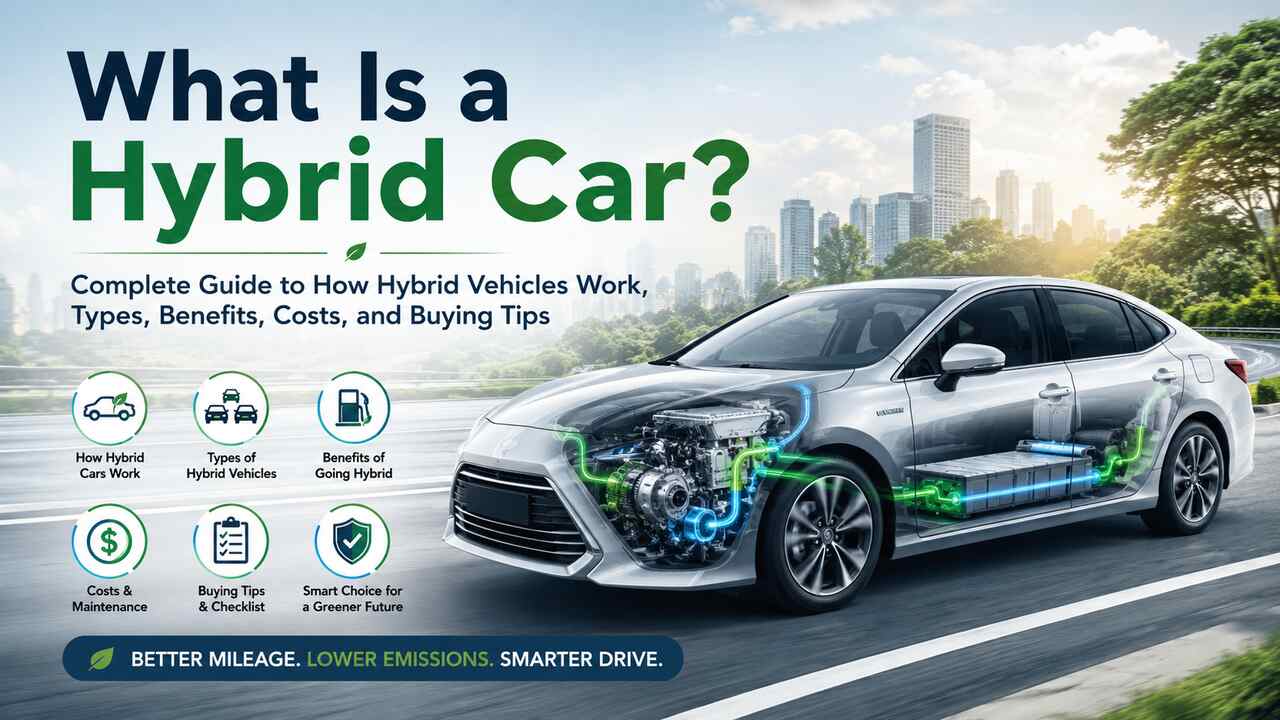


A hybrid car combines a gasoline engine with one or more electric motors to improve fuel efficiency, reduce emissions, and provide a smoother driving experience. Instead of relying entirely on gasoline, a hybrid vehicle intelligently switches between electric power, gasoline power, or both, depending on driving conditions. This approach helps drivers save fuel without requiring the regular charging routines associated with fully electric vehicles.
As fuel prices continue to fluctuate and environmental concerns become more important, hybrid cars have become a popular choice for commuters, families, and businesses. Modern hybrid technology has advanced significantly over the past two decades, offering better reliability, improved performance, and lower operating costs than earlier generations. This guide explains how hybrid cars work, explores the different types available, compares them with traditional gasoline and electric vehicles, and provides practical advice for choosing the right hybrid.
Understand How a Hybrid Car Works
A hybrid car uses two different power sources that work together to move the vehicle. The gasoline engine provides long-range capability, while the electric motor assists during acceleration, low-speed driving, or when extra power is needed. A computer continuously determines which power source is most efficient for the current driving conditions.
The main components include the gasoline engine, electric motor, battery pack, power control unit, regenerative braking system, and transmission. These components communicate with one another to maximize efficiency while maintaining reliable performance.
During city driving, the electric motor often powers the vehicle at lower speeds. When stronger acceleration or highway speeds are required, the gasoline engine joins in. Under certain conditions, both systems operate simultaneously to deliver better performance while reducing fuel consumption.
Learn the Main Components Inside a Hybrid Vehicle
Understanding the primary parts of a hybrid vehicle makes it easier to appreciate how the system improves efficiency.
| Component | Purpose | Benefit |
|---|---|---|
| Gasoline Engine | Provides primary propulsion during higher speeds | Long driving range |
| Electric Motor | Assists or powers the vehicle | Better fuel economy |
| Battery Pack | Stores electrical energy | Supplies power to the motor |
| Regenerative Braking | Captures braking energy | Recharges the battery |
| Power Control Unit | Manages energy flow | Optimizes efficiency |
| Transmission | Transfers power to the wheels | Smooth driving experience |
Unlike fully electric vehicles, most hybrid batteries recharge automatically while driving. Drivers typically do not need to plug in conventional hybrid cars because regenerative braking and the gasoline engine continuously replenish battery power.
These integrated systems allow hybrids to reduce wasted energy, especially during stop-and-go traffic where conventional gasoline vehicles consume more fuel.
Compare the Different Types of Hybrid Cars
Not all hybrid vehicles operate in the same manner. Manufacturers have developed several hybrid systems to suit different driving needs.
Mild Hybrid
A mild hybrid uses a small electric motor to assist the gasoline engine but cannot drive solely on electricity. The electric motor mainly supports acceleration and improves fuel economy.
Full Hybrid
A full hybrid can operate using the gasoline engine, the electric motor, or both together. Many city driving situations allow the vehicle to travel short distances using only electric power.
Plug-in Hybrid (PHEV)
A plug-in hybrid includes a larger battery that can be charged using an external power source. It offers a longer electric-only driving range before switching to gasoline.
Series Hybrid
In a series hybrid, the gasoline engine primarily generates electricity while the electric motor drives the wheels. This arrangement emphasizes electric propulsion.
Parallel Hybrid
A parallel hybrid allows both the gasoline engine and electric motor to directly power the wheels, either independently or together.
| Hybrid Type | External Charging | Electric-Only Driving | Best For |
| Mild Hybrid | No | No | Improved fuel economy |
| Full Hybrid | No | Limited | Daily commuting |
| Plug-in Hybrid | Yes | Yes | Short daily trips |
| Series Hybrid | Sometimes | Primarily | Urban driving |
| Parallel Hybrid | Usually No | Limited | Balanced performance |
Drive Efficiently With Regenerative Braking
Regenerative braking is one of the defining technologies found in hybrid vehicles. Instead of wasting energy as heat during braking, the electric motor temporarily functions as a generator, converting motion into electricity.
The recovered electricity is stored in the battery and later used to power the electric motor. This process improves fuel efficiency without requiring additional driver effort.
Drivers often notice smoother deceleration and reduced wear on traditional brake components because regenerative braking handles part of the slowing process.
Reduce Fuel Consumption Through Intelligent Power Management
Hybrid vehicles constantly monitor speed, throttle position, battery charge, road conditions, and driving demands. The onboard computer automatically selects the most efficient combination of gasoline and electric power.
In slow traffic, electric power usually dominates because electric motors perform efficiently at low speeds. During highway cruising, the gasoline engine becomes more efficient and takes on a larger share of the workload.
This intelligent switching allows hybrids to achieve impressive fuel economy without sacrificing convenience or driving comfort.
Compare Hybrid Cars With Gasoline Vehicles
Traditional gasoline vehicles rely exclusively on internal combustion engines. Hybrid vehicles add electric assistance to reduce fuel consumption and emissions.
Hybrid owners often spend less on fuel over the lifetime of the vehicle. The electric motor also reduces engine workload, potentially extending engine life.
Gasoline vehicles generally have lower purchase prices, but their long-term fuel expenses can exceed those of hybrids depending on annual mileage.
People who frequently drive in urban traffic usually benefit the most from hybrid technology because regenerative braking and electric operation are used more often.
Compare Hybrid Cars With Electric Vehicles
Hybrid and electric vehicles both reduce fuel consumption, but they differ significantly in operation.
Electric vehicles use only battery power and require charging infrastructure. Hybrid cars maintain a gasoline engine, eliminating range anxiety associated with long-distance travel.
Drivers without convenient home charging often find hybrids easier to own because they can refuel at traditional gas stations while still enjoying improved efficiency.
Electric vehicles generally produce zero tailpipe emissions during operation, while hybrids still use gasoline but consume considerably less than conventional vehicles.
Explore the Advantages of Owning a Hybrid Car
Hybrid vehicles provide several practical benefits beyond fuel savings.
Lower fuel consumption reduces ongoing operating expenses, especially for commuters with daily city driving.
Reduced emissions help decrease environmental impact while meeting increasingly strict emission standards in many countries.
Quiet electric operation creates a more relaxing driving experience, particularly at lower speeds.
Regenerative braking reduces wear on brake pads, potentially lowering maintenance costs over time.
Many hybrid models also retain strong resale value because demand continues to increase among fuel-conscious buyers.
Recognize the Potential Disadvantages Before Buying
Although hybrids offer many advantages, they are not the perfect solution for every driver.
The purchase price is usually higher than that of a comparable gasoline vehicle because of the additional electrical components and battery.
Battery replacement can be expensive if required outside warranty coverage, although modern hybrid batteries frequently last well over 100,000 miles and often much longer.
Some models provide less cargo space because battery packs occupy part of the storage area.
Drivers who spend nearly all their time on highways may experience smaller fuel savings than drivers operating primarily in urban environments.
Evaluate Hybrid Battery Life and Maintenance
Modern hybrid batteries are designed for durability and long service life. Manufacturers extensively test battery systems under a wide range of driving conditions.
Battery management systems carefully regulate charging and discharging cycles to reduce long-term degradation. Cooling systems also help maintain appropriate operating temperatures.
Routine maintenance for hybrid vehicles is similar to conventional cars, including oil changes, tire rotations, brake inspections, and fluid replacement. Hybrid-specific components generally require minimal attention unless a fault develops.
Because regenerative braking reduces brake wear, many hybrid owners replace brake pads less frequently than owners of conventional vehicles.
Calculate the Long-Term Cost of Ownership
When comparing vehicle costs, purchase price tells only part of the story.
Fuel savings can significantly offset the higher initial cost over several years, especially for drivers covering many miles annually.
Insurance premiums vary depending on location, vehicle model, and repair costs. Maintenance expenses are generally comparable to conventional vehicles, although specialized repairs may require technicians trained in hybrid systems.
Government incentives, tax credits, or local rebates may further reduce ownership costs in some regions.
Buyers should compare purchase price, estimated fuel expenses, expected resale value, insurance, financing costs, and maintenance rather than focusing solely on the sticker price.
Choose the Right Hybrid Car for Your Needs
Selecting the best hybrid depends on driving habits and personal priorities.
Drivers with long highway commutes should compare fuel economy ratings at highway speeds rather than relying only on combined efficiency figures.
Urban commuters usually benefit most from full hybrids because electric operation is used frequently in stop-and-go traffic.
Families may prioritize cargo space, rear-seat comfort, and safety features, while business travelers may value fuel savings and long-distance comfort.
Plug-in hybrids are especially attractive for people with home charging who complete most daily trips within the vehicle’s electric driving range.
Before purchasing, compare warranty coverage, battery warranty length, safety ratings, maintenance schedules, technology features, and expected resale value.
Maintain a Hybrid Vehicle for Maximum Efficiency
Proper maintenance helps preserve performance and fuel economy throughout the vehicle’s lifespan.
Follow the manufacturer’s recommended maintenance schedule for engine oil, filters, coolant, transmission service, and tire care.
Keep tires inflated to recommended pressures because underinflated tires increase rolling resistance and reduce fuel efficiency.
Drive smoothly by avoiding aggressive acceleration whenever possible. Gentle acceleration and gradual braking allow the hybrid system to maximize electric assistance and regenerative braking.
Regular software updates performed by authorized service centers may improve system performance and efficiency in certain models.
Understand the Environmental Benefits
Hybrid vehicles reduce fuel consumption, which directly lowers greenhouse gas emissions compared with conventional gasoline vehicles.
Because the gasoline engine operates more efficiently and runs less frequently during city driving, hybrids produce fewer emissions under many driving conditions.
Although hybrid battery production requires additional resources, many lifecycle studies indicate that fuel savings over years of operation can offset much of the environmental impact associated with manufacturing.
As battery recycling technology continues to improve, the sustainability of hybrid vehicles is expected to increase even further.
Prepare for the Future of Hybrid Technology
Automotive manufacturers continue to invest heavily in hybrid technology alongside fully electric vehicles.
New battery designs improve energy density while reducing weight. More efficient electric motors deliver stronger performance with lower energy consumption.
Advanced software increasingly predicts driving conditions, traffic patterns, and terrain to optimize energy usage automatically.
Many manufacturers are also combining hybrid technology with advanced driver assistance systems, improved connectivity, and more efficient gasoline engines to further enhance overall performance.
Hybrid technology will likely remain an important transition between traditional gasoline vehicles and fully electric transportation for many years.
Conclusion
Hybrid cars successfully combine gasoline and electric power to deliver improved fuel economy, lower emissions, and a comfortable driving experience. By intelligently switching between power sources and recovering energy through regenerative braking, hybrids reduce wasted fuel while maintaining the convenience of traditional refueling.
Whether you are looking to lower fuel expenses, reduce environmental impact, or enjoy modern automotive technology without relying entirely on charging infrastructure, a hybrid vehicle offers an excellent balance between efficiency and practicality. Understanding how hybrid systems work, comparing the different types available, and evaluating long-term ownership costs will help you choose the model that best fits your driving habits and budget.
FAQ’s
1. Does a hybrid car need to be plugged in?
Most standard hybrid cars do not require external charging. Their batteries recharge automatically through regenerative braking and the gasoline engine. Only plug-in hybrid vehicles are designed to be charged using an external power source.
2. How long does a hybrid battery usually last?
Most hybrid batteries last between 8 and 15 years, and many remain functional for well over 100,000 to 200,000 miles when properly maintained. Actual lifespan depends on driving habits, climate, and manufacturer design.
3. Are hybrid cars good for highway driving?
Yes. Hybrid cars perform well on highways, although their greatest fuel savings usually occur in city traffic where regenerative braking and electric driving are used more frequently.
4. Is maintenance more expensive for hybrid vehicles?
Routine maintenance is generally similar to conventional gasoline vehicles. While specialized hybrid repairs can cost more if needed, regenerative braking often reduces brake wear, helping offset some maintenance expenses.
5. Can a hybrid car run without gasoline?
A conventional hybrid cannot operate indefinitely without gasoline because the engine is an essential part of the system. A plug-in hybrid can drive on electricity alone for a limited distance before switching to gasoline.
6. Is buying a hybrid worth it?
For many drivers, especially those who commute regularly or spend significant time in urban traffic, a hybrid can provide meaningful fuel savings, lower emissions, and reduced operating costs over the life of the vehicle. The overall value depends on annual mileage, fuel prices, purchase cost, and how long the vehicle is kept.


