


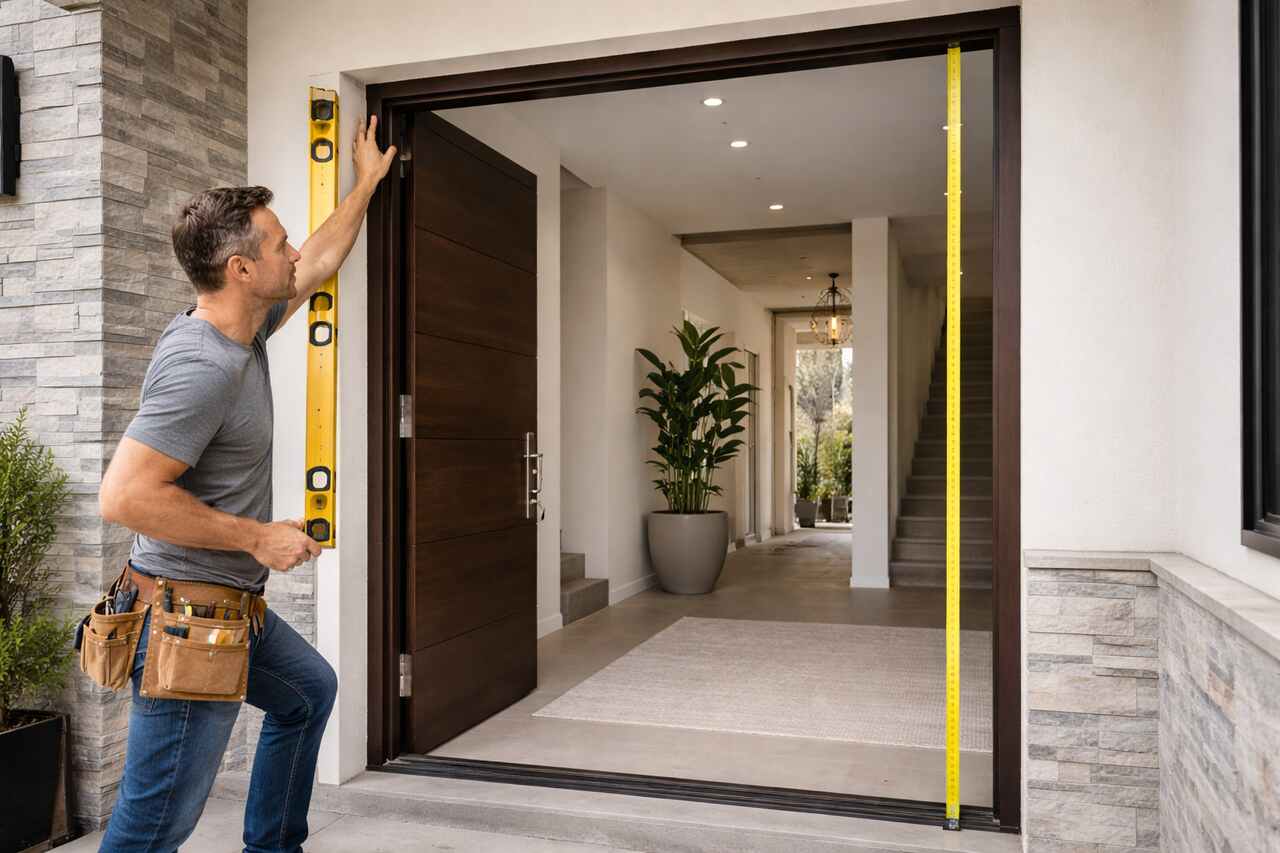


Accurate entryway measurements determine how smoothly a pivot system will operate after installation. Width, height, and floor conditions directly influence structural alignment and hardware placement. Even slight dimensional inconsistencies can affect balance and range of motion. Careful preparation ensures the door integrates correctly within the surrounding frame.
Pivot doors rely on top and bottom pivot hardware instead of traditional side hinges. Their structural load transfers vertically through anchor points at the floor and header. Exact measurement supports proper weight distribution and stable movement. Thorough planning reduces the need for dimensional adjustments during installation.
Measure The Rough Opening Width
Begin by measuring the full interior width of the framed opening. Place the tape measure firmly across the top horizontal section. Repeat the measurement at the center and bottom areas of the opening. Record the smallest dimension to maintain a consistent structural allowance.
Wall framing can show minor variation across different points. Measuring three horizontal sections confirms alignment within the cavity. Consistent width ensures the pivot axis remains properly centered. Organized documentation keeps fabrication specifications clear and accurate.
Confirm Opening Height And Floor Clearance
Measure vertically from the finished floor surface to the underside of the header. Extend the tape carefully to avoid angled readings. Repeat the measurement along both the left and right sides. Use the shorter value to maintain proper structural fit.
Floor material thickness must be included in calculations. Tile, stone, or wood surfaces alter the final clearance requirement. Pivot systems require defined bottom spacing for smooth rotation. Accurate height measurement supports balanced vertical alignment after installation.
Inspect Floor Level And Structural Support
Place a construction level across the threshold area. Confirm that the floor surface remains even from side to side. A minor slope can shift pivot alignment and hardware performance. Correct irregularities before finalizing door dimensions.
Evaluate the header and side jamb framing carefully. Structural members must support the concentrated door weight securely. Pivot hardware transfers the load directly through anchor points. Solid framing contributes to consistent and controlled movement.
Key structural checkpoints include:
- Floor surface sits level across the threshold span
- The header beam remains square within the framing cavity
- Side jambs stand vertically without a visible twist
- Subfloor provides firm anchor support beneath hardware
Verify Hardware Placement And Side Clearance
Determine pivot offset distance from the door edge precisely. Offset placement influences swing radius and spatial balance. Measure available wall space beside the opening clearly. Adequate clearance prevents contact during full door rotation.
Confirm interior and exterior clearance zones with accuracy. Door thickness affects the required side allowance. Include room for seals, latch hardware, and threshold components. Coordinated measurements simplify communication with fabrication professionals.
What Sets A Reliable Iron Door Fabricator Apart?
A qualified iron door fabricator begins with accurate field measurements and structural review. Detailed shop drawings reflect exact panel proportions and hardware placement. Controlled welding and finishing create balanced assemblies with clean seams. Structured inspections confirm alignment, glass fit, and coating consistency.
Clear guidance helps clients select panel designs, insulated glass, and protective finishes. Coordinated teams manage steel forming, surface treatment, and final checks with discipline. Verified anchor preparation supports stable installation. Such organized craftsmanship invites closer consideration of a specialist focused on durability and precision. Pivot doors function reliably when entryway dimensions are accurately recorded. Accurate width, height, structural review, and clearance checks guide stable installation. Verified anchor support maintains balanced vertical load distribution. Careful measurement establishes a dependable foundation for long-term door operation.
Read Also: Why Asphalt Shingles Remain America’s Most Popular Roofing Choice


