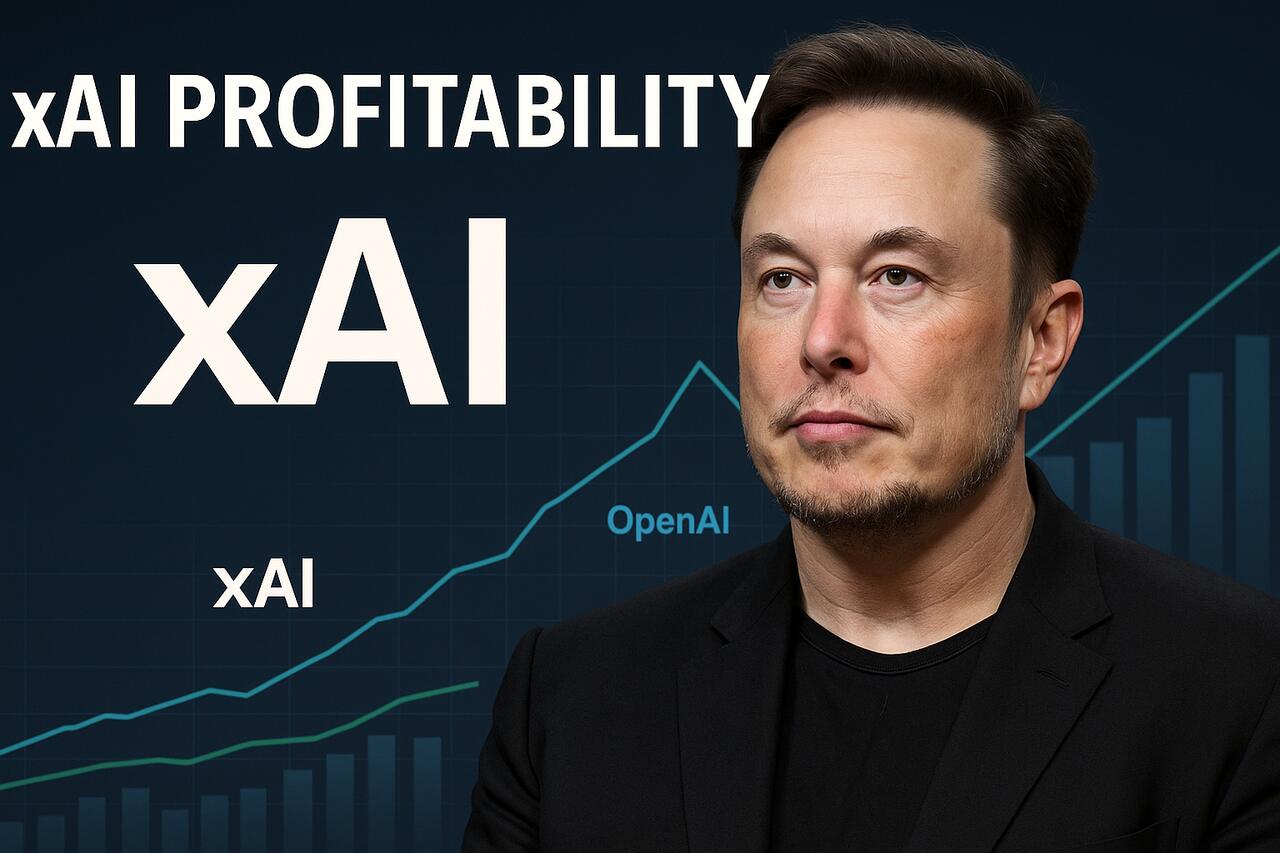


Elon Musk’s AI venture, xAI, is projected to reach profitability faster than OpenAI, according to a former OpenAI Chief Financial Officer. This assertion underscores a significant divergence in business models, infrastructure strategies, and monetization pathways between the two leading artificial intelligence entities. While OpenAI emphasizes research-driven development and enterprise-level deployment, xAI is building a leaner, vertically integrated ecosystem that embeds generative AI directly into consumer-facing platforms most notably through the X (formerly Twitter) network.
The profitability forecast for xAI hinges on Musk’s ability to synchronize AI development with his broader technological assets, including Tesla’s compute infrastructure, X’s social media user base, and potentially even SpaceX and Neuralink in the long term. This approach allows xAI to reduce cloud dependency, minimize operational costs, and activate monetization channels more rapidly than its competitors. As generative AI transitions from experimental to commercial, xAI’s model represents a shift in the industry’s focus from scaling intelligence to scaling revenue.
How Is xAI Positioned to Surpass OpenAI in Profitability?
xAI is projected to achieve profitability faster than OpenAI due to its lean operational model, integration with the X ecosystem (formerly Twitter), and Elon Musk’s strategic monetization approach. The former CFO, who has insider experience with OpenAI’s financial structure, emphasized that xAI’s commercial roadmap is more aggressive, tightly integrated with platform economics, and less reliant on third-party partnerships.
xAI’s ability to leverage existing infrastructure across Musk’s portfolio including Tesla’s compute resources and X’s user base lowers cost overhead while accelerating product rollout. The vertical integration across social media, AI model deployment, and edge computing creates a unique competitive edge that allows for faster revenue realization compared to OpenAI’s research-heavy, API-first model.
What Are the Key Revenue Drivers Behind xAI’s Profit Model?
xAI’s monetization strategy is rooted in direct-to-consumer integration, premium AI agent subscriptions, and cross-platform data utilization. By embedding its chatbot “Grok” within the X platform, xAI immediately taps into a pre-existing audience, allowing real-time monetization via ad enhancement, engagement analytics, and conversational tools.
The deployment of Grok in premium X subscriptions gives xAI a built-in revenue stream, minimizing customer acquisition costs. Unlike OpenAI, which monetizes primarily through API access and enterprise partnerships via Azure, xAI integrates its services natively in consumer products. This model benefits from higher user retention, first-party behavioral data, and personalized content monetization.
Additionally, Musk has hinted at leveraging Tesla’s in-house chips and Dojo supercomputer for AI training, reducing reliance on external cloud costs and providing hardware-software synergy that enhances profit margins.
How Does xAI’s Business Model Differ From OpenAI’s?
OpenAI operates on a B2B SaaS model, focusing on API licenses, enterprise integrations, and foundational model access through Microsoft Azure. Its profitability depends on large-scale institutional adoption, licensing deals, and cloud infrastructure agreements. The company’s model is capital-intensive due to its dependency on high-cost training cycles, expansive compute requirements, and safety-aligned R&D.
In contrast, xAI is executing a hybrid B2C-B2B model with native integration across X and potential alignment with Tesla’s robotics and self-driving platforms. xAI benefits from internal cross-subsidization, rapid feedback loops via X’s user base, and end-to-end control of deployment environments.
While OpenAI’s profitability trajectory is long-term and research-centric, xAI’s model prioritizes near-term monetization, agile product development, and reduced platform dependency.
What Strategic Advantages Does xAI Hold Under Musk’s Leadership?
Elon Musk’s ecosystem-based business philosophy grants xAI unparalleled access to shared infrastructure, proprietary data, and multimodal application environments. Through strategic resource alignment, Musk can deploy xAI models across X, Tesla, Neuralink, and potentially SpaceX, creating unique revenue paths from automotive intelligence to neurolinguistic interfaces.
Musk’s history of cost optimization, vertical integration, and rapid go-to-market execution positions xAI to sidestep traditional AI bottlenecks. Additionally, xAI does not face the same regulatory partnerships as OpenAI particularly with Microsoft allowing it greater freedom to iterate products and commercialize them without corporate gatekeeping.
This flexible structure enables faster innovation cycles, pricing autonomy, and deeper control over model deployment, all of which accelerate revenue capture.
What Role Did the Former OpenAI CFO Play in Validating xAI’s Profitability Outlook?
The former OpenAI CFO brings direct financial insight into the cost structure, licensing limitations, and long-term monetization constraints faced by OpenAI. Based on comparative analysis, the former CFO argues that OpenAI’s pursuit of alignment, safety layers, and institutional partnerships slows down commercial expansion despite technical breakthroughs.
Their commentary highlights xAI’s streamlined structure, lean operational footprint, and faster decision-making as decisive factors in achieving early profitability. By contrast, OpenAI’s alignment with academic rigor and policy-conscious deployment creates friction in mass-market adoption.
The former CFO’s endorsement underscores a growing perception among insiders that profitability in AI may depend less on model size and more on strategic ecosystem leverage a domain where Musk’s xAI holds distinct advantage.
Conclusion
xAI’s trajectory toward early profitability fueled by strategic infrastructure integration, user-owned platforms, and product-led revenue design positions it as a formidable challenger to OpenAI’s current dominance. As former OpenAI leadership recognizes xAI’s agile approach, the future of AI profitability may shift from research labs to cross-domain ecosystems with monetizable AI agents embedded at the user interface layer. For more informative articles related to News you can visit News Category of our Blog.