




A road trip should begin with anticipation, not uncertainty. Whether the journey involves a few hours on the highway or several days across multiple states, preparing the vehicle in advance can help reduce avoidable interruptions. Drivers who are reviewing vehicle options or planning future travel can learn more while creating a practical maintenance routine that fits their needs.
Long highway miles place more sustained demand on tires, brakes, cooling systems, batteries, and air conditioning than a typical short commute. Begin checking the vehicle several days before departure, not the night before, so there is time to address a worn component, schedule service, or adjust the packing plan.
Start With a Simple Vehicle Walk-Around
Before opening the hood or gathering supplies, take a slow lap around the vehicle. Look beneath it for fresh fluid spots, inspect the windshield for chips that could spread, and make sure mirrors, exterior trim, and the license plate are secure. Check for cracked lenses, loose panels, or any other damage after recent driving.
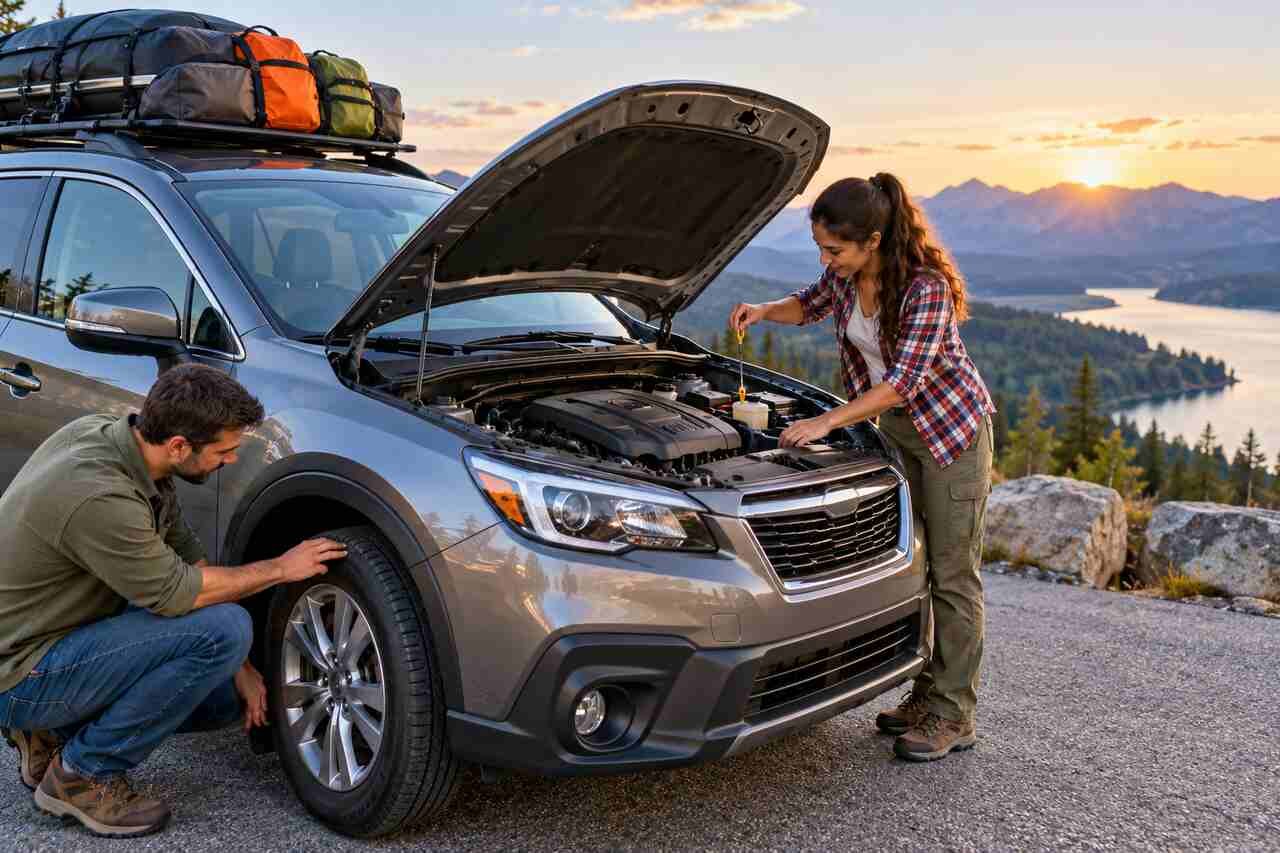
With the hood open, look for loose battery cables, visibly worn belts, split hoses, or signs of leaking fluid. You do not need to diagnose every component yourself, but noticing a concern before departure gives a technician more time to investigate it.
Check the Tires, Including the Spare
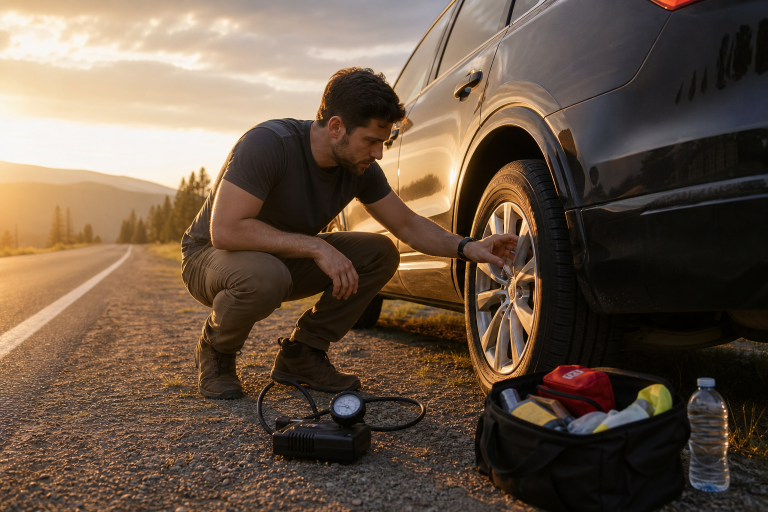
Tires are one of the most important parts of a road-trip inspection. Check pressure when the tires are cold, using the recommended tire pressure on the driver’s doorjamb label or in the owner’s manual, rather than the maximum pressure molded into the tire sidewall. This pressure is specific to the vehicle’s design and load requirements.
- Inspect tread for excessive wear, embedded nails, stones, cracks, or bulges.
- Look for uneven wear that may point to an alignment, suspension, or inflation issue.
- Check all four tires, plus the spare if the vehicle has one.
- Confirm that the jack, lug wrench, and locking-wheel-nut key are present and accessible.
Correct tire pressure supports predictable handling, tire life, and fuel economy. A tire pressure monitoring warning should never be ignored simply because the vehicle still feels normal.

Inspect Brakes and Steering
Pay attention during ordinary driving in the days before the trip. Grinding, repeated squealing, clicking, a soft brake pedal, steering vibration, or a vehicle that pulls to one side under braking all deserve professional attention. Also, notice whether the steering wheel sits off-center while traveling straight or whether the vehicle shakes at highway speed.
If maintenance is due soon, schedule it before leaving. It is better to handle a brake or steering concern at home than to search for an unfamiliar repair shop while traveling.
Review Fluids, Filters, Belts, and Hoses
Check engine oil, coolant, brake fluid, windshield washer fluid, and transmission fluid when applicable. Follow the owner’s manual for the correct fluid type and service intervals. Avoid mixing products or topping off a reservoir if you are unsure what the vehicle requires.
Also consider the engine air filter and cabin air filter. A clogged cabin filter can reduce the ventilation system’s effectiveness, while worn belts and aging cooling hoses may become more noticeable during hot weather or extended highway travel.
Test the Battery, Lights, and Climate Controls
A weak battery may reveal itself through slow starts, dim lights, flickering electronics, or corrosion around the terminals. Have the battery tested if it is older, has shown warning signs, or has been exposed to severe weather. Confirm that headlights, brake lights, turn signals, hazards, reverse lights, interior lights, power outlets, and phone chargers work properly.
Run both the air conditioner and heater before departure. Replace wiper blades that skip or leave streaks, fill the washer reservoir with season-appropriate fluid, and clean the windshield inside and out to reduce glare. Test the defroster as well, especially if the route includes rain, mountain elevations, or changing temperatures.
Prepare for Electric Vehicle Travel
Electric vehicle road trips benefit from a more detailed energy plan. Map primary charging stops, identify alternatives in case a station is occupied or unavailable, and confirm that charging apps and payment methods are ready before the trip. The network of public charging stations can help drivers locate options along the route.
- Build in extra range for hills, strong headwinds, cold temperatures, heavy cargo, and climate-control use.
- Bring the charging cable and any adapters needed for planned stops.
- Avoid arriving at a charging location with no practical backup range.
- Review the vehicle’s route-planning tools, if equipped, before departure.
Pack an Emergency Kit and Load the Vehicle Safely
A practical emergency kit does not need to take up much space. Include first-aid supplies, water, shelf-stable snacks, a flashlight, work gloves, basic tools, reflective warning gear, a portable jump starter or jumper cables, a phone charging cable, and paper copies of important contact information. Add seasonal items such as rain gear, a blanket, sunscreen, or an ice scraper when appropriate.
Before loading luggage, remove unnecessary items from the cabin and cargo area. Place heavy items low and near the center of the vehicle, secure loose objects, and keep every window clear enough for safe visibility. Check weight limits before using a roof box, hitch carrier, or trailer.
Plan the Route and Build in Breaks
Review the main route and at least one backup option. Mark fuel stops, charging locations, rest areas, hotels, and repair facilities. Download offline maps for areas with limited cell service, check weather and road conditions, and share the route and expected arrival time with someone at home.
Plan regular stops for stretching, hydration, meals, and refueling. Do not push through fatigue to save a few minutes. Set navigation before moving, keep essential items within easy reach, and switch drivers only when everyone is alert and comfortable.
Complete a Final Check the Day Before
- Confirm tire pressure and inspect the spare.
- Fill the fuel tank or charge the battery for the first leg of the drive.
- Top off washer fluid and secure luggage or cargo carriers.
- Address dashboard warning lights before leaving.
- Save insurance and roadside assistance information on the phone and keep backup details on paper.
- Take a short test drive and listen for anything unusual.
Conclusion
Road-trip preparation is a simple investment in a smoother journey. By checking the vehicle early, packing thoughtfully, and building flexibility into the route, drivers can reduce many common travel-day problems. A few careful steps before departure can mean more confidence behind the wheel and more time enjoying the miles ahead.


